Namibia’s livestock industry experienced a notable shift between January and September 2025, as domestic consumption absorbed the impact of falling exports across key meat sectors.
According to the Livestock and Livestock Products Board of Namibia (LLPBN), 69% of beef and 98% of mutton produced during the period were consumed locally.
The LLPBN’s quarterly review shows that despite lower output and rising input costs, the country’s meat industry maintained self-sufficiency, supported by stable pricing and resilient domestic markets.
“Both the beef and mutton industries reflect a tight-supply, high-price environment. Domestic demand is absorbing a larger share of production, while the export share is gradually narrowing,” the report stated.
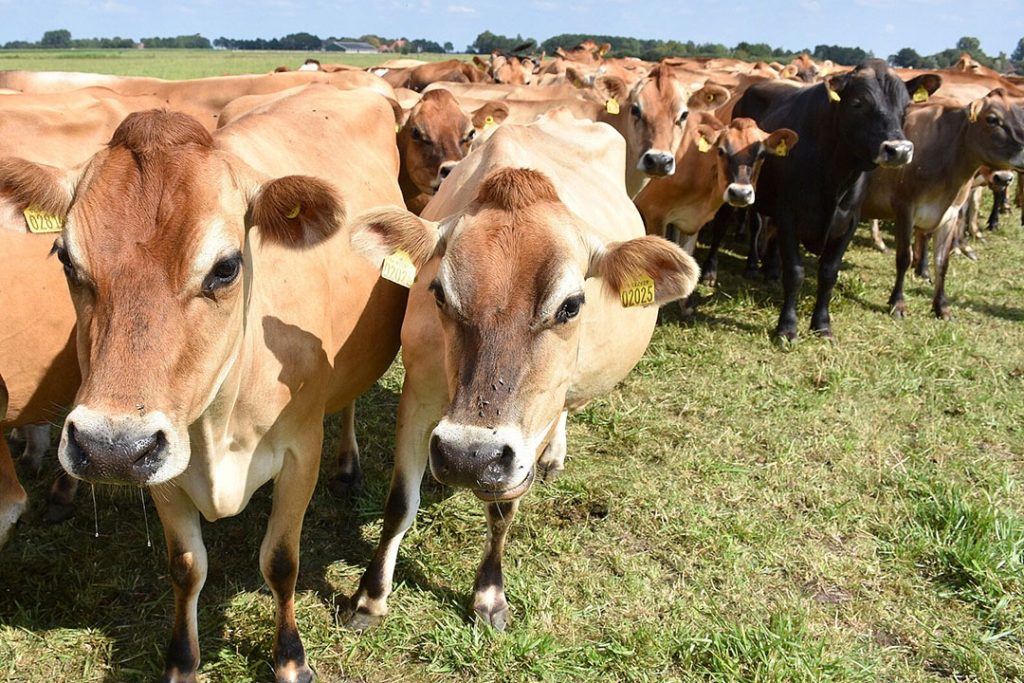
A total of 156,297 cattle were marketed between January and September 2025, a 50.3% decline from 314,466 during the same period in 2024.
Of these, 47,594 head were exported live, while 74,814 were slaughtered at A-class abattoirs and 33,889 at B- and C-class facilities — reflecting a 27% drop in throughput at smaller abattoirs.
Market share figures showed A-class abattoirs accounting for 49.9% of marketed cattle, live exports 36.9%, and B&C-class abattoirs 13.1%. The average weaner price south of the Veterinary Cordon Fence rose to N$31.12/kg, up from N$24.64/kg in 2024, while the B2 carcass price increased to N$69.90/kg, compared to N$60.76/kg a year earlier.
“Year-to-date (YTD), 156,297 cattle were marketed across all marketing channels. This represents a decline of 50.3%, down from the 314,466 heads marketed in the same 2024 period,” the report stated.
In the sheep sector, marketing fell by 39.5% to 423,174 head, driven by a 44.3% decline in live exports.
However, A-class abattoir throughput rose by 13.6%, while local market share for export-approved and B&C-class abattoirs improved to 13.7% and 17.7% respectively. The Namibian A2 producer price averaged N$91.92/kg, still below the Northern Cape’s N$97.94/kg benchmark.
The goat sector also recorded a 20.4% year-on-year decline in volumes. Live exports accounted for 98.6% of total marketing, while B&C-class abattoirs handled only 1.4%.