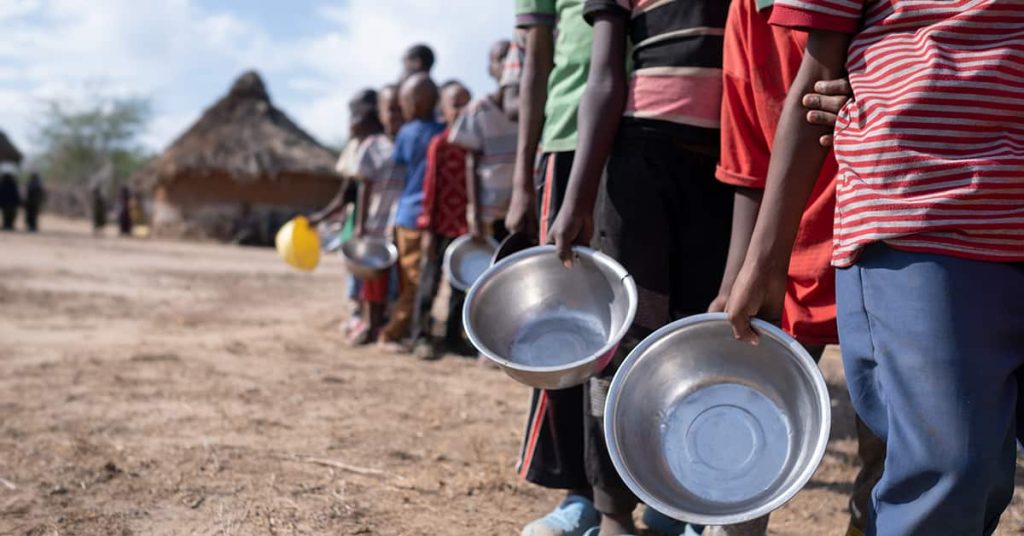
Namibia’s food security situation is expected to worsen between October 2025 and March 2026, with 612,000 people, or 20% of the analysed population, projected to face high levels of acute food insecurity.
The figures are contained in the latest Integrated Food Security Phase Classification (IPC) report for July 2025 to June 2026.
According to the IPC, the expected deterioration is driven by the discontinuation of the government’s drought relief programme in August 2025, high unemployment of 36.9%, and poor livestock conditions in drought-prone regions.
The IPC noted that although most dams remain above 85% full and grazing conditions are favourable, the National Strategic Food Reserves hold only 3,505.77 tonnes, about 15% of capacity, leaving the country with limited buffer stock.
“The lean season will expose thousands of households to severe food shortages, particularly in regions such as Kunene, Kavango West, Zambezi and Omaheke, where up to 30% of the population could face IPC Phase 3 or worse,” the report stated.
The IPC said rising food prices, reduced labour opportunities and declining purchasing power continue to deepen household vulnerability, especially in rural and marginalised areas. It noted that annual food inflation reached 6.4% in June 2025, driven by increases in fruit, meat, oils and grains.
“High food prices are placing significant strain on lower-income households, forcing many to reduce meal frequency and quality,” the report said.
The IPC expects conditions to improve slightly between April and June 2026, when the number of food-insecure people could fall to 408,000 (13%) as households begin consuming their harvests.
It projects that thirteen regions will shift from Crisis (Phase 3) to Stressed (Phase 2), supported by improved rainfall, better grazing and increased water availability.
“Despite expected improvements, Kunene remains a hotspot due to flood-related crop damage, veld fires and structural poverty,” the IPC warned.
The report also said that food security had improved markedly in early 2025 compared with the previous year, with the number of food-insecure people declining from 1.15 million to 456,000 between July and September 2025.
The IPC attributed this to a 75% increase in communal crop production and above-average rainfall that restored pastures and water sources.
According to the IPC, urgent action is needed to reduce food gaps and protect livelihoods, particularly for households in IPC Phase 3.
Priority measures include continuing welfare and food assistance, strengthening water, sanitation and nutrition programmes, conducting regular food security assessments, ensuring agricultural input supply, expanding food-for-work initiatives, improving access to land for household gardens and promoting awareness of the Solar Revolving Fund to build resilience.