Namibia’s foreign reserves are projected to decline from N$63 billion at the end of 2024 to N$47 billion by the end of 2025, following the repayment of the US$750 million Eurobond issued in 2015 at a 5.25% coupon rate, according to the Ministry of Finance.
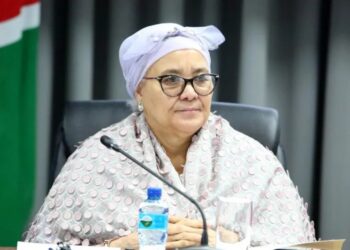
Finance Minister Ericah Shafudah said the temporary decline reflects the planned drawdown required to redeem the bond but remains within sustainable levels.
“While foreign reserves are projected to decline, we anticipate a moderate recovery in 2026, supported by sound fiscal planning and continued economic resilience,” Shafudah said.
She explained that the redemption strategy was carried out under the Sovereign Debt Management Strategy (SDMS) and the Namibia Financial Sector Strategy, which together guide the balance between external and domestic borrowing.
“Approximately 80% of government funding is sourced locally, with 20% from international markets. This redemption was meticulously planned in line with our long-term debt-management principles to protect macroeconomic stability,” Shafudah said.
The minister noted that Namibia’s debt profile is now largely dominated by domestic borrowing, limiting the country’s exposure to foreign currency risk.
“After the Eurobond redemption, the domestic-to-foreign debt ratio is expected to reach 85:15, and about 90% of foreign debt is denominated in South African rand. This strategic composition ensures that 99% of the government’s debt portfolio is protected from exchange-rate risks,” she said.
Shafudah emphasised that maintaining adequate reserves remains a key priority even as the government meets its external obligations.
“Our prudent approach safeguards Namibia’s financial stability and demonstrates our ability to meet commitments without jeopardising liquidity,” she stated.
She added that the successful repayment reinforces Namibia’s standing in global markets as a credible and disciplined borrower.
“The redemption also reinforces Namibia’s credibility in global markets as a disciplined borrower as the government continues focusing on consolidating fiscal gains and rebuilding reserves through growth-oriented policies. As we move forward, our focus remains on enhancing domestic revenue mobilisation and investing in sectors that drive inclusive growth,” Shafudah said.
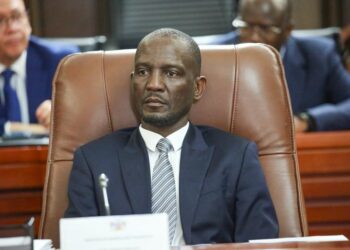
Bank of Namibia Governor Johannes !Gawaxab confirmed that the country’s reserves fell from around N$64 billion at the end of 2024 to N$57 billion by September 2025.
“At the end of 2024, reserves stood at roughly N$64 billion. By September 2025, they were around N$57 billion. Even after the Eurobond payment, this level remains sufficient for the peg arrangement and for meeting Namibia’s international obligations,” !Gawaxab said.
Following the Eurobond repayment, reserves are expected to end the year just below N$50 billion, equivalent to about 3.1 months of import cover, which the central bank considers adequate under Namibia’s monetary framework.
The Governor said the repayment comes at a time of macroeconomic stability, with GDP growth of 3.7% in 2024, moderating to just above 3% in 2025 due to weaker global demand and softer output in the meat and diamond sectors.
“We are redeeming our bond in a very disinflationary environment, with inflation averaging around 3.6% in the first eight months of 2025 and expected to remain below 4% into 2026,” !Gawaxab said.
He added that Namibia’s full repayment of the Eurobond demonstrates the country’s fiscal discipline and commitment to stability amid tightening global financial conditions.
“The payment of the Eurobond sends a strong signal of macroeconomic stability and creditworthiness. Even in a challenging global environment, Namibia has demonstrated that it honours its commitments,” !Gawaxab said.
With 85% of public debt now held domestically, the Bank of Namibia said the country’s exposure to foreign exchange risk has been significantly reduced, further strengthening the overall resilience of Namibia’s debt portfolio.