By Esther Omoregie
In recent years, terms such as ESG (Environmental, Social and Governance), sustainability, and climate change have gained significant traction in boardrooms and business circles.
Yet the real question remains: do corporate leaders in Namibia fully grasp the implications of these concepts for their organizations? These are not just buzzwords or compliance checkboxes—they represent a deeper responsibility that companies hold as corporate citizens.
Traditionally, business success has been measured by one metric: profit. While financial performance remains critical, the world is shifting toward a broader evaluation of success known as the triple bottom line: profit, people, and planet.
This shift recognizes that long-term corporate value cannot be sustained if growth comes at the expense of the environment, society, or employees.
For Namibia, this evolution is especially relevant. As a country heavily reliant on natural resources—mining, fisheries, and agriculture—our economy is both an engine for growth and a potential source of environmental and social strain.
Climate risks such as droughts, coupled with growing societal expectations for inclusivity and fairness, mean that businesses can no longer afford to overlook their broader responsibilities.
This is where sustainability reporting comes in. By systematically measuring and disclosing their environmental, social, and governance impacts, Namibian companies can demonstrate transparency, build trust with stakeholders, and position themselves competitively in a global marketplace that increasingly rewards responsible practices.
More than a compliance exercise, sustainability reporting is an opportunity for local businesses to strengthen resilience, attract investment, and contribute meaningfully to Namibia’s development goals.
In short, sustainability reporting should no longer be viewed as an optional add-on. For Namibian companies, it is a strategic priority—one that determines not only how the world sees us, but also how we secure long-term prosperity at home.
What is Sustainability Reporting?
Sustainability reporting is the practice of disclosing an organization’s environmental, social, and governance (ESG) performance. It goes beyond traditional financial statements by addressing how a company’s operations affect people, the planet, and long-term prosperity.
These reports provide transparency, allowing stakeholders such as investors, customers, employees, and regulators to assess how responsibly an organization is managing its risks and opportunities.
The purpose of sustainability reporting extends far beyond compliance. At its core, it fosters accountability and trust. By openly communicating their ESG impacts, companies signal to stakeholders that they take sustainability seriously.
The advantages of sustainability reporting are manifold. It enhances reputation, strengthens stakeholder relationships, and improves access to capital by appealing to ESG-focused investors.
Additionally, the process of gathering data for reports often uncovers opportunities for efficiency, such as reducing waste or cutting energy costs. Over time, these improvements contribute to both profitability and resilience.
Standards and Frameworks Guiding Sustainability Reporting
To ensure clarity and comparability, organizations often follow global frameworks such as the Global Reporting Initiative (GRI), the Sustainability Accounting Standards Board (SASB), and the Task Force on Climate-related Financial Disclosures (TCFD).
These frameworks guide companies in presenting reliable and standardized information, which is increasingly essential as investors and regulators demand greater transparency.
Another vital development is the work of the International Sustainability Standards Board (ISSB). The ISSB has introduced a set of global baseline standards—IFRS S1 (General Sustainability Disclosures) and IFRS S2 (Climate-related Disclosures)—designed to ensure consistent, comparable, and reliable reporting across countries.
These standards are rapidly gaining international traction, with regulators in the EU, UK, and several African markets already aligning their frameworks with ISSB requirements.
For Namibian companies, aligning with the IFRS Sustainability Disclosure Standards is not only about keeping up with global best practice; it is about securing competitiveness in international markets.
As investors and trading partners increasingly demand ESG disclosures that meet these standards, local companies that fail to adapt risk being left behind.
While these standards are currently voluntary, they are strongly encouraged for companies wishing to align their sustainability reporting structures to international best practices.
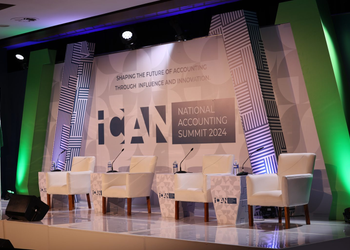
The Institute of Chartered Accountants of Namibia (ICAN) is currently at the forefront of advocating for the implementation of the IFRS Sustainability Disclosure Standards locally.
Numerous resources are also available online from the International Financial Reporting Standards Foundation to guide voluntary adoption and implementation.
For Namibia, a country whose economy depends heavily on natural resources and whose future is deeply tied to climate resilience, the stakes are even higher.
By adopting sustainability reporting and aligning with the IFRS Sustainability Disclosure Standards, local corporates can not only secure their place in global markets but also contribute meaningfully to the country’s development goals and long-term prosperity.
For organizations that may feel uncertain about where to begin, support is available. ICAN is committed to guiding corporates on their sustainability reporting journey—helping them navigate international frameworks, align with global best practices, and build reporting structures that drive both transparency and value creation.
The message is clear: sustainability reporting is not the future—it is the present. The time for Namibian companies to act is now.
* Esther is a qualified Chartered Accountant and a member of the Institute of Chartered Accountants of Namibia (ICAN). She currently serves as the Technical and Finance Manager at ICAN, where she plays a pivotal role in advancing the adoption of the IFRS Sustainability Disclosure Standards in Namibia. In this capacity, she works closely with the Pan African Federation of Accountants (PAFA) Center of Excellence to promote best practices and build capacity for sustainability reporting across the region.