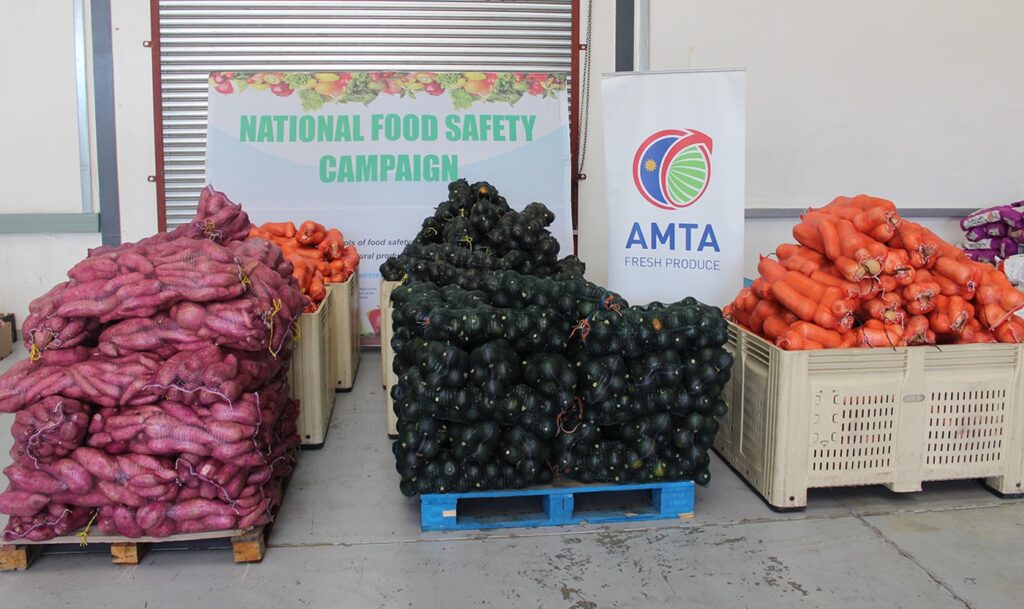
The Agro Marketing and Trade Agency (Amta) has warned that Namibia is producing more food but lacks the agro-processing capacity needed to preserve and market it.
Amta’s Monitoring and Evaluation Officer, Harbie Myambo, said the shortage of facilities is leading to waste, limiting farmers’ earnings, and slowing efforts to achieve food security and industrialisation.
“The young farmers they’ve got potential. But as government we do not have enough capacity. We do not develop enough capacity in terms of value addition and agro processing. So that is the reality in the field,” Myambo said.
He pointed to tomatoes as an example.
“A farmer produces you know two tons of tomatoes. They come to Amta. There is no market because we are competing with the private sector. As a public entity of government we sit there and things go bad,” he explained.
Myambo added that value chains must be strengthened.
“Linking primary production with agro processing and value addition is key in terms of employment, in terms of poverty alleviation. It will even address the issue of rural to urban migration,” he said.
Agriculture Minister Inge Zaamwani-Kamwi confirmed that agro-processing is central to government strategy. “Indeed agriculture is the number one priority in NDP6. And as such it requires all of us to participate in ensuring that we increase food production, that we enhance productivity, and to ensure that agriculture continues to contribute to our GDP,” she said.
Zaamwani-Kamwi said government will set up new infrastructure and bring young people into the sector.
“There is also room for their participation in the new industry that is listed in the NDP six in terms of agro processing. We are required to set up 14 agro processing facilities in all the regions. And as we set those up, obviously we’ll have good morning of young people involved in those,” she added.
She also stressed that new trade deals are opening markets for Namibian products.
“We then sign protocols, trade protocols with several countries. Specifically we have signed recently with China. We have protocol with the Middle East for certain products. We have agreements to access the US market, the European markets, and through those agreements that we have then our farmers have access to those international markets,” Zaamwani-Kamwi said.