Thursday, September 10, 2026
Subscribe
The Brief | Namibia's Leading Business & Financial News
  • Home
  • Companies
    • Finance
    • Agriculture
    • Technology
    • Property
    • Trade
    • Tourism
  • Business & Economy
  • E-PAPERreader
  • Mining & Energy
  • Opinions
    • Analysis
    • Columnists
  • Africa
No Result
View All Result
The Brief | Namibia's Leading Business & Financial News
  • Home
  • Companies
    • Finance
    • Agriculture
    • Technology
    • Property
    • Trade
    • Tourism
  • Business & Economy
  • E-PAPERreader
  • Mining & Energy
  • Opinions
    • Analysis
    • Columnists
  • Africa
No Result
View All Result
The Brief | Namibia's Leading Business & Financial News
Subscribe
No Result
View All Result
Home Companies Agriculture

Namibia to import 333,000 tonnes of cereals in 2024/25 to meet demand

by editor
March 11, 2025
in Agriculture
5
A A

Namibia will need to import an estimated 333,000 tonnes of cereal for the 2024/25 marketing year, as domestic production remains insufficient to meet demand, according to the Food and Agriculture Organisation (FAO).

FAO highlighted that the country will need to import 105,000 tonnes of wheat, 22,000 tonnes of rice, and 206,000 tonnes of coarse grains.

“Per capita consumption is projected at 114kg per year, consisting of 41kg of wheat, 8kg of rice, and 65kg of coarse grains,” noted FAO.

This comes as domestic cereal availability is expected to reach 105,000 tonnes, comprising 85,000 tonnes from production and a 20,000-tonne stock drawdown.

FAO’s recent data highlights that the cereal supply and demand balance for the 2024/25 marketing year (May-April) highlights a significant dependence on imports due to declining domestic production.

“Total domestic cereal availability is projected at 105,000 tonnes, consisting of 85,000 tonnes from production and a 20,000-tonne stock drawdown,” said FAO. 

The country’s wheat production is expected to reach 20,000 tonnes, while coarse grain production is estimated at 65,000 tonnes.

“Total cereal utilisation is projected at 438,000 tonnes, with food consumption accounting for 344,000 tonnes, including 125,000 tonnes of wheat, 23,000 tonnes of rice, and 196,000 tonnes of coarse grains,” FAO data reveals. 

Meanwhile, non-food uses, such as animal feed and industrial purposes, are expected to consume 91,000 tonnes, with the majority being coarse grains (88,000 tonnes). 

Exports are minimal at 3,000 tonnes, and no stock build-up is anticipated.  

Moreover, a comparison with previous years reveals a sharp decline in production as total cereal production for 2024 is estimated at 85,000 tonnes, which is only 61% of the five-year average of 139,000 tonnes. 

“While wheat production has increased by 38% compared to the five-year average (14,000 tonnes), coarse grain production has plummeted to just 52% of the five-year average (125,000 tonnes),” FAO revealed.

In contrast, the previous year’s total production was significantly higher at 155,000 tonnes, including 30,000 tonnes of wheat and 125,000 tonnes of coarse grains.  

Import requirements have risen compared to previous years, with total imports for 2024/25 expected to be 5% higher than the five-year average of 317,000 tonnes.

While wheat imports (105,000 tonnes) are slightly lower than the five-year average (112,000 tonnes), rice imports (22,000 tonnes) remain unchanged. 

Coarse grain imports, however, have increased by 13% from the five-year average of 183,000 tonnes, primarily due to reduced domestic production.

“Compared to the previous year, total import requirements have increased from 267,000 tonnes to 333,000 tonnes, with wheat imports rising from 90,000 tonnes, rice imports decreasing slightly from 26,000 tonnes, and coarse grain imports surging from 151,000 tonnes,” said FAO.


author avatar
editor
See Full Bio
Previous Post

Namibia’s cattle sales plunge by 49.1% in January

Next Post

NaCC to overhaul fines, targets new rules for green hydrogen and AI

Must Read

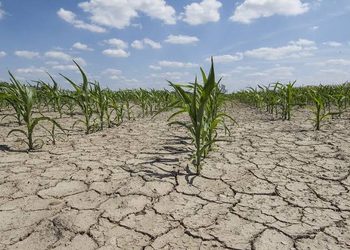
Young corn plants growing in a cracked, dry field under a blue sky, showing drought stress.
Agriculture

Namibia faces agriculture, water and energy pressure as dry 2026/27 season looms

September 7, 2026
Workers in hard hats and gloves stretch a large gray fabric over a worktable in an industrial textile setting.
Agriculture

Meatco targets EU, Asian markets for Namibian leather

September 2, 2026
Namibia among countries seeing modest recovery in cereal output
Agriculture

Namibia’s 2026 cereal output forecast at 155,000 tonnes

September 1, 2026
Professional portrait of a smiling man in a dark suit and blue tie against a white background with glasses on.
Agriculture

LLPBN officially appoints Vehaka Tijimune as CEO

August 31, 2026
Namibia slaughtered over 14 million chickens by end of September
Agriculture

Namibia’s poultry output forecast to rise 13.8% to 3.81 million kg

August 28, 2026
Namibia’s beef exports plunge nearly 50% in Q2
Agriculture

Govt targets Q1 2027 reopening of Oshakati abattoir

August 25, 2026
Load More

Related News

FNB Namibia crowned Namibia’s Bank of the Year

FNB Namibia crowned Namibia’s Bank of the Year

July 19, 2023
Financial planning for Namibia’s millennials

Financial planning for Namibia’s millennials

March 28, 2024
Digital future stalled by old-school thinking

Speed humps on a highway: A costly fix for a planning failure

June 10, 2026

Browse by Category

  • Africa
  • Agriculture
  • Analysis
  • Business & Economy
  • Columnists
  • Companies
  • e-edition
  • Finance
  • Finance
  • Fisheries
  • Green Hydrogen
  • Health
  • Investing
  • Latest
  • Market
  • Mining & Energy
  • namibia
  • Namibia
  • News
  • Opinions
  • Property
  • Retail
  • Technology
  • Tourism
  • Trade
The Brief | Namibia's Leading Business & Financial News

The Brief is Namibia's leading daily business, finance and economic news publication.

CATEGORIES

  • Business & Economy
  • Companies
    • Agriculture
    • Finance
    • Fisheries
    • Health
    • Property
    • Retail
    • Technology
    • Tourism
    • Trade
  • e-edition
  • Finance
  • Green Hydrogen
  • Investing
  • Latest
  • Market
  • Mining & Energy
  • namibia
  • News
    • Africa
    • Namibia
  • Opinions
    • Analysis
    • Columnists

CONTACT US

Cell: +264814612969

Email: newsdesk@thebrief.com.na

© 2026 The Brief | All Rights Reserved. Namibian Business News, Current Affairs, Analysis and Commentary

Welcome Back!

Login to your account below

Forgotten Password?

Retrieve your password

Please enter your username or email address to reset your password.

Log In
No Result
View All Result
  • Home
  • Companies
  • Mining & Energy
  • Business & Economy
  • Opinions
    • Analysis
    • Columnists
  • Africa

© 2026 The Brief | All Rights Reserved. Namibian Business News, Current Affairs, Analysis and Commentary

This website uses cookies. By continuing to use this website you are giving consent to cookies being used. Visit our Privacy and Cookie Policy.