Namibia’s long-term development goals, including Vision 2030, the National Development Plans (NDPs), and the Harambee Prosperity Plans (HPPs), are being hindered by policy inconsistencies and gaps in implementation, economic analysts have warned.
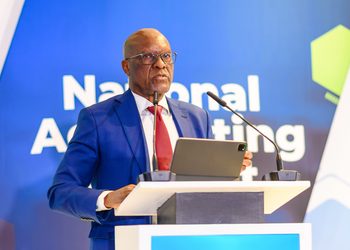
Speaking at a high-level panel discussion hosted by the Economic Association of Namibia (EAN) on Tuesday, Economist and Managing Director of High Economic Intelligence, Salomo Hei, criticized the lack of continuity in the country’s development strategy.
“We are constantly changing the goalpost. We had the National Development Plans as our anchor strategy, then moved to the Harambee Prosperity Plan One and Two. Before we could fully implement HPP II, we shifted focus again to the energy transition and green hydrogen ambitions,” Hei said.
Hei noted that a review of NDP5 or NDP6 reveals a scattered focus, emphasizing that “we are pursuing too many initiatives without completing those already underway.”
He also questioned whether Namibia is equipped to handle frequent shifts in strategic focus without undermining long-term planning.
“I don’t think a 35-year-old adult is still in the process of finding themselves. Namibia must be clear on its identity and direction. We can’t keep resetting and reinventing the wheel every five years. We need strategic patience and institutional discipline to follow through with the development plans we commit to,” he said.
Hei further warned against over-reliance on the national budget as the primary tool for economic transformation.
“We should not see the budget as the sole instrument for transforming the Namibian economy. It is only one tool among many. Structural transformation needs to be driven by policy clarity, investment incentives, infrastructure, and a clear framework for how private and public sectors can collaborate meaningfully,” he said.
Regarding extractive industries, Hei stressed the importance of ensuring that large-scale developments benefit Namibians directly.
“TotalEnergies said $45 billion worth of subsea contracts are about to come on stream. But to what extent have we ensured that Namibian companies, workers, and communities will benefit from that? There must be clear policy articulation on how local content is defined, measured, and enforced,” he said.
He argued that economic transformation should be deliberate and rooted in ownership.
“If an Exclusive Prospecting Licence is owned by Namibians, then the value chain from that asset should remain in Namibia. We should not be in a situation where ownership exists only on paper while the real benefits leak out of the economy. It must be deliberate and traceable,” Hei said.
Also speaking at the event, Floris Bergh, Chief Economist at Capricorn Asset Management, urged fiscal restraint as Namibia’s new administration takes office.
“It is truly a balancing act. The expectations are extremely high, and the pressure to deliver is real. But we must be honest with ourselves, the income is not endless. We need to build a culture of fiscal discipline that matches the scale of our ambition,” he said.
Bergh also cautioned against unsustainable increases in government spending to meet growing demands.
“Just throwing another N$17 billion onto the budget each year without expanding the economic base is unsustainable. There’s a limit to what GDP can carry, as typically, governments can extract only about 25% of GDP as revenue before they start hurting the very economy they’re trying to grow. We need to be extremely careful not to cross that line,” he said.
The panel discussion, themed “Balancing Growth and Social Upliftment: The National Budget in a New Dispensation,” was organized by the Economic Association of Namibia in partnership with Capricorn Group, the Hanns Seidel Foundation Namibia, and High Economic Intelligence.
The discussion comes as Namibia’s new cabinet, appointed earlier this month, prepares for its first major fiscal policy announcement. Ericah Shafudah, the new Minister of Finance and Social Grants Management, is expected to deliver the national budget for the 2025/2026 fiscal year on Thursday.