By Kondjeni Ndakeva
Public opinion surveys have long been a keystone of informed decision-making in most countries all over the world.
Countries like South Africa, the United States, the United Kingdom, France, etc. view surveys as fundamental to media reporting.
These tools have offered, and still offer, up-to-the-minute knowledge on public perceptions on economic, political, and social matters. Yet, in Namibia they remain underutilized, leaving a big information gap that hinders effective governance and citizen engagement.
The role of surveys in public discourse
During the lead-up to the USA elections in 2024, organisations such as Gallup and media outlets like CNN facilitated polling on a daily basis to gauge public perceptions on presidential candidates and on critical issues.
On the one hand, tools like “approval ratings” measure the public perception in relation to their leaders to show how the leadership decisions correspond with people’s expectations.
Closer to home, countries like South Africa have embraced public opinion surveys through Afrobarometer. A non-partisan organisation that conducts research on political, economic, and social issues.
These data have even accurately predicted the election outcomes in South Africa. Despite its presence in Namibia, Afrobarometer’s impact has been limited as its findings are less frequent and rarely spark sustained national discussions in the country.
Missed opportunities
In Namibia, the absence of consistent, credible surveys on critical issues is a glaring gap. For instance, during the 2024 elections, there were no reliable polls accessible to assess public opinion of parties’ manifestos or presidential candidates. Because of this dearth of information, certain media outlets and the general public were in the dark and relied on speculations and anecdotal evidence.
Institutions like the Institute for Public Policy Research (IPPR), on the other hand, have made commendable efforts to publish research on a variety of topics; nevertheless, their scope was frequently broad, focusing on more general themes rather than current, trending issues that are of national interest.
In the meanwhile, informal internet surveys run by some media houses such as The Namibian and Windhoek Times had a small audience, and they were not rigorous enough to influence meaningful discourse.
Social media, a double-edged sword
While social media platforms like Facebook and X offer a forum for debate, they frequently magnify the loudest or most powerful voices and support biased opinions. These conversations run the risk of skewing public opinion in the absence of the stabilising influence of reliable evidence based on data.
Viral social media campaigns, for instance, might prioritize sensationalism over substance, disregarding nuanced discussions of critical national concerns.
A road map for Namibia
Namibia stands to benefit immensely from adopting a culture of regular public surveys. To bridge this information gap, Namibia must adopt a culture of regular public opinion surveys.
Simple, inexpensive internet surveys are a good place for media outlets, non- governmental organisations, and other organisations to start when assessing public opinion. Online surveys are a positive start, even though they might not include populations without internet access. Building credibility and capacity can also be facilitated by cooperation with private and academic organisations, both domestically and abroad.
Why surveys matter
Public opinion surveys are not just for collecting data but vital instruments for accountability and citizen empowerment. They detail people’s preferences, worries, and help policymakers better align their activities with the requirements of the populace.
For media organisations, access to credible data enhances reporting on elections, governance, and social issues. Ultimately, surveys drive meaningful change by providing a foundation for transparent and informed national conversations.
Namibia’s media houses, civil society and academic institutions must step up to bridge the information gap. By prioritising credible surveys, they can empower citizens, foster accountability, and transform how we discuss and address national issues. It’s time to embrace data-driven dialogue as a tool of democracy.
Compliments of the New Year!
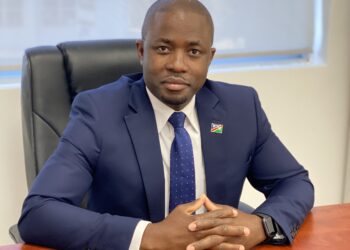
*Kondjeni Ndakeva is a Data Scientist, Software Developer and Database Administrator with a master’s degree in data science. He is passionate about leveraging data to drive impactful decisions and enhance democratic accountability in Namibia.