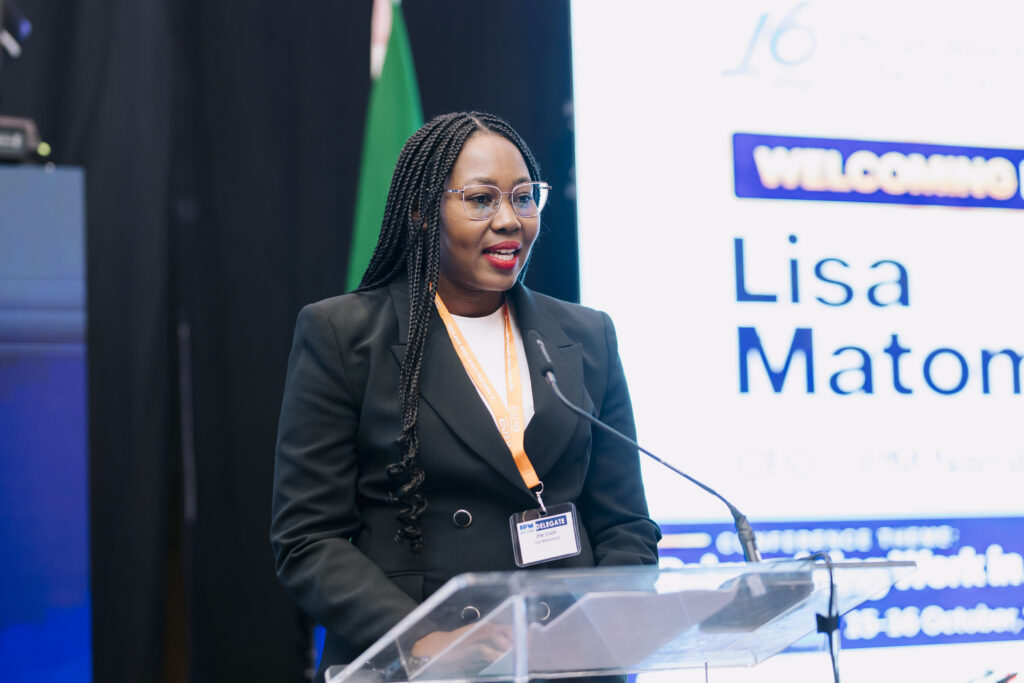
By Lisa Matomola
In my previous article, I encouraged graduates not to overlook SMEs when looking for their first job. That encouragement comes with a condition, and it applies to everyone on the payroll.
Through my work as an HR consultant, I have worked with large corporations, government institutions and SMEs. One thing is constant: every organisation, whatever its size, needs professional employees to succeed.
There is a concern that deserves attention precisely because we are steering more young people towards smaller employers. Some employees do not take their jobs seriously because they work for a small business.
SME founders raise this with me often. They describe employees who arrive late, miss deadlines, ignore instructions, show little accountability and, at times, openly disrespect the people who gave them a job. Some treat workplace rules as optional. They take advantage of the flexibility small businesses offer and mistake an approachable founder for one who cannot hold them accountable.
To be fair, many SME employees work hard and take real pride in it. But the exceptions do damage, both to the business and to their own long-term employability.
Professionalism has nothing to do with the size of your employer
Your work ethic should never be determined by the size, reputation or financial strength of the organisation that employs you.
Whether you work for a multinational, a government institution, a family-owned business or an SME with three employees, the expectations are the same. Arrive on time. Honour your commitments. Respect your colleagues. Meet deadlines. Communicate professionally. Take responsibility for your performance.
A small employer does not mean small responsibilities.
Unfortunately, some employees save their best behaviour for organisations with big names, formal structures, impressive offices and attractive packages. But professionalism is not a switch you flip when you walk into a corporate building. It is a habit, a personal standard and part of your professional identity.
If you cannot respect deadlines in an organisation of five, what makes you believe you will suddenly become accountable in an organisation of 500?
The habits you build today will follow your career
One of the greatest mistakes employees make is assuming that their behaviour in their current job has no bearing on future opportunities.
Having worked extensively in recruitment and career coaching, I can tell you that technical qualifications alone do not determine employability. Employers also look for reliability, accountability, integrity, initiative, emotional intelligence and the ability to work with others. These skills are built and demonstrated through everyday behaviour.
When you consistently arrive late, delay assignments, ignore feedback or show disrespect towards authority, you are building habits that become harder to change. And habits have consequences. You may leave an SME for a larger organisation, but the poor habits will leave with you.
Remember, Namibia is a relatively small professional market. Your reputation travels. The person you disrespect today may be the one called for a reference tomorrow. The founder whose business you did not take seriously may know someone on your next interview panel.
Never underestimate the influence of the people you work with, regardless of the size of their businesses.
Your conduct can decide whether an SME grows or closes
We often talk about SMEs in terms of entrepreneurship, access to finance, markets and economic development. We pay less attention to the role employees play in whether these businesses survive.
Imagine a founder who has invested personal savings, taken financial risks and worked tirelessly to build a business. Clients begin to arrive and jobs are created. Then employees repeatedly miss deadlines, serve customers poorly, ignore instructions and show little commitment to quality.
What happens next? Clients become dissatisfied. Contracts are lost. The company’s reputation suffers. Revenue declines, and the business struggles to sustain its workforce. Meanwhile, the founder spends more time supervising people than growing the business. That is not sustainable.
An employee’s lack of professionalism therefore reaches well beyond their own performance. It affects the livelihoods of colleagues, the survival of the business and its ability to create more jobs. In a country where unemployment remains a significant challenge, we cannot afford to overlook that.
When you work for an SME, you are not simply occupying a position. You are helping sustain a business that could employ more Namibians tomorrow.
SME founders must professionalise too
Employees must take responsibility for their conduct, but founders cannot escape their own leadership responsibilities. Professionalism is a two-way street.
Some founders expect professional behaviour while running businesses with no clear policies, job descriptions, performance expectations or workplace standards. Others manage by personal relationships, mood or informal arrangements that blur accountability. That must change.
An SME may be small, but it still needs a defined culture. In practice, that means:
- Values that guide how people behave, communicate and serve clients.
- Clear expectations from the day an employee joins.
- Defined reporting lines, responsibilities and reasonable deadlines.
- Consistent performance management, with feedback, recognition and coaching, not only conversations when something goes wrong.
Founders must also lead by example. You cannot demand punctuality while arriving late to your own meetings. You cannot demand respect while humiliating employees or disregarding their rights.
The size of your business does not exempt you from being a responsible employer.
Building Namibia’s workforce is a shared responsibility
As I argued in my previous article, one of the greatest things an SME can offer is exposure: the chance to perform different functions, take part in decisions, deal directly with clients and see how a business really runs. But exposure alone is not enough. Founders must invest deliberately in training, coaching and mentoring.
Namibia continues to produce graduates who enter a labour market where qualifications do not always translate into workplace-ready skills. That gap is an opportunity for SMEs to become real contributors to skills development.
I have seen young professionals grow when given responsibility, guidance and meaningful exposure. Some arrive with limited practical experience and leave with confidence, stronger technical capabilities and a clear understanding of professional expectations.
SMEs also matter well beyond the income they generate for their founders. They support job creation, entrepreneurship, innovation, skills development and economic participation, all of which feed Namibia’s national development priorities.
That potential depends on commitment from both sides. When founders invest in professional systems, fair employment practices and development, they build stronger organisations. When employees bring professionalism, accountability and commitment, they raise efficiency, client satisfaction and growth.
Together, these behaviours build the reputation of the business and the trust of its clients. A professional SME is more likely to retain customers, win opportunities and compete effectively.
Closing reflection
I want to challenge both employees and SME founders.
To employees: do not wait until you work for a big company to become a professional. The discipline, integrity, accountability and work ethic you show today are preparing you for tomorrow’s opportunities. Do not look down on your employer because the organisation is small. The opportunity in front of you may become the foundation of a successful career.
To SME founders: build businesses where professionalism is not negotiable, but where employees are also respected, supported, trained and developed. Create cultures that encourage accountability without compromising dignity. Your responsibility extends beyond making a profit. You are helping shape Namibia’s workforce.
A small business should never mean small standards, and a small job should never mean small commitment.
Your work ethic is your personal brand. Protect it, wherever you work.
Lisa Matomola is the Managing Consultant of Hito HR and Training Consultants and IPM Namibia CEO