Saturday, August 22, 2026
Subscribe
The Brief | Namibia's Leading Business & Financial News
  • Home
  • Companies
    • Finance
    • Agriculture
    • Technology
    • Property
    • Trade
    • Tourism
  • Business & Economy
  • E-PAPERreader
  • Mining & Energy
  • Opinions
    • Analysis
    • Columnists
  • Africa
No Result
View All Result
The Brief | Namibia's Leading Business & Financial News
  • Home
  • Companies
    • Finance
    • Agriculture
    • Technology
    • Property
    • Trade
    • Tourism
  • Business & Economy
  • E-PAPERreader
  • Mining & Energy
  • Opinions
    • Analysis
    • Columnists
  • Africa
No Result
View All Result
The Brief | Namibia's Leading Business & Financial News
Subscribe
No Result
View All Result
Home Companies Agriculture

Understanding the Generalised System of Preferences (GSP) beef quota and its impact on the Namibian beef industry

by editor
February 6, 2024
in Agriculture
6
A A

An article published last month in the Norwegian media reveal plans for that country’s Minister of Agriculture to review African Meat quotas in the Norwegian market. 

The Norwegian General System of Preference (GSP) scheme provides exporters from developing countries such as Namibia and Botswana a duty relief when exporting goods to the EU, such as beef.

Namibia and Botswana currently enjoy preferential market access for beef in the Norwegian market through annual quotas under the Generalised System of Preferential of 2,700 tonnes. Thus, each country gets 1,350 and an additional 250 tonnes per country under the SACU- European Free Trade Association (EFTA), making it 1,600 tonnes for each country yearly.

Now, what is triggering the Minister of Agriculture to review this is that there have been new EU regulations that ensure Norwegian meat companies, such as those owned by farmers’ cooperatives, receive favourable meat prices from African meat companies. 

This has brought about some dynamics in the beef market prices because, instead of meat being brought through quotas from African countries, meat is said to be now imported via the European market at a much more reasonable price.

Unlike other free trade agreements, the GSP-scheme is unilateral. This entails that Norwegian exporters are not granted preferential treatment for their products when exporting to GSP countries.

The Norwegian Minister has thus demanded a review of the changes to see if there is anything that is in conflict with the current agreements between SACU and EFTA.  Some of the meat from SACU is now imported via the EU and at a different price than previously. Trading patterns have thus been believed to have changed.

It is our wish as Africans that the review will be considerate to the African countries, more so Namibia and Botswana.

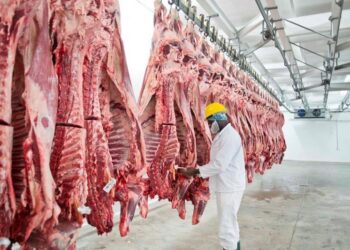
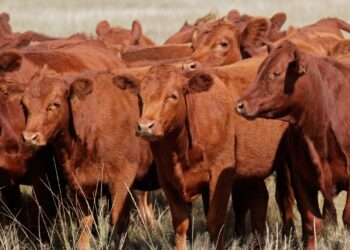
The Norway quota means a lot to Namibian farmers, although more so to the Commercial farmers because they are able to comply with stringent export abattoir requirements that adhere to market specifications of that specific market. Namibia and Botswana each hold over two million herd of cattle, and where small-scale communal production is an important livelihood for the majority of farmers engaged in livestock. 

While both countries have made significant investments in their  animal husbandry through strong systems and laws such as the Prevention of Undesirable Residue in Meat Act and the Livestock and Livestock Products Act, to mention a few, to access lucrative markets in the European Union and Norway, the generalised system of preference that facilitates this quota is becoming competitive.

Namibia has, over the years, consistently maintained its eligibility for exporting high-value cuts to Norway and demonstrated its capacity to fill the allocated quota, thereby maximising the much-needed foreign exchange earnings that the country needs.

The GSP-scheme has been implemented for about 90 countries and territories, of which 35 are ranked among the Least Developed Countries (LDCs). These countries benefit from better terms than other countries included in the system, the so-called GSP+ or ordinary GSP-countries.

All goods exported from an LDC are duty-free when imported into Norway.  As a main rule, goods from a GSP country are sent upon request by an identified Norwegian importer (a Norwegian consignee) directly from the GSP country to Norway. However, goods may be transported via a consignee in EU on the condition that they have remained under customs surveillance during transit or storage.

*Rosa Hamukuaja Thobias is a Researcher, Strategist, Entrepreneur and Communication Strategist. This article is written in her personal capacity.


author avatar
editor
See Full Bio
Previous Post

Namibia’s fuel prices for February cut by 4 cents

Next Post

FirstRand Namibia appoints Vekondja Kuzee as Chief Information Officer

Must Read

Standard Bank Namibia backs blueberry project with N$40 million
Agriculture

El Niño is not the real risk. Unpreparedness is

August 21, 2026
Namibia’s sheep marketing surges as exports to South Africa drive livestock trade
Agriculture

Namibia markets 68,233 sheep in July, live exports account for 87%

August 21, 2026
Exterior view of Agribank Namibia storefront with glass doors and blue logo on white wall under a grid-pattern overhang
Agriculture

Northern farmers secure Agribank financing for 13 agricultural projects

August 21, 2026
Group of cows crowded in metal pens at a livestock yard, beige and brown coats visible under bright daylight
Agriculture

Weaner demand drives 152% jump in Namibia live cattle exports

August 20, 2026
Herd of reddish-brown cattle standing on a dusty, sunlit savanna with sparse trees in the background.
Agriculture

Namibia’s live cattle exports surge 56% in June

August 19, 2026
Green tractor with large yellow wheels on a flat farm field under a bright blue sky
Agriculture

Agriculture Ministry launches drive to repair 508 tractors ahead of cropping season

August 18, 2026
Load More

Related News

Smiling man wearing glasses and a blue shirt, holding a microphone while speaking at an outdoor event.

Governor warns bureaucracy, land scarcity slowing Khomas housing delivery

July 15, 2026
Namibia removed from global hunger hotspot list

Namibia removed from global hunger hotspot list

July 4, 2025
Namibia flags water risks, seeks dam commitment before backing Lesotho water project

Namibia flags water risks, seeks dam commitment before backing Lesotho water project

February 4, 2026

Browse by Category

  • Africa
  • Agriculture
  • Analysis
  • Business & Economy
  • Columnists
  • Companies
  • Finance
  • Finance
  • Fisheries
  • Green Hydrogen
  • Health
  • Investing
  • Latest
  • Market
  • Mining & Energy
  • Namibia
  • namibia
  • News
  • Opinions
  • Property
  • Retail
  • Technology
  • Tourism
  • Trade
The Brief | Namibia's Leading Business & Financial News

The Brief is Namibia's leading daily business, finance and economic news publication.

CATEGORIES

  • Business & Economy
  • Companies
    • Agriculture
    • Finance
    • Fisheries
    • Health
    • Property
    • Retail
    • Technology
    • Tourism
    • Trade
  • Finance
  • Green Hydrogen
  • Investing
  • Latest
  • Market
  • Mining & Energy
  • namibia
  • News
    • Africa
    • Namibia
  • Opinions
    • Analysis
    • Columnists

CONTACT US

Cell: +264814612969

Email: newsdesk@thebrief.com.na

© 2026 The Brief | All Rights Reserved. Namibian Business News, Current Affairs, Analysis and Commentary

Welcome Back!

Login to your account below

Forgotten Password?

Retrieve your password

Please enter your username or email address to reset your password.

Log In
No Result
View All Result
  • Home
  • Companies
  • Mining & Energy
  • Business & Economy
  • Opinions
    • Analysis
    • Columnists
  • Africa

© 2026 The Brief | All Rights Reserved. Namibian Business News, Current Affairs, Analysis and Commentary

This website uses cookies. By continuing to use this website you are giving consent to cookies being used. Visit our Privacy and Cookie Policy.