Friday, August 21, 2026
Subscribe
The Brief | Namibia's Leading Business & Financial News
  • Home
  • Companies
    • Finance
    • Agriculture
    • Technology
    • Property
    • Trade
    • Tourism
  • Business & Economy
  • E-PAPERreader
  • Mining & Energy
  • Opinions
    • Analysis
    • Columnists
  • Africa
No Result
View All Result
The Brief | Namibia's Leading Business & Financial News
  • Home
  • Companies
    • Finance
    • Agriculture
    • Technology
    • Property
    • Trade
    • Tourism
  • Business & Economy
  • E-PAPERreader
  • Mining & Energy
  • Opinions
    • Analysis
    • Columnists
  • Africa
No Result
View All Result
The Brief | Namibia's Leading Business & Financial News
Subscribe
No Result
View All Result
Home Business & Economy

Namibia confronts World Bank on lending rates

by editor
November 7, 2023
in Business & Economy, Finance
11
A A

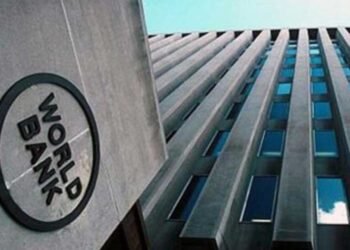
The government has challenged the World Bank over its interest rates, saying they are too high for developing and small countries like Namibia.

Prime Minister Saara Kuugongelwa-Amadhila said there is a need to address “unjust interest” charged to borrowing members, including the issue of developed nations being charged less, while the underdeveloped and middle class are charged more. 

“This drains nations in the long term after repaying the loan. In fact, the interest rates are in US dollar denomination, which makes it even worse on our economies, thus affecting our ability to repay, and in cases where debt relief is given, one still fails to honour the payment, because it is just too much,” she said. 

“Some of the developed nations were able to recognise the special challenge that Namibia is faced with, that is why they came here with developmental programmes such as the United States Millenium Challenge Account and USAID, knowing that we are an upper middle income and won’t qualify for donor funding and so forth,” said Kuugongelwa-Amadhila. 

The World Bank’s Regional Vice President for Eastern and Southern Africa, Victoria Kwakwa, disputed the interest rate but acknowledged that there is a need to review policies and broaden the funding criteria beyond just the GDP per capita indicator. 

Kwakwa told President Hage Geingob that the World Bank no longer imposes conditions on loans, grants, or concessional loans it offers, in terms of what projects are to be funded and how to implement them.

Instead, the Bank’s Vice President for Eastern and Southern Africa, said they have modified their approaches by working based on priorities the receiving countries have set. 

“I can also agree with you that the state of income does not measure well the economic status of a country. It is unfortunate that there are no comprehensive indicators to be used to measure other underlying factors. However, the Bank is entering a new revolution, in which we are looking at offering concessional loans to upper-income countries that do not qualify to receive grants or soft loans, but do make global contributions,” she said.

This comes following a meeting with President Hage Geingob at State House who also repeatedly asked during an engagement whether the World Bank has reviewed its classification of countries. 

“Have you reviewed your conditions? There is a need to change how you rate countries, how can Namibia be classified as a rich country whereas the majority are disadvantaged and only a few groups are rich? How fair can that be?” he questioned.

“Our country is battling poverty, unemployment and also having come from a dark past of apartheid, therefore, these are some of the factors you should also consider instead of just dividing GDP against the population. That is not a fair representation,” Geingob said. 

In turn, Kwakwa acknowledged that some policies back in the years were stringent, but over time the World Bank has listened, learned and made adjustments.

Namibia is a higher-middle-income country according to the World Bank classification, with an estimated annual GDP per capita of US$5,828 but has extreme inequalities in income distribution and standard of living.

The classification has disadvantaged Namibia, as it does not qualify for grants and soft loans since it is regarded as a rich country, which is not a true reflection on the ground.

author avatar
editor
See Full Bio
Previous Post

Electricity, salaries dominate Windhoek’s N$5bn budget 

Next Post

Oil, green hydrogen benefits only long term – World Bank

Must Read

Momentum Metropolitan unveils rooftop solar project at Windhoek HQ
Finance

Momentum Metropolitan Namibia named Group’s top Africa life company for third year

August 21, 2026
Front entrance of the Ministry of Finance, with a large sign reading 'MINISTRY OF FINANCE FISCUS BUILDING' above glass doors.
Business & Economy

Namibia expands public procurement rules to over 80 additional entities

August 19, 2026
Professional headshot of a smiling man in a dark suit and white shirt against a light background.
Finance

RMB Namibia appoints Tim von Hase as Head of Trade and Treasury Solutions

August 17, 2026
Professional portrait of a man in a blue blazer and white shirt, smiling slightly, facing the camera against a neutral textured background.
Finance

Standard Bank Namibia appoints Jerome Namaseb as Personal & Private Banking Executive

August 17, 2026
Diverse group of people posing outside a glass-front building for a community event, several wearing sashes and smiling at the camera.
Business & Economy

Standard Bank connects 60 Namibian SMEs to buyers, new markets

August 16, 2026
Standard Bank posts N$556.9m six-month profit, up 10%
Finance

SBN Holdings profit rises 4.1% to N$580m in six months

August 14, 2026
Load More

Related News

SA energy fund to provide emergency jet fuel for Joburg airport – Acsa

SA energy fund to provide emergency jet fuel for Joburg airport – Acsa

May 10, 2022
Why Humility Is the New Competitive Advantage in Leadership

Live with passion. Live with purpose

April 2, 2026
When AI crashes the billboard party: A business beat worth watching

When AI crashes the billboard party: A business beat worth watching

November 27, 2025

Browse by Category

  • Africa
  • Agriculture
  • Analysis
  • Business & Economy
  • Columnists
  • Companies
  • Finance
  • Finance
  • Fisheries
  • Green Hydrogen
  • Health
  • Investing
  • Latest
  • Market
  • Mining & Energy
  • Namibia
  • namibia
  • News
  • Opinions
  • Property
  • Retail
  • Technology
  • Tourism
  • Trade
The Brief | Namibia's Leading Business & Financial News

The Brief is Namibia's leading daily business, finance and economic news publication.

CATEGORIES

  • Business & Economy
  • Companies
    • Agriculture
    • Finance
    • Fisheries
    • Health
    • Property
    • Retail
    • Technology
    • Tourism
    • Trade
  • Finance
  • Green Hydrogen
  • Investing
  • Latest
  • Market
  • Mining & Energy
  • namibia
  • News
    • Africa
    • Namibia
  • Opinions
    • Analysis
    • Columnists

CONTACT US

Cell: +264814612969

Email: newsdesk@thebrief.com.na

© 2026 The Brief | All Rights Reserved. Namibian Business News, Current Affairs, Analysis and Commentary

Welcome Back!

Login to your account below

Forgotten Password?

Retrieve your password

Please enter your username or email address to reset your password.

Log In
No Result
View All Result
  • Home
  • Companies
  • Mining & Energy
  • Business & Economy
  • Opinions
    • Analysis
    • Columnists
  • Africa

© 2026 The Brief | All Rights Reserved. Namibian Business News, Current Affairs, Analysis and Commentary

This website uses cookies. By continuing to use this website you are giving consent to cookies being used. Visit our Privacy and Cookie Policy.