Friday, August 21, 2026
Subscribe
The Brief | Namibia's Leading Business & Financial News
  • Home
  • Companies
    • Finance
    • Agriculture
    • Technology
    • Property
    • Trade
    • Tourism
  • Business & Economy
  • E-PAPERreader
  • Mining & Energy
  • Opinions
    • Analysis
    • Columnists
  • Africa
No Result
View All Result
The Brief | Namibia's Leading Business & Financial News
  • Home
  • Companies
    • Finance
    • Agriculture
    • Technology
    • Property
    • Trade
    • Tourism
  • Business & Economy
  • E-PAPERreader
  • Mining & Energy
  • Opinions
    • Analysis
    • Columnists
  • Africa
No Result
View All Result
The Brief | Namibia's Leading Business & Financial News
Subscribe
No Result
View All Result
Home Companies Agriculture

The basic understanding of “livestock-environment-management” interaction

by editor
April 27, 2022
in Agriculture
5
A A

Livestock farming enterprise objectives are aimed at increasing and sustaining production, which in turn, exerts pressure on the animal’s physiological abilities to perform.

These performance aspects include reproduction, health, feed conversion, and general adaptability amongst others.

The productivity of a livestock farm depends on three factors, namely, the environment, the animal, and the applied management regime. When these factors are separated at any time, the animal’s productive potential may noticeably be compromised to some degree. Further, the role of each of these factors in determining productivity is influenced by various attributes highlighted below.

The animal factor:

The productive ability of the animal is primarily influenced by its genetic make-up or overall, by its breed type. There are different livestock breeds with different structural and physiological abilities which in turn influence their performances in any given environment. The different breeds of animals differ in their abilities to adapt to the environment, feed conversion, and disease resistance amongst others. In addition, personal preferences, and management abilities also influence the breed of choice. However, the main driver of performance is genetic-environmental interaction.

For example, sheep breeds such as the Damara and the Dorper carry different genetic attributes related to adaptability or weight gain that can be used as measures of performance given the production objectives and the environment.

The environmental factor:

The production environment has a significant influence on the animal’s performance. This is primarily attributed to the climatic conditions such as temperature and rainfall, moreover the landscape or topographic features such as mountains and plains, and lastly the availability or quality of the resources such as forage and water.

The animal’s performance and survival are dependent on its ability to withstand or adapt to changes in environmental conditions. However, animals that are native to the environment perform well compared to the non-natives.

Moreover, adaptability is both on spatial and temporal scales. As a result of genetic-environmental interaction, an animal may adjust or adapt to a new environment when exposed to it over time due its genetics being influenced to express adaptive traits. It is also common that the productive potential of non-native animals is compromised, or in extreme cases, succumb to harsh environmental conditions.

The management factor:

A livestock management plan should be based on the production objectives and set targets. Thus, to achieve those, specific activities are expected to be performed. The management regime should be

aimed at harmonizing the interaction of the animal’s genetics with its environment to ensure that the production objectives and targets are achieved. This includes practices such as health maintenance, feed and water provision, and general animal welfare (e.g.,shelter) to ensure that the animal performs optimally. 

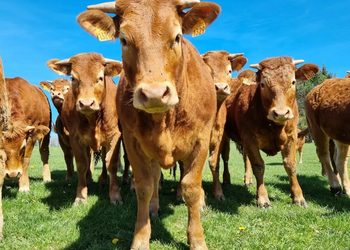
The farming objectives are also influenced by the market which also leads to the introduction of animal breeds that would meet specific market demands, which in turn exerts pressure on the animal and the environment. For example, the demand for heavier slaughter or carcass weights will demand animal breeds with such characteristics (large-framed breeds) which in turn will demand heavy feeding to maintain their production potential. On that, the environment or the grazing area is put under pressure to sustain heavy breeds as compared to lighter breeds, e.g., Limousine versus Nguni cattle.

In conclusion, livestock selection is not an independent practice but should be driven by production objectives and targets, however, the ultimate choice should not compromise the animal’s potential, the environment, and the management abilities but ensure sustainable farm productivity.

*By Erastus Ngaruka is a Technical Advisor: Livestock & Rangeland at Agribank


author avatar
editor
See Full Bio
Previous Post

Mining, renewables to drive 2022 growth – RMB Namibia

Next Post

Here’s what SA’s super-rich studied

Must Read

Group of cows crowded in metal pens at a livestock yard, beige and brown coats visible under bright daylight
Agriculture

Weaner demand drives 152% jump in Namibia live cattle exports

August 20, 2026
Herd of reddish-brown cattle standing on a dusty, sunlit savanna with sparse trees in the background.
Agriculture

Namibia’s live cattle exports surge 56% in June

August 19, 2026
Green tractor with large yellow wheels on a flat farm field under a bright blue sky
Agriculture

Agriculture Ministry launches drive to repair 508 tractors ahead of cropping season

August 18, 2026
Green combine harvester working in a dry cornfield during harvest, dust rising behind it.
Agriculture

Namibia’s 70% food import dependence exposes households to El Niño price shock

August 17, 2026
Savanna Beef secures export approval to UK, EU and EFTA markets
Agriculture

Savanna Beef secures export approval to UK, EU and EFTA markets

April 9, 2026
Namibian beef to feature in 42 German restaurants
Agriculture

Namibian beef to feature in 42 German restaurants

September 18, 2025
Load More

Related News

Namibia secures spot in N$18 billion global decarbonisation programme

Namibia secures spot in N$18 billion global decarbonisation programme

June 16, 2025
Digital future stalled by old-school thinking

Namibia: Stuck in neutral promise without propulsion

November 2, 2025
Shadow AI employees: Why your company needs an AI usage policy

The questions every board should ask before approving any AI tool 

July 29, 2026

Browse by Category

  • Africa
  • Agriculture
  • Analysis
  • Business & Economy
  • Columnists
  • Companies
  • Finance
  • Finance
  • Fisheries
  • Green Hydrogen
  • Health
  • Investing
  • Latest
  • Market
  • Mining & Energy
  • Namibia
  • namibia
  • News
  • Opinions
  • Property
  • Retail
  • Technology
  • Tourism
  • Trade
The Brief | Namibia's Leading Business & Financial News

The Brief is Namibia's leading daily business, finance and economic news publication.

CATEGORIES

  • Business & Economy
  • Companies
    • Agriculture
    • Finance
    • Fisheries
    • Health
    • Property
    • Retail
    • Technology
    • Tourism
    • Trade
  • Finance
  • Green Hydrogen
  • Investing
  • Latest
  • Market
  • Mining & Energy
  • namibia
  • News
    • Africa
    • Namibia
  • Opinions
    • Analysis
    • Columnists

CONTACT US

Cell: +264814612969

Email: newsdesk@thebrief.com.na

© 2026 The Brief | All Rights Reserved. Namibian Business News, Current Affairs, Analysis and Commentary

Welcome Back!

Login to your account below

Forgotten Password?

Retrieve your password

Please enter your username or email address to reset your password.

Log In
No Result
View All Result
  • Home
  • Companies
  • Mining & Energy
  • Business & Economy
  • Opinions
    • Analysis
    • Columnists
  • Africa

© 2026 The Brief | All Rights Reserved. Namibian Business News, Current Affairs, Analysis and Commentary

This website uses cookies. By continuing to use this website you are giving consent to cookies being used. Visit our Privacy and Cookie Policy.