…654 homes targeted in Otjomuise pilot project
PowerCom requires N$375 million over three years to roll out fibre infrastructure capable of reaching 75,000 homes across Namibia, with plans to connect approximately 28,300 households by the end of the investment period.
PowerCom Chief Executive Officer Beatus Amadhila said the proposed investment would require N$125 million annually to extend fibre coverage to 25,000 premises each year under a shared open-access network model.
Speaking at the Government Institutions Pension Fund (GIPF) Pension and Investment Symposium in Windhoek on 12 November, Amadhila said the project would allow multiple internet service providers to use the same infrastructure, reducing duplication and extending broadband access to underserved areas.
“Build a shared access infrastructure, allow service providers to compete over it and release capital in stages as the evidence strengthens,” Amadhila said.
The proposed rollout targets an estimated 207,060 urban households considered potential fibre-to-the-home (FTTH) customers.
The estimate is based on the 2023 Population and Housing Census, which recorded 414,119 urban households, with PowerCom assuming that half could be suitable for fibre connectivity in the short to medium term.
Amadhila said Namibia’s broadband penetration remained below 35%, indicating significant room for investment in fixed broadband infrastructure.
According to Communications Regulatory Authority of Namibia (CRAN) figures cited by PowerCom, Namibia had 56,331 active fibre-based services in March 2026, comprising 46,524 fibre-to-the-home connections and 9,807 fibre-to-the-building services.
The country also had approximately 38,000 copper-based broadband connections.
However, Amadhila cautioned that the potential market would need to be assessed against existing network coverage, household incomes, competing services and consumers’ willingness to pay.
“A national gap gives us a reason to investigate, and verified local demand gives us a basis to invest,” he said.
Under the proposed model, PowerCom would construct and operate the fibre infrastructure, while internet service providers such as Telecom Namibia, MTC and Paratus would be able to offer services to customers through the shared network.
Amadhila said the company would prioritise areas without existing fibre infrastructure to avoid duplicating networks already operated by other telecommunications providers.
“Our strategy is to ensure that we do not go where we already have operators. Our strategy is to go into areas where there is no fibre laid at all,” he said.
PowerCom estimates that extending fibre infrastructure past each home would cost approximately N$5,000, while connecting a customer would require an additional N$3,000, excluding end-user equipment.
The company projects approximately 5,800 active connections by the end of the first year, generating N$2.6 million in monthly wholesale revenue.
By the second year, active connections are projected to increase to 15,800, generating N$7.1 million monthly, before reaching 28,300 connections and N$12.8 million in monthly wholesale revenue by the end of the third year.
The projections assume average wholesale revenue of N$450 per active connection per month and customer uptake of approximately 38% of homes passed by the third year.
Amadhila stressed that the figures represented illustrative gross revenue projections rather than guaranteed investment returns, as they excluded operating costs, financing expenses, taxes, maintenance and equipment replacement.
PowerCom estimates that a network passing 1,000 homes at a construction cost of N$5 million could recover that initial cost through cumulative gross revenue within approximately 37 months, assuming customer uptake reaches 50% by the third year.
The company projects five-year gross revenue of N$10.37 million under this scenario, equivalent to 107% above the initial construction investment, although this does not represent a net investment return.
Amadhila said a bankable financial model would require further assessment of project cash flows, internal rates of return and debt-servicing capacity.
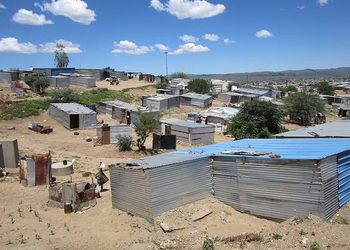
Meanwhile, PowerCom is preparing a pilot project in Otjomuise Extensions 2, 3 and 4 in Windhoek, covering 654 homes at an estimated cost of N$3.08 million.
The pilot will involve 12.2 kilometres of micro-duct trenching and 17.8 kilometres of micro-fibre installation, with civil works estimated at N$1.65 million and materials at N$1.42 million.
Amadhila said the pilot would test construction costs, customer demand and network operating systems before larger investments were approved.
He said civil works would account for between 50% and 60% of the cost of extending fibre past homes, creating opportunities for local contractors involved in trenching, duct installation, cable laying and ground reinstatement.
PowerCom’s preliminary investment readiness assessment found that regulatory compliance, governance and investment quality requirements were in place, while project pipeline development remained incomplete and risk management arrangements were not yet ready.
The company is therefore seeking approval for a funded project preparation programme to verify demand, update costs, obtain permissions and determine how construction and operational risks would be allocated.
On financing, Amadhila proposed a phased approach, with sponsor equity supporting early project preparation, followed by infrastructure funds, commercial banks and development finance institutions as construction progresses.
Pension funds and insurers could participate once the network becomes operational and generates more predictable cash flows.
“I know the investors will probably be attracted to something in the region of 15%, and depending on the areas. So we need to meet each other halfway,” he said.
Amadhila said PowerCom would engage regulators, internet service providers and potential investors to determine whether the project should proceed as proposed, be resized, involve additional partners or be discontinued.