At least 50% of Namibia’s investment plan under the Climate Investment Funds’ (CIF) US$1.75 billion Industry Decarbonization Programme must be allocated to private sector activities as the country seeks to secure financing for green hydrogen, green steel and other low-carbon industrial projects.
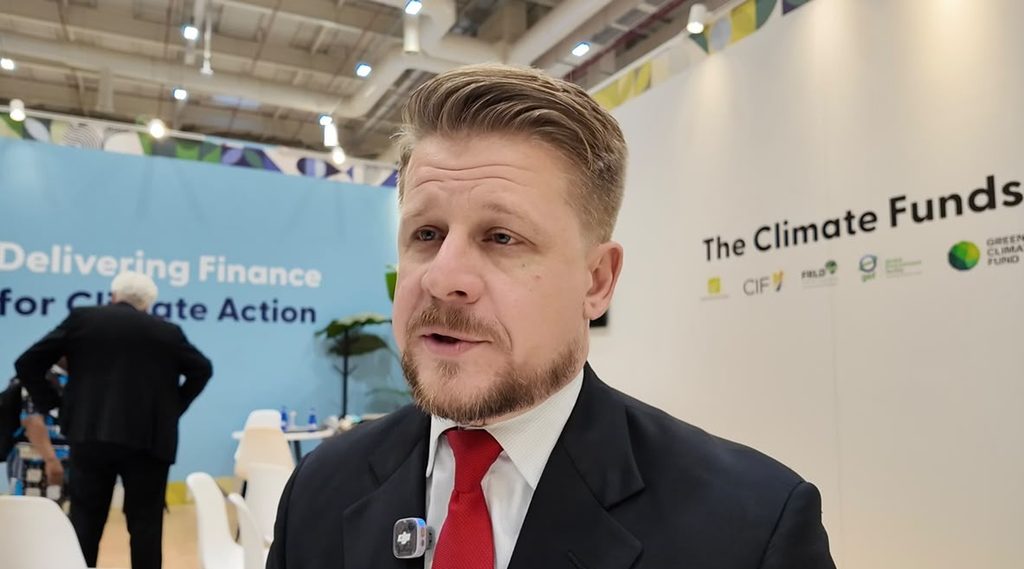
CIF Head of Clean Energy Daniel F. Morris said the requirement is intended to ensure that businesses play a central role in developing new industrial facilities and attracting investment into Namibia’s emerging green industries.
Speaking on the sidelines of COP31 in Antalya, Türkiye, Morris said Namibia has an opportunity to develop low-carbon industries from the outset, avoiding the costs of replacing carbon-intensive infrastructure in the future.
Namibia is among seven countries participating in the programme and could access up to US$250 million (approximately N$4.5 billion) in concessional financing to support its industrialisation plans.
The programme was launched in 2024 with an initial US$1 billion commitment, followed by an additional US$750 million allocation, bringing the total financing envelope to US$1.75 billion.
Morris said Namibia’s investment requirements differ from those of more industrialised emerging economies, including Brazil and Mexico, where financing is largely directed towards reducing emissions from existing industrial operations.
In Namibia, funding would instead support the establishment of new industrial facilities, processing plants, refineries and manufacturing capacity linked to green hydrogen, green iron and steel production.
He said private sector participation would be critical to developing these industries and ensuring that projects attract sufficient capital to reach implementation.
CIF financing is channelled through multilateral development banks, including the World Bank and African Development Bank, and can be combined with private investment, government funding and other development finance.
The financing instruments include concessional loans aimed at reducing borrowing costs and guarantees designed to address investment risks and attract private capital.
Morris said the programme also requires engagement with governments, private companies, workers and civil society organisations to ensure broader participation in the development of industrial projects.
He cited South Africa as an example of CIF-supported investment, noting that the country has a US$500 million investment plan focused on its transition away from coal.
He cited South Africa as an example of CIF-supported investment, noting that the country has a US$500 million investment plan focused on its transition away from coal.
According to Morris, approximately US$250 million in new projects under South Africa’s investment plan had been approved in the month preceding the interview.
CIF has also supported renewable energy development in South Africa, including financing for the country’s first large-scale battery storage project backed by the fund.
For Namibia, the 50% private sector allocation requirement means that securing funding will depend on developing bankable industrial projects capable of attracting commercial investment alongside concessional financing.
The programme is expected to support Namibia’s efforts to establish a low-carbon industrial base, expand domestic processing and manufacturing capacity, and position the country as a supplier of green industrial products to regional and international markets.