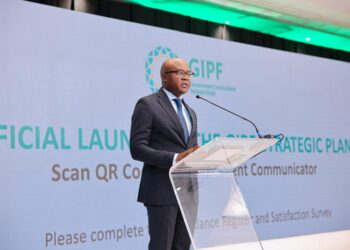
The Government Institutions Pension Fund (GIPF) is seeking to address regulatory and investment barriers preventing institutional capital from financing infrastructure projects and businesses in Namibia.
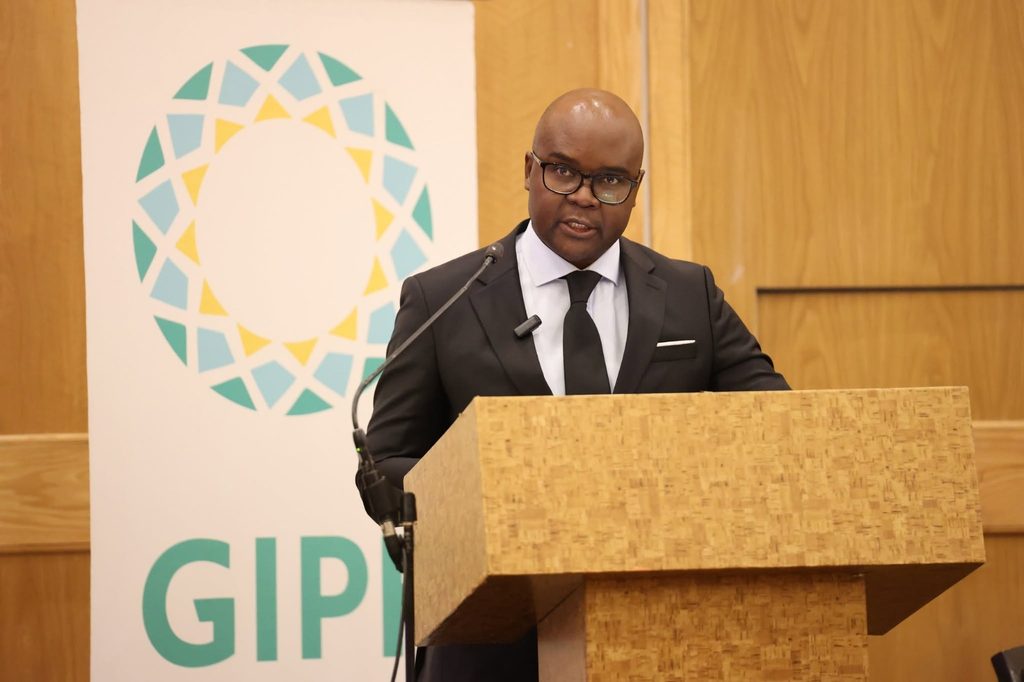
GIPF Chief Executive Officer Martin Inkumbi said the fund wanted closer cooperation between investors, policymakers, regulators and project developers to improve the flow of capital into projects capable of supporting economic growth and job creation.
Speaking to The Brief ahead of the GIPF Pension and Investment Symposium scheduled for 11 and 12 November 2026, Inkumbi said Namibia needed to identify and address obstacles limiting investment in viable projects.
“We want to talk about what are the bottlenecks and impediments, what are the challenges, maybe what should regulators and policymakers look at to eliminate bottlenecks, to make it easier for capital to flow to projects, infrastructure, enterprises,” he said.
Inkumbi said the fund was looking at ways to increase its contribution to Namibia’s economic development by directing more capital towards investments with measurable economic benefits.
He revealed that approximately 48% of GIPF’s capital was already invested in Namibia, exceeding the regulatory minimum domestic investment requirement of 45%.
Despite surpassing the threshold, Inkumbi said the fund believed it could do more to support infrastructure development, business expansion and employment creation.
“GIPF is a significant investor and of course the largest pension fund in terms of capital. And yes, we do believe that we should do more and we can do more, in addition to what we are already doing. I think the main change is that we need to maybe allocate the capital where it matters most, where it has significant impact, but of course the priority is always to make those investments that are also earning the return that will enable us to pay our members their due benefits in future,” he said.
He stressed that any additional investments would need to generate sustainable returns to ensure the fund could meet its long-term obligations to members.
“Besides the regulations that are directing capital in the local economy, there is definitely the desire and the intention to put our money where our mouth is, because we do believe that we have to support economic development, job creation,” Inkumbi said.
The fund will bring together institutional investors, regulators, policymakers and project developers at its two-day Pension and Investment Symposium at the Windhoek Country Club and Resort.
The event, held under the theme Investment Ready: Positioning Namibia for Institutional Capital, is expected to attract approximately 300 participants, including local and international experts in finance, investment, economics and business leadership.
A key component of the symposium will be a project pitch session on the second day, during which large corporations and public institutions will present projects planned for implementation over the next 12 to 24 months.
The projects will be presented to potential financiers, including pension funds, insurance companies, development finance institutions and commercial banks.
The session is intended to connect project developers with institutions capable of providing funding and identify opportunities for financing infrastructure and business development.
Inkumbi said the broader objective was to improve Namibia’s investment environment and enable more institutional capital to support productive economic activities while maintaining the financial sustainability of pension fund investments.