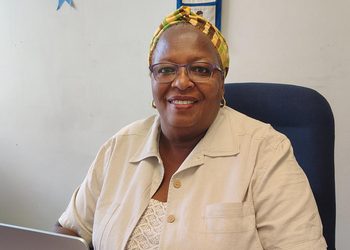
By Dr Tuwilika Nafuka
In September 2024, I sat in the audience at my first National ICT Summit and wrote that digital health was barely in the room.
This year, at the 9th National ICT Summit, I stood on the plenary stage to speak on telemedicine, early warning systems and emergency response. That shift matters: health now runs on the networks and data this summit exists to discuss.
Telemedicine is no longer a pilot. Namibian innovators such as OnCall and PatientCare already connect patients with doctors, clinics and pharmacies across all 14 regions. With OnCall a patient in a remote town can be triaged, consulted and given a prescription without a costly journey.
But every consultation travels along a chain: a phone, a network, a server, a legal jurisdiction, and finally a medical record. Apart from the patient and the record, every link belongs to the ICT sector.
Artificial intelligence ran through almost every conversation at the summit, from water and education to banking, telecommunications, and broadcasting and journalism at NBC. All of it depends on data.
Health data is among the most valuable of all: it can power models that read scans, predict outbreaks and support clinicians where specialists are scarce. But a model trained on another country’s patients can be confidently wrong here, and Namibian data used without rules may build tools we never benefit from.
And unlike a password, a diagnosis can never be changed. Whoever governs health data will shape the AI that serves, or fails, Namibians.
Today, Namibia assures the doctor through the Health Professions Councils, the money through NAMFISA, and the medical aid claim through NAMAF. What we do not yet assure is the data, the platform and the network.
Our data protection law is still forthcoming, so careful local providers borrow standards from South Africa, the United States and international bodies.
My research across more than 390 digital health and AI companies in 46 African markets points to a clear lesson: where data protection law is enacted and enforced, company practices improve dramatically. The difference is whether the law asks the questions.
Namibia now has the tools to ask them. The National Digital Health Policy 2026 – 2036 is coowned by the Ministry of ICT, and a Digital Health Bill is being drafted.
I proposed six questions every digital health service should answer before certification: where patient data is stored and under which law; who can access it; whether it works offline; how incidents are reported; whether records can be retrieved if a service closes; and whether any AI has been tested on Namibian patients.
The provider supplies the evidence; the state verifies it. And there is an economic opportunity too: every health record hosted abroad is a job hosted abroad.
Early warning shows what is at stake. Today, internet connectivity at many health facilities, especially in rural areas, is unstable, and the Policy itself names limited rural ICT infrastructure as a weakness.
Surveillance systems read silence as safety. A rural clinic that cannot connect reports no cases, and no cases looks like no disease. The quietest district may be the sickest, and you can only notice a silent clinic if you know it exists.
That is why, through TupaBloom Digital Care Foundation, we built NamCareMap: a digital map of hospitals, clinics, pharmacies and practitioners across all 14 regions, accessible on any smart device, to help Namibians find care that speaks their language.
Our WhatsApp service, coming soon, will let anyone ask for a specialist who speaks their language, and help doctors refer patients to the right colleague. I invite every health provider to list their practice at namcaremap.com.na.
Namibia has the policy. The Bill is coming. Trust in digital health, and in the AI built on it, will be built in infrastructure, together.
*Dr Tuwilika Nafuka is a medical doctor with an MSc in Digital Health Systems. A Chevening alumna and Africa CDC Bingwa PLUS fellow, ONE UK ambassador and member of the Center for AI and Digital Policy (CAIDP) AI Policy Clinic she works on digital health governance, AI and data sovereignty.