The government is seeking parliamentary approval to increase Namibia’s 2026/27 budget by approximately N$700 million to N$88.6 billion, despite a downward revision in economic growth and revenue projections.
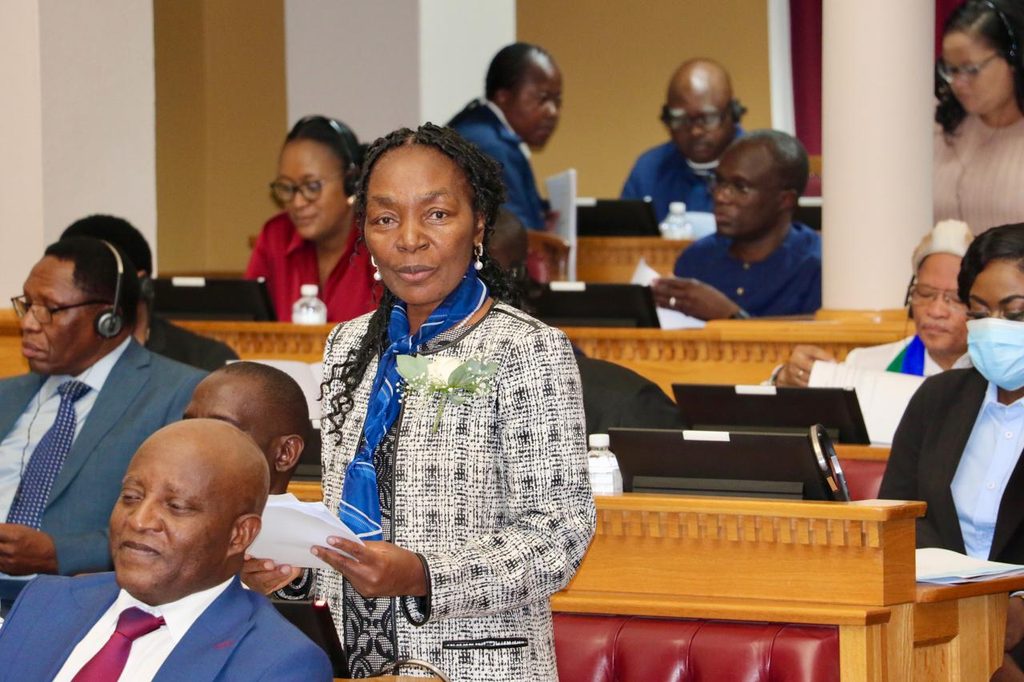
Finance Minister Ericah Shafudah tabled the proposed adjustments in the National Assembly on Thursday during the Mid-Year Budget Review, citing urgent funding requirements across several government ministries and public institutions.
The proposed increase would raise the total budget appropriation from N$87.9 billion to N$88.6 billion, with additional funding directed towards public servants’ medical aid, defence operations, healthcare personnel, infrastructure and outstanding government obligations.
The Ministry of Finance is set to receive the largest additional allocation of N$665 million, including N$535 million for the Public Service Employees Medical Aid Scheme (PSEMAS) and N$130 million to replenish the Contingency Fund.
“An additional amount of N$665 million is proposed for Vote 09: Finance, comprising N$535 million to address funding requirements for PSEMAS and N$130 million to replenish the Contingency Fund,” Shafudah said.
The Office of the President is expected to receive N$180 million, of which N$140 million will finance the construction of basic sports facilities under regional governors, while N$40 million will be used to strengthen security measures.
The Ministry of Defence will receive N$200 million to cover rations and utility expenses.
Shafudah also proposed allocating N$62 million to the Ministry of Urban and Rural Development, including N$50 million for urgent soil erosion mitigation works in Rundu and N$12 million to finance a 5% salary adjustment for regional councillors.
“An amount of N$62 million is allocated to Vote 17: Urban and Rural Development, comprising N$50 million for urgent soil erosion mitigation works in Rundu, Kavango East Region, and N$12 million to fund the five (5.0) percent salary adjustment for Regional Councillors,” she said.
The Ministry of Health and Social Services is set to receive N$41 million to accommodate 456 medical and dental interns, while N$50 million has been earmarked for the Ministry of Works and Transport to settle outstanding rental obligations for state properties.
A further N$26 million has been proposed to settle outstanding drought relief invoices, while the Judiciary will receive N$28.5 million for operational expenses, including transport, utilities, salary adjustments and security measures for magistrates.
The Ministry of Gender Equality and Child Welfare is allocated N$12.9 million, including N$5 million for the National Sanitary Pad Initiative targeting vulnerable learners, with the balance intended for early childhood development educators’ allowances.
The Ministry of Justice is expected to receive N$16 million, comprising N$13 million for the expansion of its head office and N$3 million for operational requirements.
Additional allocations have been proposed for parliamentary oversight, audit capacity, anti-corruption operations and other government functions.
Shafudah said the adjustments were intended to address urgent expenditure requirements while maintaining spending discipline amid weaker revenue expectations.
The proposed changes will require parliamentary approval before the revised appropriations can take effect.
The additional N$700 million represents an increase of approximately 0.8% in the original N$87.9 billion budget, indicating a relatively small overall adjustment despite substantial funding pressures in individual ministries.
However, the increase comes as the government expects weaker economic growth and lower revenue collections, potentially reducing its capacity to finance expenditure through tax and other income.