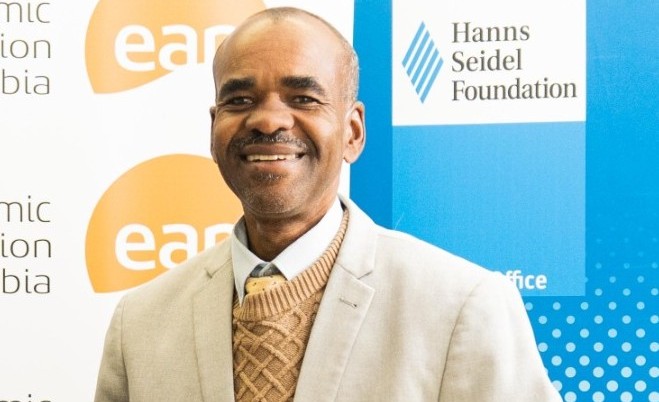
Namibia’s livestock industry faces growing risks to production, employment and export earnings as the ongoing foot-and-mouth disease (FMD) outbreak threatens to derail a projected recovery in livestock farming, Economic Association of Namibia (EAN) has warned.
EAN Chief Executive Officer Cons Karamata said restrictions on livestock movement, marketing and meat exports could disrupt the industry for several months, while access to premium international markets could take considerably longer to restore.
Before the outbreak, the Bank of Namibia had projected livestock farming to grow by 2.2% in 2026 and 4.6% in 2027. However, Karamata warned that these forecasts were now under significant pressure as farmers and meat producers faced growing uncertainty over market access.
“This expected recovery is now subject to considerable downside risk, particularly if livestock marketing and export restrictions remain in place for an extended period,” Karamata said.
According to the EAN, 131 animals had tested positive for FMD across 18 farms in the Karasburg Veterinary District as of 14 October 2026, following inspections covering 63,011 animals.
The outbreak remains confined to the Karasburg Veterinary District in the //Kharas Region, while a separate outbreak has been confirmed in the Zambezi Region. Veterinary investigations have not established a direct link between the two outbreaks.
Karamata said the outbreak posed a significant threat to rural livelihoods, given the importance of agriculture to employment and household incomes.
Figures from the Namibia Statistics Agency’s 2023 Population and Housing Census Labour Force Report show that agriculture, forestry and fishing employed approximately 88,277 people, accounting for 16.1% of national employment and about 34% of rural employment.
Although these figures cover agricultural activities beyond livestock farming, Karamata said they demonstrated the sector’s importance to the rural economy.
He warned that farmers could face delayed livestock sales, declining cash receipts and rising costs associated with animal maintenance and disease prevention.
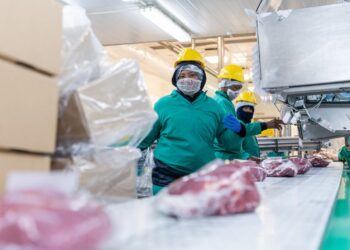
Karamata said abattoirs, feedlots, transporters, auctioneers and meat processors could also experience reduced business activity, working hours and income as movement and export restrictions continued.
The outbreak has already affected Namibia’s access to the European Union market, with the bloc temporarily suspending imports of fresh beef, sheep and goat meat, certain farmed and wild ungulates, and selected processed meat products, including biltong and jerky, from Namibia’s previously FMD-free zone.
Karamata welcomed government efforts to negotiate with the EU over meat products produced before 23 September 2026, when the outbreak was confirmed, and called for similar discussions with other trading partners to minimise export losses.
He said restoring market access would be critical to protecting the industry’s recovery and preventing prolonged financial losses across the livestock value chain.
Karamata also called on government to engage commercial banks and other financial institutions to provide relief to farmers and businesses experiencing cash-flow difficulties.
He warned that prolonged restrictions could worsen financial distress among livestock producers already facing delayed sales and increased operating costs.
Karamata urged farmers to cooperate with veterinary surveillance teams, comply with livestock movement restrictions and maintain accurate animal identification and movement records.
He also called on livestock traders, transporters and auctioneers to observe veterinary requirements to prevent the further spread of the disease.
Consumers were encouraged to avoid panic buying and purchase meat from registered retailers, while suppliers of livestock products and emergency materials were urged not to exploit the outbreak through unjustified price increases.
Karamata said continued engagement between government, trading partners, financial institutions and affected businesses would be necessary to limit the economic impact of the outbreak.
He added that regular and transparent communication would be essential to contain the disease, protect rural livelihoods and restore confidence in Namibia’s livestock industry.