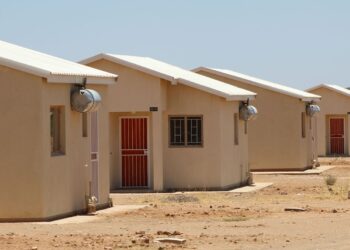
Affordable houses are rapidly disappearing from Namibia’s mortgage market, with properties valued below N$500,000 accounting for just 25% of registered mortgage bonds in 2026, compared with more than 80% in 2007.
The sharp decline over the past 19 years points to a housing market increasingly dominated by higher-priced properties as house prices rise faster than the incomes of many Namibian households.
The affordability gap has widened significantly, with Namibia’s weighted average house price reaching about N$1.44 million in the first quarter of 2026, while approximately 75% of workers earn less than N$5,000 per month.
Bank of Namibia Deputy Director for Policy Research and Analysis Abigail Nainda said the declining share of lower-value properties in registered mortgage bonds raises concerns about financial inclusion, wealth creation and social mobility.
In her analysis, From Housing Delivery to Housing Systems, Nainda said rising house prices across market segments have increasingly placed homeownership beyond the financial reach of lower-income households.
“Housing affordability is therefore not only a housing-sector issue but also an economic development challenge linked to income growth, productivity, and employment creation,” she said.
The shift in the mortgage market has been significant. In 2007, properties below N$500,000 accounted for more than four out of every five registered mortgage bonds. By 2026, only one in four bonds fell within that property-value bracket.
The contraction in the lower end of the market comes despite a substantial expansion in overall mortgage lending.
Mortgage loans stood at N$14.1 billion at the end of 2007, according to the Bank of Namibia. By July 2026, combined household and corporate mortgage lending had increased to approximately N$61.34 billion.
Household mortgage loans accounted for N$47.12 billion, according to IJG Securities, after increasing by N$238.5 million, or 0.5%, during July. Annual household mortgage growth accelerated to 2.4%, its fastest pace since December 2023.
Corporate mortgage lending increased by N$1.20 billion, or 9.2%, during the month to N$14.23 billion, while annual growth reached 6.5%.
The figures show that while more money is tied up in property financing, homes at the lower end of the market have become a much smaller component of registered mortgage bonds.
For households unable to qualify for mortgages at current property prices, rising rental costs are placing additional pressure on disposable incomes and could make saving for homeownership increasingly difficult.
Nainda said Namibia’s affordability problem cannot be addressed by simply increasing the number of houses constructed, arguing that the cost and availability of serviced land and infrastructure remain major obstacles.
High land-servicing costs, infrastructure shortages and lengthy approval processes increase development costs, which ultimately feed into the prices paid by homebuyers.
“Expanding investment in bulk infrastructure, including water, electricity, roads, and sewerage systems, is essential for increasing housing supply and improving affordability,” Nainda said.
She said improving housing affordability would require stronger coordination between government, local authorities, financial institutions, developers, investors and communities.
The National Housing Policy and housing targets under the Sixth National Development Plan provide a framework for expanding housing delivery, but Nainda said improved access to financing, infrastructure investment and stronger household income growth would be critical