Namibia is looking to deploy artificial intelligence across government services as part of efforts to make public institutions more efficient, improve access to information and strengthen the use of data in decision-making.
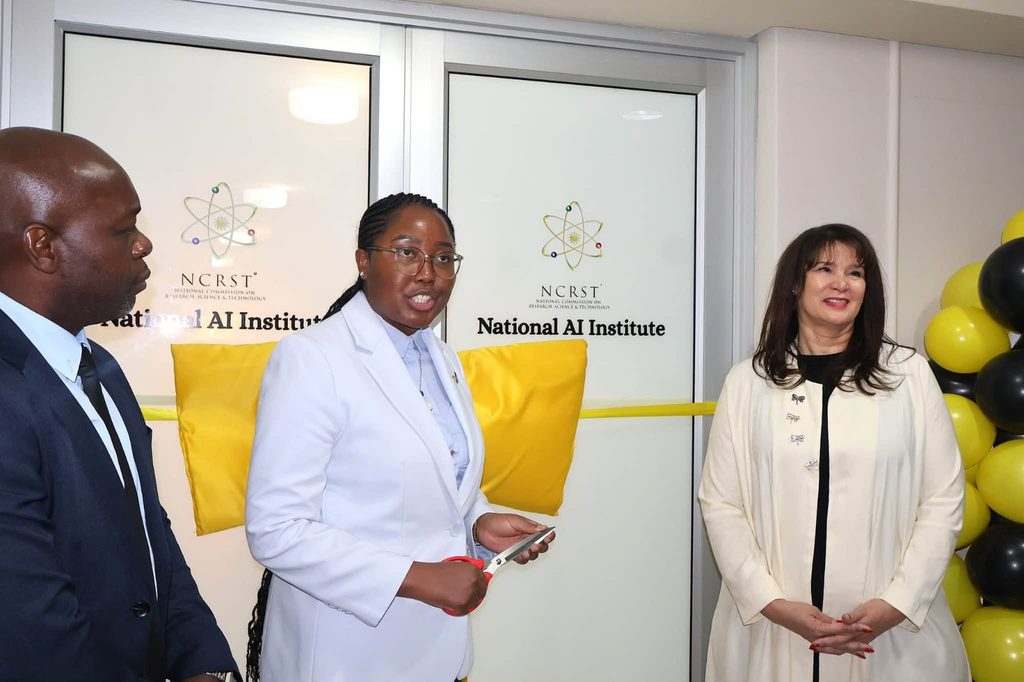
The push will be supported by the newly launched National Artificial Intelligence Institute, which will provide a platform for developing, testing and applying AI solutions in Namibia.
Minister of Information and Communication Technology Emma Theofelus said digital government would be one of the areas where the country could benefit from building domestic AI capabilities.
“For the Ministry of Information and Communication Technology, we are particularly interested in how this capability can contribute to digital government. Citizens should experience digital transformation through services that are easier to access, more responsive and more efficient,” Theofelus said.
She said potential government applications include using AI to improve how public information is organised and accessed, analyse large volumes of data and support service delivery.
“The potential application of artificial intelligence in Government ranges from improving how information is organised and accessed to supporting service delivery, analysing large volumes of data and enabling institutions to respond more effectively to citizens,” she said.
The National Artificial Intelligence Institute was launched in Windhoek by the National Commission on Research, Science and Technology (NCRST) following recommendations by the Presidential Fourth Industrial Revolution Task Force.
The institute will operate through four specialised units: the Development Centre, Dataset Centre, AI Innovation Centre, and Research and Development Centre.
Theofelus said the structure is intended to create a pathway for AI ideas to be developed into practical applications that can be tested and deployed locally.
“The Institute creates a dedicated national platform through which capabilities can be developed around artificial intelligence, data, innovation and practical applications,” she said.
The institute is also expected to support private-sector technology development, allowing businesses, researchers and innovators to develop products and test AI applications.
Theofelus said Namibia would need to develop local datasets and technical expertise to ensure AI systems respond to the country’s languages, economic structure, population distribution and development challenges.
Government is also seeking collaboration with telecommunications companies, universities, research institutions and the private sector as it builds the country’s AI capabilities.