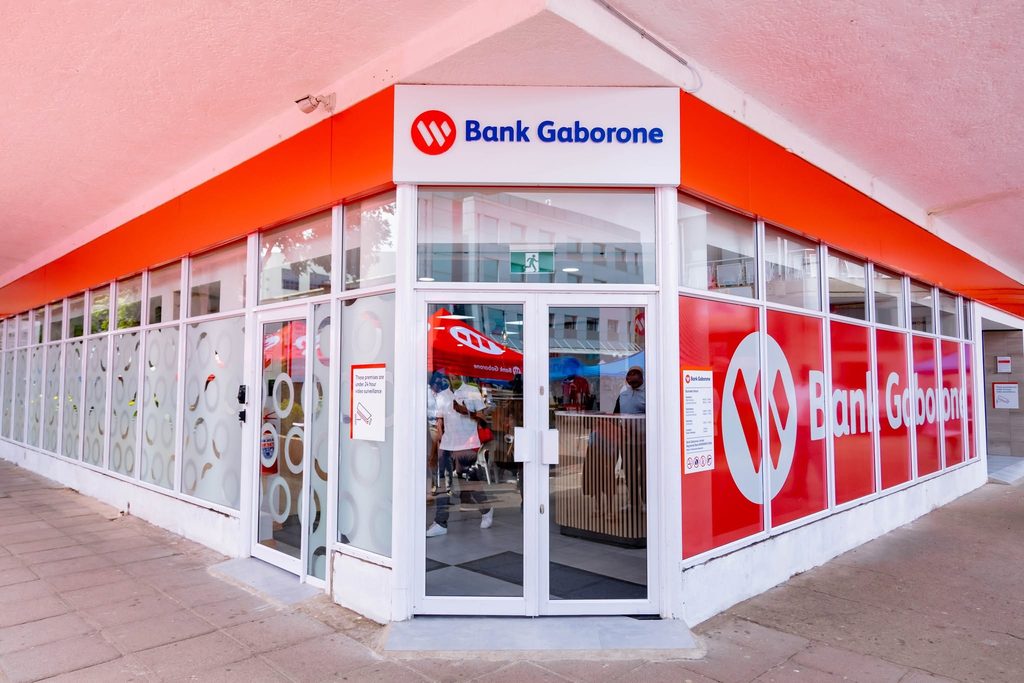
Capricorn Group has approved a P80 million (about N$96 million) emergency capital facility for Bank Gaborone as it restructures the bank following rising bad debts, higher funding costs and weakness in Botswana’s mining-dependent economy.
The move follows a difficult financial year for Bank Gaborone, which slipped into a loss as its non-performing loan (NPL) ratio climbed above 14% amid financial pressure on clients exposed to the diamond industry.
Capricorn Group Chief Executive Officer David Nuyoma said the deterioration in Botswana’s diamond sector had affected borrowers and contributed to the increase in bad loans.
“We have a new strategy for Bank Gaborone. It went through a difficult phase during the past 12 months, principally because of the non-performing loans. A number of those clients had a reliance on the diamond industry. The sale of diamonds has tremendously gone down. Mining in Botswana has gone down by 40%. GDP went down by 5%,” Nuyoma said.
The deterioration in Bank Gaborone’s loan book contributed to an increase in non-performing loans across the wider Capricorn Group.
Capricorn Group Financial Director Johan Maass said the group prioritised liquidity at Bank Gaborone during the period, a move that constrained profitability but strengthened the bank’s funding position.
Bank Gaborone’s loan-to-funding ratio declined to 76.6%, its lowest level in eight years, while its capital ratio stood at 14.3%.
Maass said Capricorn’s board had approved a P80 million emergency capital contribution facility for Bank Gaborone, subject to the necessary regulatory approval, providing additional capital capacity if required.
The facility had not been drawn down at the time the group’s financial results were released.
Maass said Bank Gaborone’s balance sheet remained positioned to support its operations despite the deterioration in asset quality, while the lower loan-to-funding ratio provided additional liquidity capacity.
The bank’s net interest margin ended the financial year at 2.8% after coming under pressure from higher funding costs.
Maass said the margin had started recovering during the second half of the financial year, with further improvement expected as funding conditions normalise.
Nuyoma said Bank Gaborone had returned to profitability during the first two months of Capricorn’s new financial year, recording profits in both July and August.
“Already, by now, we have seen growth during this financial year. Our financial year starts from July. July showed positive growth. August showed positive growth. I hope that September will be, and the rest of the year will be as such, so that we return to full recovery,” he said.
The Bank Gaborone recovery strategy forms part of Capricorn’s broader focus on portfolio management, capital optimisation and growth.
Capricorn Group’s profit declined by 6.4% during the financial year, while return on equity fell to 15.6% from 18.2%.
Despite the pressure in Botswana, non-interest income increased to 47.7% of total group income, exceeding Capricorn’s 45% target, while Capricorn Asset Management’s assets under management increased by N$10 billion to N$67 billion.
Nuyoma said Capricorn remained committed to the Botswana market while seeking to diversify Bank Gaborone’s lending exposure and broader financial services activities.
“As far as we are concerned, we are still ready to serve this market, and also the communities in which we serve, including Botswana. We are here to stay. We are a local bank, truly a local bank,” he said.