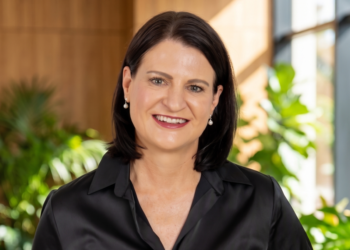
By Hilda Basson Namundjebo
It is 04:57 in Windhoek. The city is still asleep, wrapped in the kind of silence that makes you aware of your own breathing.
Somewhere far off, a single car moves through the dark, possibly someone else beginning their day, or ending it.
And here I sit, thinking about the multiple hoops an entrepreneur must jump through to keep a business liquid, a client satisfied, a team motivated, and a dream alive.
People speak about entrepreneurship with a kind of glossy admiration. They talk about freedom, creativity, ownership, the thrill of building something from nothing.
They rarely talk about the unpredictability of payment cycles, how you can deliver excellence, exceed expectations and still wait months to be paid.
They don’t talk about the constant pressure of having to be two steps ahead, or five steps ahead, because falling behind is not an option. There is no cushion.
No shareholder equity. No corporate buffer. No board to absorb the shock. It is your money, your risk, your name, your sleepless night.
Corporate life is tough; the KPIs, the politics, the performance dashboards, the C‑suite demands. But at least in the corporate world, you are protected by an institution.
You perform against shareholder equity, not your own bank account. You have a salary that arrives whether the client pays or not.
You have a team with structure, systems, and HR to manage underperformance. You have departments. You have cover.
Entrepreneurship is a different battlefield. The toll it takes on your mental fortitude is hazardous. You need a tough mind and an even thicker skin.
You must manage demands and client deliverables with the dignity of a diplomat and the charm of a seasoned performer.
You must smile through exhaustion, negotiate through frustration, and deliver through uncertainty. You must be calm when your bank balance is screaming and gracious even when your patience is thinning. You must be strategic when your spirit is tired.
And then there is staff. Staff who need coaching, correcting, uplifting, redirecting; all that while you are already carrying the weight of everything else.
You become the strategist, the HR manager, the finance department, the creative engine, the operations lead, and the emotional shock absorber.
You carry the business on your back while trying to teach others how to carry even a fraction of it.
I wonder if a study exists on the neurological formation of entrepreneurs versus employed people. Because the pressure is constant, relentless, and deeply personal.
Your brain learns to operate in survival mode, opportunity mode, innovation mode, and crisis mode; all at once.
You live with a level of anxiety that is difficult to explain. You are always thinking, always worried, always planning. Even in your sleep, your mind is ticking.
And then, of course, it is even harder for a woman.
Because you still carry traditional responsibilities and societal expectations with you. You must shoulder them with grace, smile through your tears, and still show up as strong, capable, and composed.
You must be mother, daughter, sister, leader, provider, and visionary – all at the same time. You must be soft enough to be loved and strong enough to be respected. You must be everything, everywhere, all at once.
And for black entrepreneurs, the journey is even more complex. Our structures are informal. Our networks are thinner. Our access to capital is limited. Market access is harder to penetrate.
But when you build your own business, you must carve your own path through walls that were not designed for you. You must create legitimacy from scratch. You must prove yourself twice, sometimes three times, before you are taken seriously.
Then there is the family dimension. You carry the emotional and financial weight of being “the one who made it”, even when you are still fighting to make payroll.
You give because you love, but every act of generosity chips away at your reserves. Yet still, you give.
Entrepreneurship is not a job. It is a psychological marathon. It is a spiritual test. It is a financial gamble. It is a daily negotiation with hope. It is waking up at 04:57, staring into the quiet, and wondering how you will stretch yourself again today – and knowing that you will.
Because beneath the exhaustion, beneath the pressure, beneath the relentless demands, there is a quiet conviction: I was built for this. Even when it feels like it is breaking me.
And perhaps that is the truth of entrepreneurship; not the glamour, not the titles, not the awards, not the LinkedIn announcements. The truth is in the early mornings, the silent rooms, the whispered prayers, the private fears, the stubborn resilience, and the decision to keep going.
At 04:57, the city sleeps. But the entrepreneur is awake, carrying a world only she can see, building a future only she can imagine, and fighting battles only she will ever understand.
But this is where my soul breathes – freely.
*Hilda is a business leader, public speaker and a seasoned broadcast journalist. Founder of the national brand and organisation Team Namibia, Hilda believes her purpose is to impact the world with kindness, one engagement at a time