By Al-bright Shigwedha
Who was the boy child before society told him what a man should be?
Before society taught him that crying makes him weak and vulnerability is shameful, he was simply a child who needed reassurance, affection, guidance, and a safe place to make mistakes.
Somewhere along the way, however, we began preparing boys for manhood by teaching them how to endure rather than how to feel.
Boys are taught to “man up” before they are taught how to communicate. They are taught to be strong before they understand that strength does not mean carrying everything alone.
We tell them to protect everyone else, but rarely ask who is protecting them.
What happens when a boy learns that his value is measured by what he can provide, but never learns what to do when the weight becomes too heavy?
Our boys and men are fighting invisible battles. Some are expected to provide before they have even had the opportunity to understand themselves.
They are expected to become financially independent, support their parents, build homes, succeed professionally, and appear emotionally unaffected while doing it all.
When did we begin teaching boys to become providers before teaching them how to process their feelings?
Perhaps this is why anger becomes one of the few emotions society allows men to express freely. Sadness is weakness. Fear is weakness.
Crying is weakness. Yet anger is often accepted because it fits the image of masculinity we have created.
But what if anger is sometimes grief that was never permitted to speak? What if it is fear disguised as aggression, rejection disguised as silence, or pain that has nowhere else to go?
Then there is the world our boys are growing up in now.
Social media has created an entirely new definition of success. A young man is constantly shown that he should have money, a car, a house, a successful career, and his life figured out before he has even had the chance to live it.
He measures their highlights against his unfinished life.
He is told to build a home for himself, sometimes another for his parents, provide for his family and become successful enough to prove that he is a “real man.”
But what happens to the boy who cannot?
Does he become less of a man because he is struggling financially? Does his inability to provide make him less worthy? And who tells him otherwise?
These questions become even more urgent when we look at Namibia’s suicide statistics. In the 2023/2024 financial year, Namibia recorded 542 suicide deaths and 2,937 suicide attempts. Approximately 82% of those who died were men. These are not merely statistics.
They are sons, brothers, friends, and young men whose struggles became heavier than their ability to carry them.
So, are we asking the right questions?
Are we providing the right solutions? Are we actually listening when boys tell us that opening up feels impossible? When we tell them to “just talk to someone,” have we considered that many have spent their entire lives being taught not to?
Where do our boys go when the world becomes too heavy? Who can they call? Do our homes, schools, and communities provide spaces where boys can speak without being mocked or told to toughen up?
And perhaps most importantly, are we only paying attention when a boy has already reached breaking point?
Therapy should not be reserved for moments of crisis. Boys should be allowed to seek help to understand themselves, process experiences, heal from trauma, or simply have someone listen.
If a bird has spent its entire life inside a cage, opening the door does not automatically teach it how to fly.
Perhaps that is what we have failed to understand. We cannot spend years building emotional cages around boys and then expect them to know how to walk freely when we finally tell them it is safe to speak.
We keep asking why our boys are struggling.
Let’s start by asking: what have we taught them about struggling?
And perhaps the real question is not whether the boy child is listening.
It is whether we are.
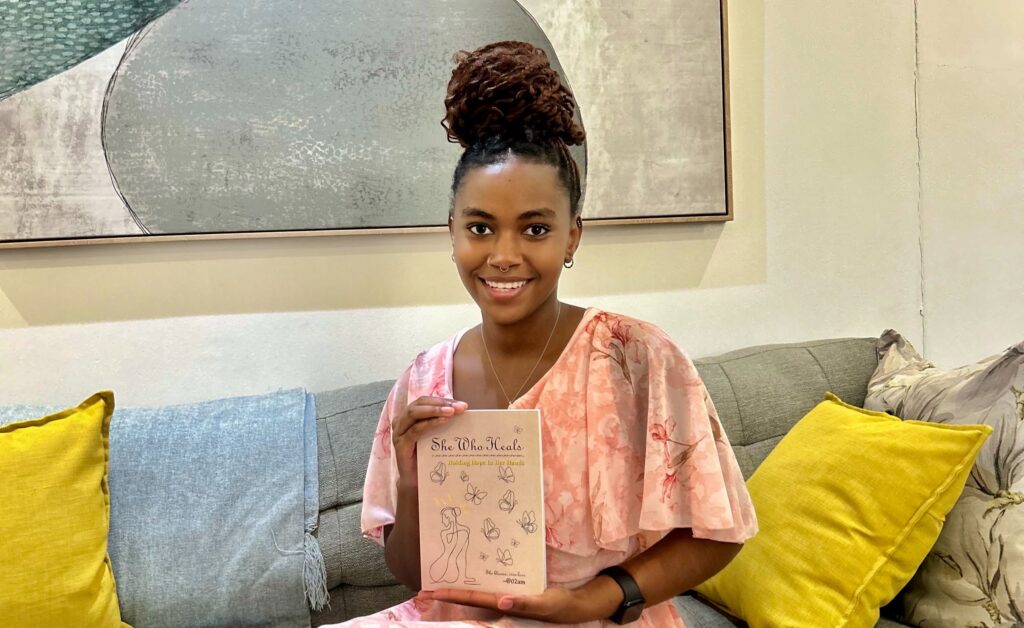
*Al-bright Shigwedha is a Namibian social work student, mental health advocate, author, and founder of The Lotus Project, a community initiative focused on supporting vulnerable individuals through outreach and charity work. She is the author of the self-help poetry book She Who Heals and is passionate about youth wellbeing, emotional health, and creating meaningful conversations around mental health in Namibia