…as Khomas accounts for 42% of Namibia’s registered vehicles
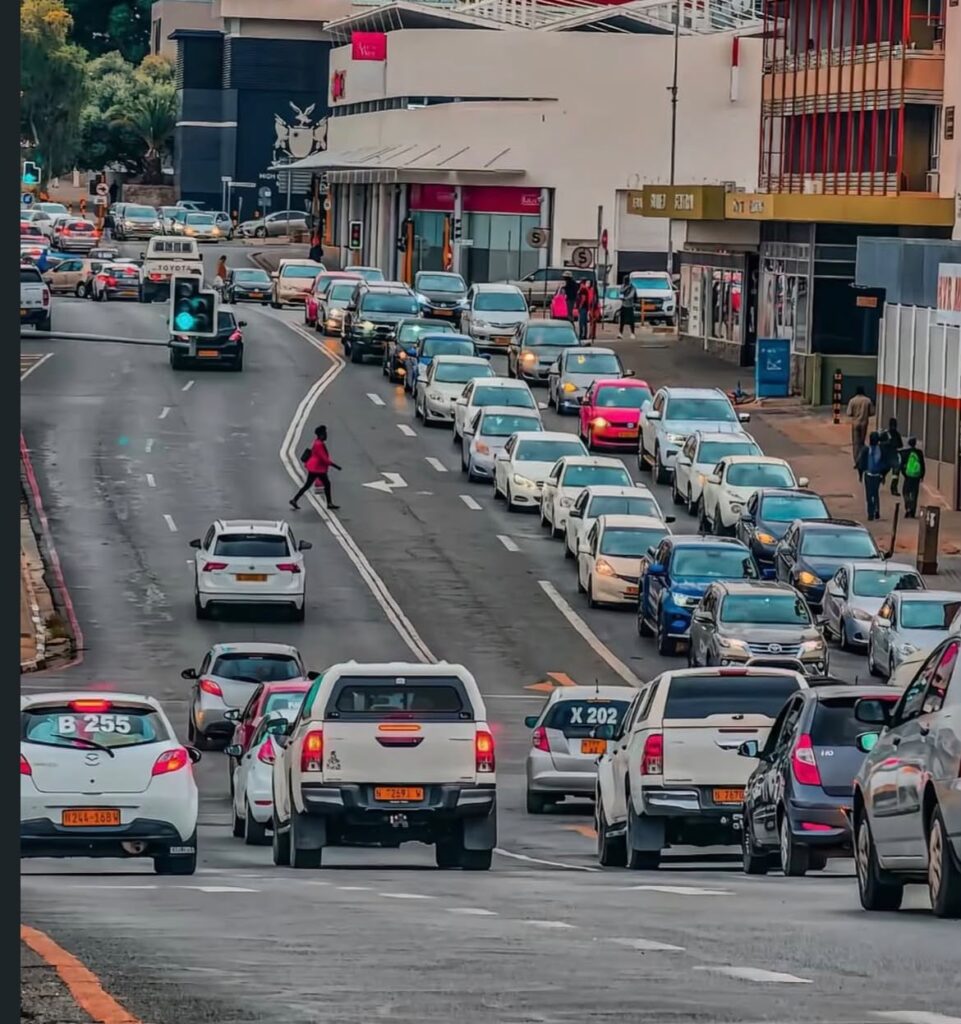
More than 20,500 vehicles enter Windhoek every day, worsening traffic congestion and placing growing pressure on the capital’s road network as government warns that the city’s dependence on private vehicles has become unsustainable.
Khomas Governor Sam Nujoma said approximately 16,000 vehicles enter the city daily through the northern corridor, while another 4,500 arrive via the southern corridor, in a city with nearly 420,000 registered vehicles and a population of around 500,000.
He said the figures highlight the urgent need to invest in alternative public transport systems to reduce congestion and improve mobility.
“The City of Windhoek continues to face significant urban mobility pressures, with approximately 16,000 vehicles entering Windhoek daily via the northern corridor and 4,500 via the southern corridor, against nearly 420,000 registered vehicles in a city of around 500,000 residents, reflecting an unsustainable, car-dependent mobility model that requires proactive and decisive investment in alternative forms of public transportation,” Nujoma said.
He said Khomas, which accounts for 42% of Namibia’s registered vehicles, continues to face increasing pressure to expand and maintain its transport infrastructure.
“Since our region accounts for 42% of Namibia’s vehicle population and we receive a high volume of vehicles, our road infrastructure demands constant upgrading, expansion and maintenance to support economic activities while also promoting the safety of our road users,” he said.
The region maintains approximately 2,931 kilometres of roads, comprising 550.7 kilometres of bitumen roads, 1,687.4 kilometres of gravel roads, 685.2 kilometres of earth roads and 7.9 kilometres of proclaimed roads.
To ease congestion, several major road projects are under way or have recently been completed.
The N$1 billion Windhoek-Okahandja Section 4A dual carriageway has been completed, while the N$400 million Western Bypass has reached 5% completion and is expected to be completed by March 2027.
Meanwhile, the N$500 million Windhoek-Rehoboth Phase 1A dual carriageway is 92% complete, while both Phase 2A and Phase 2B of the Windhoek-Hosea Kutako International Airport road upgrade have been completed and opened to traffic.
Looking ahead, government has budgeted hundreds of millions of Namibia dollars for additional road projects during the 2026/27 financial year, including new interchanges, airport road works, regional road maintenance and a NaTIS office in Wanaheda.
However, Nujoma warned that implementation of the planned projects would depend on continued funding from Central Government and the Road Fund Administration.
“I must, however, flag that the implementation of these projects in the Regional Roads Master Plan depends on adequate and sustained funding from both Central Government and the Road Fund Administration,” he said.