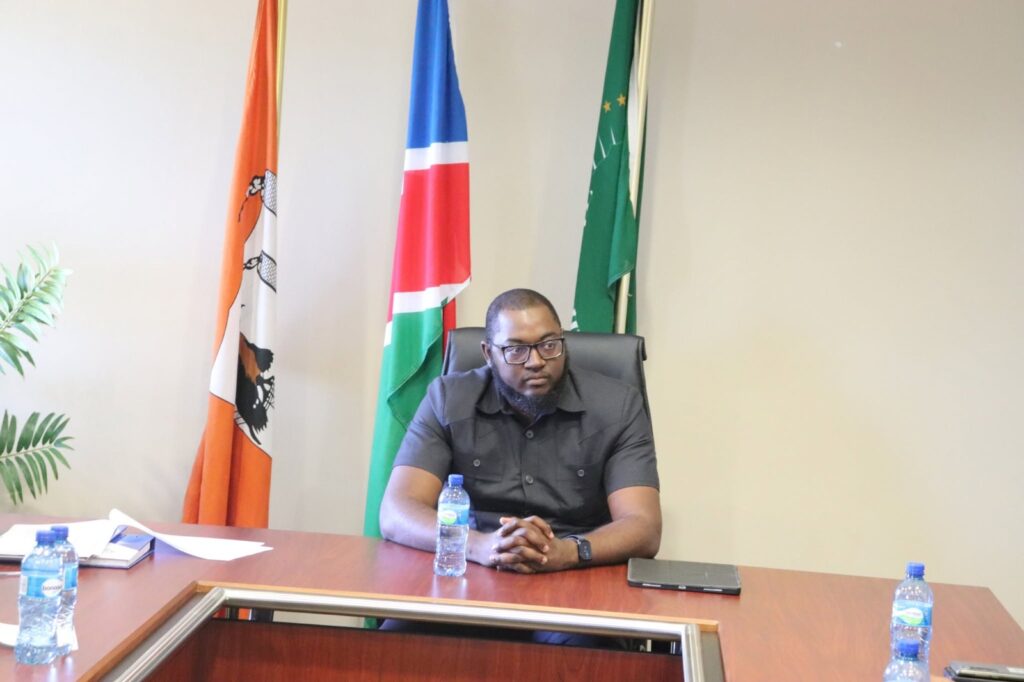
The Khomas Region will spend more than N$1.7 billion on housing, land servicing, sanitation, water and related infrastructure projects during the 2026/27 financial year as authorities intensify efforts to address growing demand for serviced land, housing and basic services.
Delivering the 2026 State of the Region Address, Khomas Governor Sam Nujoma said the region continues to face significant challenges related to land access, housing and sanitation, which remain among the most persistent structural constraints to development.
Nujoma said government, local authorities and public institutions have committed substantial resources to unlock serviced land, expand housing delivery and improve access to water and sanitation infrastructure.
“The issue of land access, housing and sanitation remains one of the most enduring historical and structural constraints on development in our region,” he said.
The largest allocation comes from the Ministry of Urban and Rural Development, which has committed N$750 million to the upgrading and formalisation of informal settlements in the Khomas Region.
Nujoma said implementation of the programme has been delayed by intergovernmental coordination challenges between the ministry and the City of Windhoek.
The City of Windhoek has meanwhile completed layout designs for 11,226 proposed erven across 18 townships and earmarked N$296.4 million in capital expenditure for land servicing and housing delivery during the 2026/27 financial year.
The projects target areas including Cimbebasia, Otjomuise, Rocky Crest, Havana, Goreangab and Okahandja Park.
Nujoma commended the municipality for submitting five Environmental Impact Assessment applications to the Environmental Commissioner earlier this year.
“I urge the Office of the Environmental Commissioner to expedite the review of these applications so that serviced land can be delivered without delay to meet the region’s growing demand for housing,” he said.
In water and sanitation services, the governor said the City of Windhoek has constructed 194 communal toilets and 227 communal water points in informal settlements, increasing sanitation coverage by 16% and water-point coverage by 22%.
The Khomas Regional Council has invested N$3 million in borehole drilling, installation, rehabilitation and water pump procurement across 11 rural settlement sites.
Long-term water and sanitation infrastructure plans also carry a substantial price tag.
According to Nujoma, the City’s Water and Wastewater Infrastructure Master Plan requires N$11.72 billion over a 20-year implementation period.
He said funding has already been secured through grants and loans for the upgrading of the Gammams Wastewater Treatment Plant and the construction of an additional Direct Potable Reclamation Plant.
The Havana Wastewater Treatment Plant, estimated to cost N$180 million, is expected to go to tender during 2026.
Housing delivery is also being supported through public housing programmes.
Nujoma said 304 housing units are currently under construction in Windhoek under the Mass Housing Development Programme.
The National Housing Enterprise (NHE) completed two housing units in the region during the previous financial year at a combined cost of N$1 million and plans to invest N$82 million during the 2026/27 financial year.
The planned NHE projects include the construction of 73 housing units at Otjomuise Apartments, Goreangab Apartments and the Khomasdal Housing Development, the installation of civil and electrical services for 380 erven in Otjomuise, and upgrading works on 22 housing units in informal settlements.
On rural development, the Ministry of Urban and Rural Development allocated N$1 million to the Khomas Regional Council during the 2025/26 financial year, including N$800,000 for the Rural Sanitation Programme and more than N$200,000 for self-help initiatives.
Nujoma said land shortages and affordability remain major obstacles to housing development.
“However, housing development in the region continues to face challenges, particularly the scarcity and unaffordable cost of land, high input costs for land servicing, beneficiary creditworthiness, the lengthy township establishment process, increasing building material costs, limited funding for serviced land and housing delivery, and a protracted contractor procurement process,” he said.
The governor also highlighted a Cabinet-approved debt swap agreement between the City of Windhoek and the central government, under which N$357.8 million in liabilities will be converted into 423 hectares of land.
Nujoma said the agreement will unlock more than 6,000 erven for housing and national development projects.
“By converting N$357.8 million in liabilities into 423 hectares of land, this initiative unlocks more than 6,000 erven for housing and national projects, restores the City’s borrowing capacity and strengthens service delivery,” he said.
In addition, N$30 million has been allocated for peri-urban electrification projects in informal settlements, where 485 household electricity connections have already been completed.
Nujoma said the electrification programme covers Okatunda, Okuryangava, Mix Settlement and Groot Aub, with further network expansion planned under a two-year programme beginning this year.