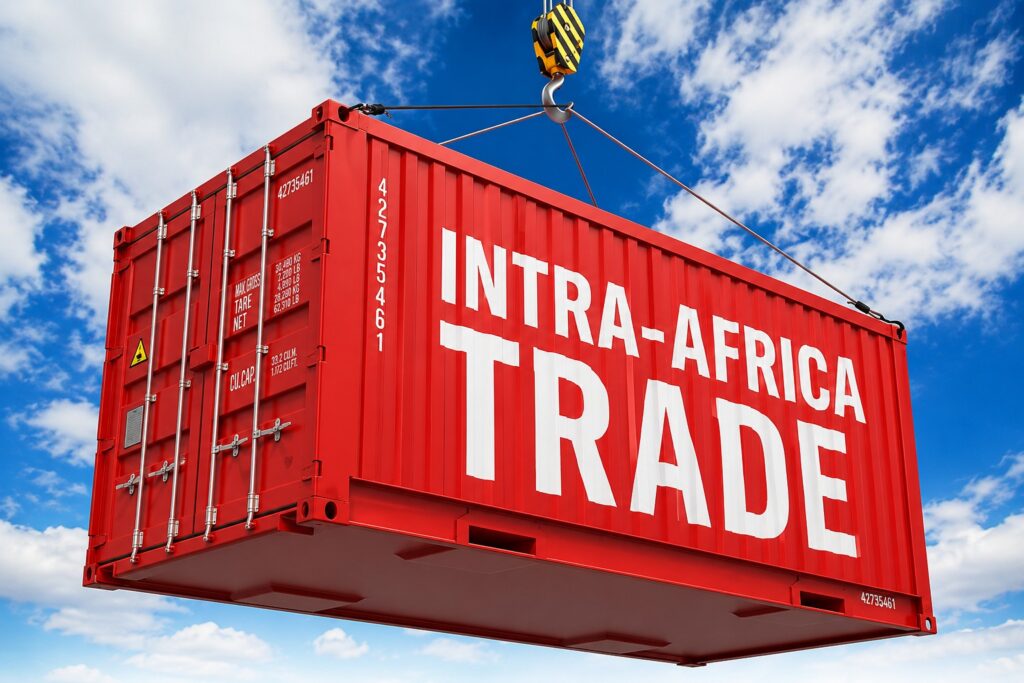
More than half of Namibia’s exports and imports were traded within Africa in April 2026, highlighting the importance of regional markets and trade agreements such as the African Continental Free Trade Area (AfCFTA), according to the Namibia Statistics Agency (NSA).
The NSA reported that Namibia exported goods worth N$5.5 billion to African countries during the month, while imports from the continent amounted to N$7.7 billion, resulting in total intra-African trade of N$13.2 billion and a trade deficit of N$2.3 billion.
According to the agency, 56.1% of Namibia’s total exports were destined for African markets, while 54.7% of total imports originated from the continent.
The NSA said the figures demonstrate the significant role regional markets play in Namibia’s trade.
“Intra-African trade is vital for promoting economic diversification, industrialisation and resilience by reducing dependence on external markets. Through initiatives such as the African Continental Free Trade Area (AfCFTA) and regional blocs such as the Southern African Customs Union (SACU) and Southern African Development Community (SADC), it enhances market access, strengthens regional value chains and supports sustainable economic growth across the continent,” the agency said.
Data showed that South Africa, Botswana, Zambia, the Democratic Republic of Congo and Zimbabwe were Namibia’s main export destinations within Africa during April.
On the import side, South Africa, Zambia, the Democratic Republic of Congo, Nigeria and Morocco were the country’s leading African suppliers.
The report showed that 98.9% of Namibia’s exports to Africa were destined for countries in Southern Africa, with intra-SADC exports accounting for 55.5% of the country’s total global exports during the month.
Similarly, 85% of goods imported from Africa originated from SADC member states, with intra-SADC imports representing 46.5% of Namibia’s total imports from the rest of the world.
By economic bloc, NSA data showed that SACU was Namibia’s largest export destination, accounting for 38.2% of total export value, followed by the OECD with 24.1% and SADC countries outside SACU with 17.3%. BRIC+ and COMESA accounted for 17.3% and 16.7% respectively.
“Exports to SACU were led by non-monetary gold, while exports to OECD markets were dominated by fish, nickel ores and concentrates, and uranium. Exports to SADC countries outside SACU mainly comprised fish, fertilisers, sulphur and unroasted iron pyrites,” the NSA said.
On the import side, SACU supplied 35.6% of Namibia’s total imports, with major products including commercial motor vehicles, sugar, molasses and honey, and passenger motor vehicles.
Meanwhile, the OECD accounted for 18.2% of imports, followed by BRIC+ at 15.7%, the European Union at 12.3% and COMESA at 11.3%.