Saturday, August 1, 2026
SUBSCRIBE
The Brief | Namibia's Leading Business & Financial News
  • Home
  • Companies
    • Finance
    • Agriculture
    • Technology
    • Property
    • Trade
    • Tourism
  • Business & Economy
  • E-PAPERreader
  • Mining & Energy
  • Opinions
    • Analysis
    • Columnists
  • Africa
No Result
View All Result
The Brief | Namibia's Leading Business & Financial News
  • Home
  • Companies
    • Finance
    • Agriculture
    • Technology
    • Property
    • Trade
    • Tourism
  • Business & Economy
  • E-PAPERreader
  • Mining & Energy
  • Opinions
    • Analysis
    • Columnists
  • Africa
No Result
View All Result
The Brief | Namibia's Leading Business & Financial News
Subscribe
No Result
View All Result
DSTV WC26 Campaign
Home Latest

Namibian banks face profit squeeze as deposit battle intensifies

by reporter
June 1, 2026
in Latest
15
A A
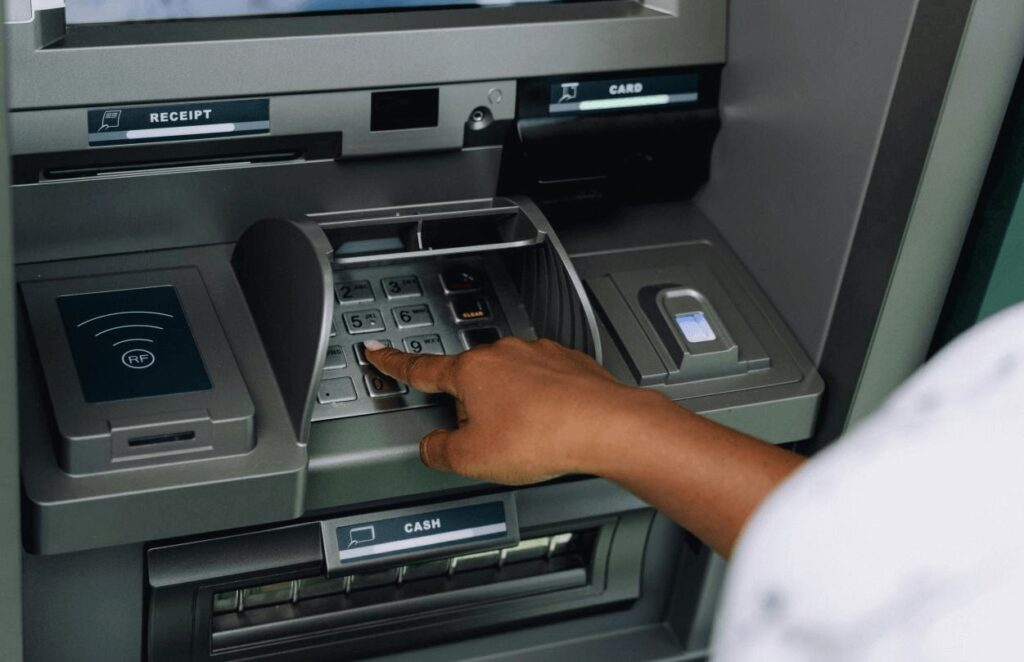
Hand entering PIN on an ATM keypad with card slot and cash dispenser visible.

Namibian banks are entering a tougher operating environment where attracting and retaining customer deposits will increasingly determine profitability, according to a new banking sector report by Simonis Storm.

The stockbroking firm warned that the favourable conditions that supported bank earnings in 2024 and 2025 have largely disappeared, exposing significant differences in the strength of local banking franchises.

“The endowment tailwind that supported the 2024 and 2025 cycle is fully extinguished, the variables that now matter are funding quality, IFRS 9 stage migration and ROE spreads over the current equity hurdle, and the dispersion between the listed franchises is now structural rather than cyclical,” the report read.

With global oil prices rising and inflationary pressures persisting, the Bank of Namibia is expected to keep the repo rate unchanged at 6.50%, limiting opportunities for banks to boost earnings through higher lending rates.

Simonis Storm said funding quality has become the most critical factor determining future performance, with banks that command large pools of low-cost retail deposits holding a significant advantage over competitors reliant on expensive wholesale funding.

The report identified FirstRand Namibia as the strongest performer in the sector, citing its strategic shift towards growing retail deposits while reducing institutional funding.

According to the report, FirstRand increased current, savings and call account deposits by 9.4% while cutting institutional funding by 26.7%.

The move resulted in a 28.8% decline in interest expenses and helped the bank achieve a return on equity of 30.2%.

“Funding composition is the single most important franchise differentiator under the current regime. FirstRand grew franchise current, savings and call deposits 9.4% while reducing institutional funding 26.7%, with interest expense declining 28.8% as a direct result,” it reported.

The report, however, raised concerns about Standard Bank Namibia’s funding profile despite the bank reporting strong earnings.

Customer deposits declined by 4.5%, forcing the bank to increase borrowing from other financial institutions by 76% to fill the gap.

Simonis Storm warned that such dependence on wholesale funding could become increasingly costly if competition for deposits intensifies.

“This shift is the principal forward risk to the SNO investment case, because under a rising deposit beta regime, banks dependent on wholesale funding face accelerated funding cost increases without the offsetting protection of a deep CASA base,” it reported.

Capricorn Group also came under scrutiny, with the report warning that its funding flexibility is becoming increasingly constrained.

The group’s loan-to-deposit ratio climbed to 91.1%, indicating that most available deposits have already been deployed into loans.

Simonis Storm said the elevated ratio leaves little room for further lending growth without securing additional funding at higher costs.

At the same time, rising credit stress and weaker asset quality have weighed on profitability.

The report noted that Capricorn’s return on equity has fallen to 15.0%, below the level generally required by investors.

Simonis Storm said the divergence emerging between Namibia’s major banks reflects structural differences in funding strategies rather than temporary market conditions.

The firm warned that as the battle for deposits intensifies, banks with strong retail funding franchises are likely to widen the gap over competitors that remain dependent on wholesale and institutional funding.


author avatar
reporter
See Full Bio
Previous Post

Namibia helps drive 60% earnings surge at Momentum Africa

Next Post

Windhoek C & C overtakes NAMICA as the cheapest wholesaler in May 2026

Must Read

Person using an ATM, inserting a card while holding a wallet nearby in a bank lobby
Latest

High banking costs keep many Namibians out of formal financial system

July 31, 2026
Professional man in a white shirt with a teal logo stands with arms crossed in a bright, modern office setting (logo reads 'DAURES GREEN HYDROGEN VILLAGE').
Latest

Mondjila appointed to lead Daures Green Hydrogen Village Phase 2

July 31, 2026
Namibia fuel prices set to drop in June
Latest

Fuel prices to rise by N$2.00 a litre as government restores levies

July 31, 2026
Namibia’s beef exports plunge nearly 50% in Q2
Latest

Namibia targets higher beef exports and value addition in livestock sector

July 31, 2026
Erongo Regional Council sign on a beige brick wall with a blue canopy over a gated entrance along a sidewalk.
Latest

Erongo proposes reclamation plant to address water challenges

July 31, 2026
Professional headshot of a man in a dark suit and red tie against a white background.
Latest

NamPost appoints Willem Mouton as CEO

July 31, 2026
Load More

Related News

ECB assures electricity stability for next 2 years

ECB assures electricity stability for next 2 years

December 15, 2023
Barclays to take on Credit Suisse wealth clients across Africa

Barclays to take on Credit Suisse wealth clients across Africa

February 4, 2022
Namibia eyes greater share of diamonds mined under De Beers’ agreement 

Namibia eyes greater share of diamonds mined under De Beers’ agreement 

February 19, 2024

Browse by Category

  • Africa
  • Agriculture
  • Analysis
  • Business & Economy
  • Columnists
  • Companies
  • Finance
  • Finance
  • Fisheries
  • Green Hydrogen
  • Health
  • Investing
  • Latest
  • Market
  • Mining & Energy
  • namibia
  • Namibia
  • News
  • Opinions
  • Property
  • Retail
  • Technology
  • Tourism
  • Trade
The Brief | Namibia's Leading Business & Financial News

The Brief is Namibia's leading daily business, finance and economic news publication.

CATEGORIES

  • Business & Economy
  • Companies
    • Agriculture
    • Finance
    • Fisheries
    • Health
    • Property
    • Retail
    • Technology
    • Tourism
    • Trade
  • Finance
  • Green Hydrogen
  • Investing
  • Latest
  • Market
  • Mining & Energy
  • namibia
  • News
    • Africa
    • Namibia
  • Opinions
    • Analysis
    • Columnists

CONTACT US

Cell: +264814612969

Email: newsdesk@thebrief.com.na

© 2026 The Brief | All Rights Reserved. Namibian Business News, Current Affairs, Analysis and Commentary

Welcome Back!

Login to your account below

Forgotten Password?

Retrieve your password

Please enter your username or email address to reset your password.

Log In
No Result
View All Result
  • Home
  • Companies
  • Mining & Energy
  • Business & Economy
  • Opinions
    • Analysis
    • Columnists
  • Africa

© 2026 The Brief | All Rights Reserved. Namibian Business News, Current Affairs, Analysis and Commentary

This website uses cookies. By continuing to use this website you are giving consent to cookies being used. Visit our Privacy and Cookie Policy.