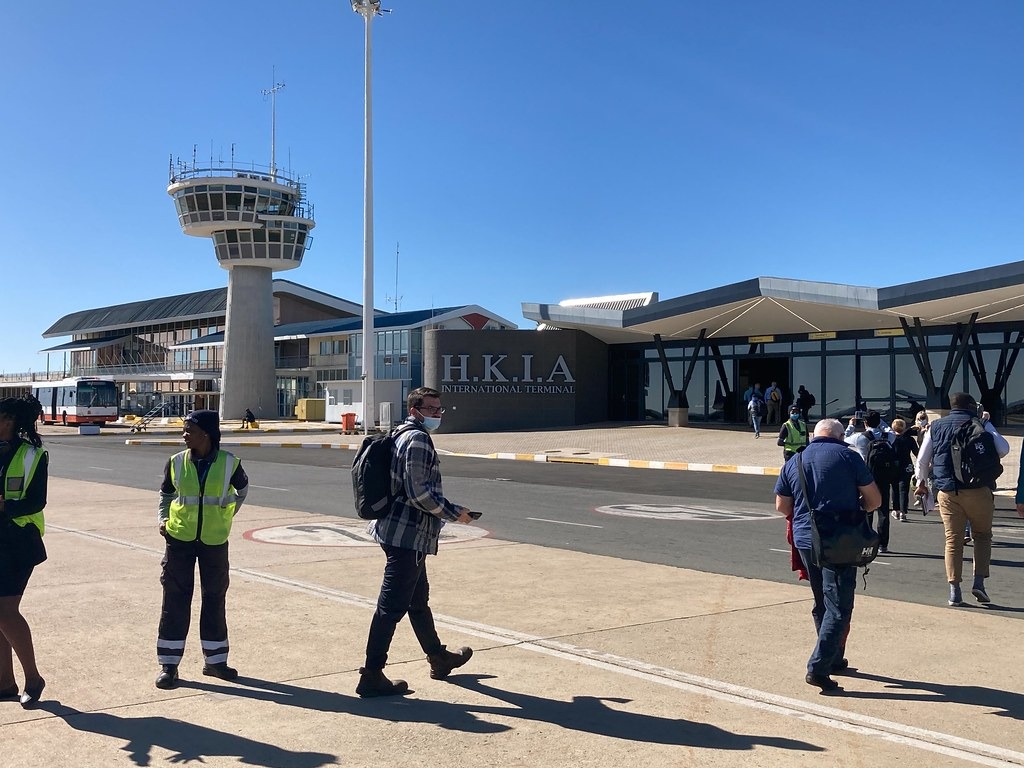
Namibia Airports Company is advancing plans to expand Hosea Kutako International Airport, with a feasibility study underway and preliminary cost estimates ranging between N$4 billion and N$5 billion, as pressure mounts on existing infrastructure.
Chief Executive Bisey Uirab told The Brief the project remains at the study stage, with ongoing engagements expected to inform final investment decisions and timelines.
“That process is going well. We are still engaging at the study levels. When we have something tangible, we will definitely share with the nation,” said Uirab.
The planned upgrade centres on the development of a new passenger terminal aimed at accommodating rising volumes and reinforcing the airport’s role as Namibia’s primary international gateway.
The company has set a target to complete construction by 2030, citing projected capacity constraints at the existing terminal.
“We have a very tight timeline to make sure that by 2030 at the latest, we do have this new terminal. Looking ahead, the outcome of the feasibility study will determine the final scope, cost, and implementation plan for the Hosea Kutako terminal expansion as Namibia prepares for increased passenger and industrial activity,” said Uirab.
Passenger growth projections indicate that the current infrastructure could become congested by 2029 or 2030, making expansion necessary to sustain operational efficiency.
Uirab said the project forms part of broader efforts to position Namibia’s aviation infrastructure to support tourism growth, regional connectivity and increased business travel.
As of February 2026, Hosea Kutako International Airport remained the dominant hub, accounting for 78.4% of total passenger movements, followed by Walvis Bay Airport at 12.7% and Eros Airport at 5.3%, with smaller airports contributing between 2.4% and 0.06%.