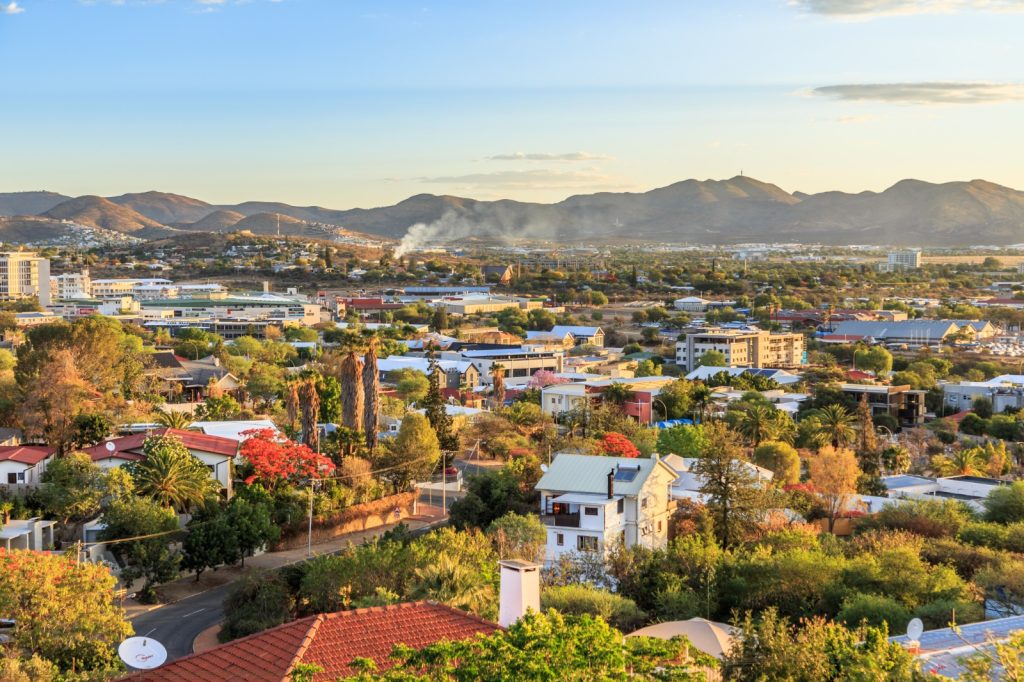
The City of Windhoek says accelerating delivery to address the full backlog of approximately 55,000 erven would require investment of about N$17 billion, underlining the scale of infrastructure needed to tackle the capital’s housing crisis.
City representative Theunis Heunis said the funding requirement reflects the cost of bulk infrastructure needed to service land, including water, sewer and electricity, as demand continues to outpace delivery.
He said government would need to allocate at least N$900 million annually over a 10-year period to support the delivery of serviced land, as part of a plan to roll out 67,000 erven.
“We have indicated that government needs to consider a phased implementation period, as timelines are a critical constraint. Delivering 67,000 serviced erven cannot be achieved simultaneously. Based on this, we proposed that if the full 67,000 serviced erven are to be delivered over a 10-year period, an annual allocation of at least N$900 million from government would be required,” Heunis said.
At this level of funding, the City estimates that about 7,000 erven could be delivered each year, in line with earlier projections of between 5,000 and 8,000 erven annually.
However, Heunis warned that current funding levels fall well short of requirements, with previous allocations significantly reduced or not disbursed.
“This allocation would support the servicing of land and the reduction of the existing backlog, for which we have already provided the quantified stock figures. In the previous financial year, government committed to a specific funding amount; however, this was subsequently reduced, and the allocated funds were ultimately not disbursed,” he said.
The City said bulk servicing remains a major constraint, with infrastructure costs estimated at around N$1.5 billion per year to service 5,000 erven, excluding additional related costs.
Demand pressures continue to intensify, driven by rapid urbanisation and population growth. Nearly half of Windhoek’s population is estimated to live in informal settlements, with more than 150 such areas now recorded.
The housing backlog is estimated at close to 65,000 units, highlighting the widening gap between supply and demand.
“If the objective is to meaningfully address the housing and serviced land shortage, sustained annual funding at the required scale will be necessary over the medium term,” Heunis said.
The City’s warning underscores mounting pressure on government to unlock large-scale funding and accelerate land servicing if Windhoek is to curb the growth of informal settlements and ease the housing crisis.