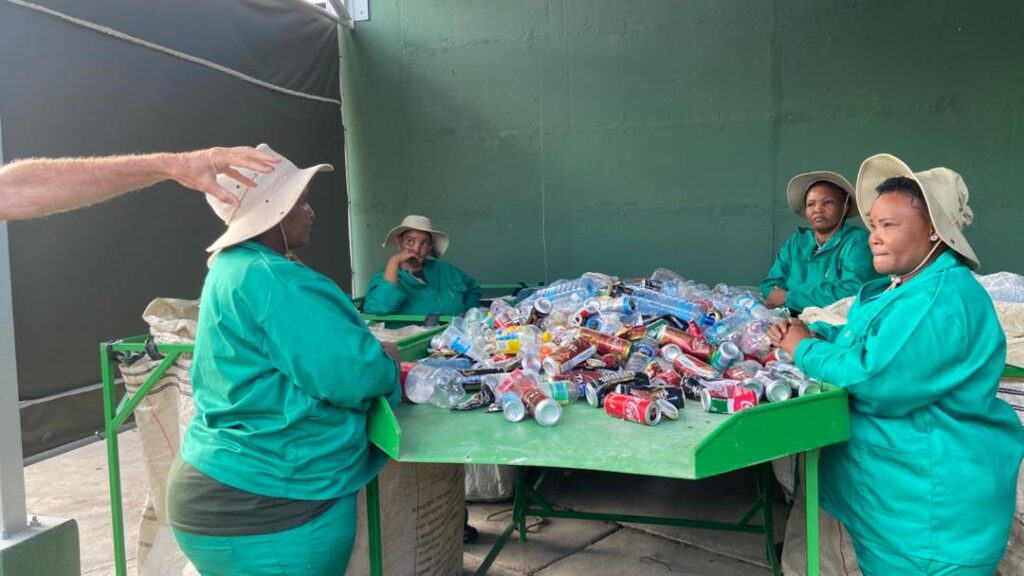
The Environmental Investment Fund of Namibia (EIF) has handed over a N$4.9 million solid waste management facility at Ombika in Etosha National Park, funded through environmental levies, including proceeds from the plastic bag levy.
The facility is aimed at addressing long-standing waste management challenges in the park, with authorities seeking to reduce environmental damage and improve conditions for wildlife.
Speaking at the handover, EIF Chief Executive Officer Benedict Libanda said the project reflects a shift from concern to investment in practical solutions.
“The Ministry of Environment, Forestry and Tourism initiated this undertaking in response to the critical and worrisome state of solid waste management within the park. What began as a concern is now a N$4.9 million investment in a sustainable solution,” Libanda said.
He said environmental levies remain the Fund’s primary source of revenue, with N$236 million collected over the past three financial years between 2021/22 and 2023/24.
According to Libanda, the funds are directed towards priority areas including waste management, renewable energy, biodiversity conservation and climate resilience.
“The Board has allocated N$20 million for waste management in Namibia for the 2024/25 financial year, of which this Ombika project was financed,” he said.
The Ombika facility is expected to reduce the impact of waste on wildlife and support improved environmental management within Etosha.
“No longer will wildlife be forced to linger around rubbish, scavenging through waste and exposing themselves to harm. We are restoring their habitat,” Libanda said.
He added that the success of the facility will depend on its effective operation, cautioning against underutilisation.
The project was implemented with the involvement of Tulipamwe Consulting Engineers and Khamachub Investment CC, with technical support from Rent-A-Drum.
Libanda said the development forms part of broader efforts to scale up recycling initiatives, strengthen compliant waste infrastructure and advance Namibia’s transition towards a circular economy.
Environmental levies, introduced in 2019 under various legislative frameworks including the Environmental Management Act, are designed to reduce pollution and promote responsible waste management. These include charges on plastic bags, electronic appliances, lubricant oils and batteries.
The Namibia Revenue Agency collects the levies on behalf of the State, with funds channelled to the EIF to support environmental and climate-related projects nationwide.