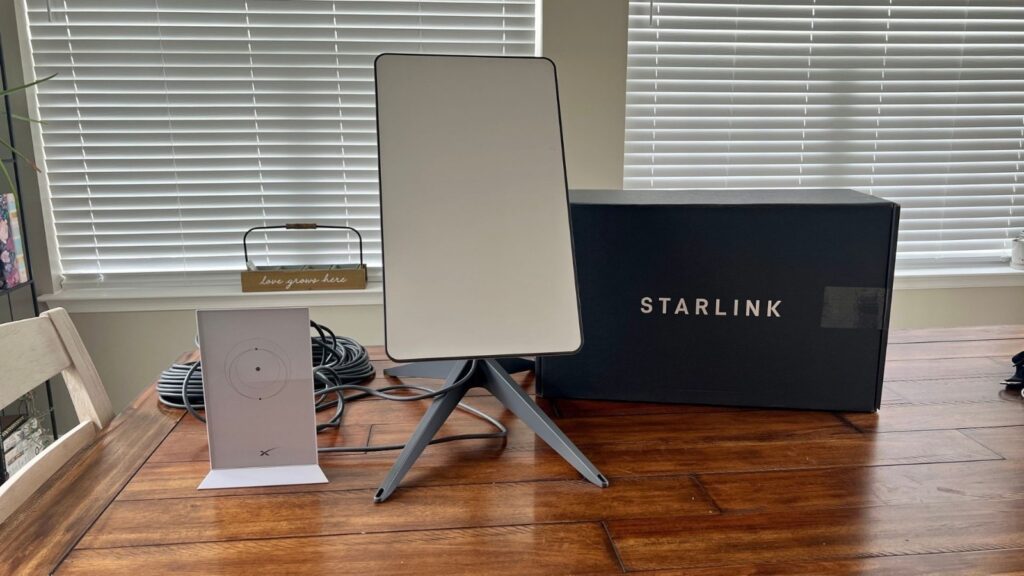
The Communications Regulatory Authority of Namibia (CRAN) has declined an application by Starlink Internet Services Namibia (Pty) Ltd for both a telecommunications service licence and a spectrum licence, according to a notice published in the Government Gazette on 23 March 2026.
The decision affects the company’s plans to provide fixed satellite services across Namibia under a Class Comprehensive Telecommunications Service Licence, which would have enabled the use of designated radio frequency bands nationwide.
CRAN also rejected the associated spectrum licence required to operate satellite-based communications services at a national level.
“The Authority resolved to decline the award of a Class Comprehensive Telecommunications Service Licence (ECS and ECNS) to Starlink Internet Services Namibia (Pty) Ltd. The Authority further resolved to decline the award of a Spectrum Licence for the provision of satellite services. The full reasons for these decisions may be requested from the Authority,” the notice stated.
According to the application, the company is incorporated in the United States, with no shareholding held by Namibian citizens or locally controlled entities.
The proposed service would have utilised specified frequency bands to deliver fixed satellite communication services across the country.
CRAN noted that, in terms of Section 31 of the Communications Act, 2009, it may reconsider its decision within 90 days, either on its own initiative or upon petition by an aggrieved party.
“The full reasons for the decisions may be requested from the Authority. The decision was issued in accordance with applicable licensing regulations,” the notice added.
In the same Government Gazette, CRAN approved the transfer of control of a telecommunications and spectrum licence held by Q-Kon Telecom Namibia, with effect from 2 March 2026.
Separately, the Authority confirmed receipt of a new application from Hengarihoff Corporation Ltd for a telecommunications service licence to deploy a LoRaWAN network for Internet of Things services. Members of the public have been invited to submit comments within 14 days.