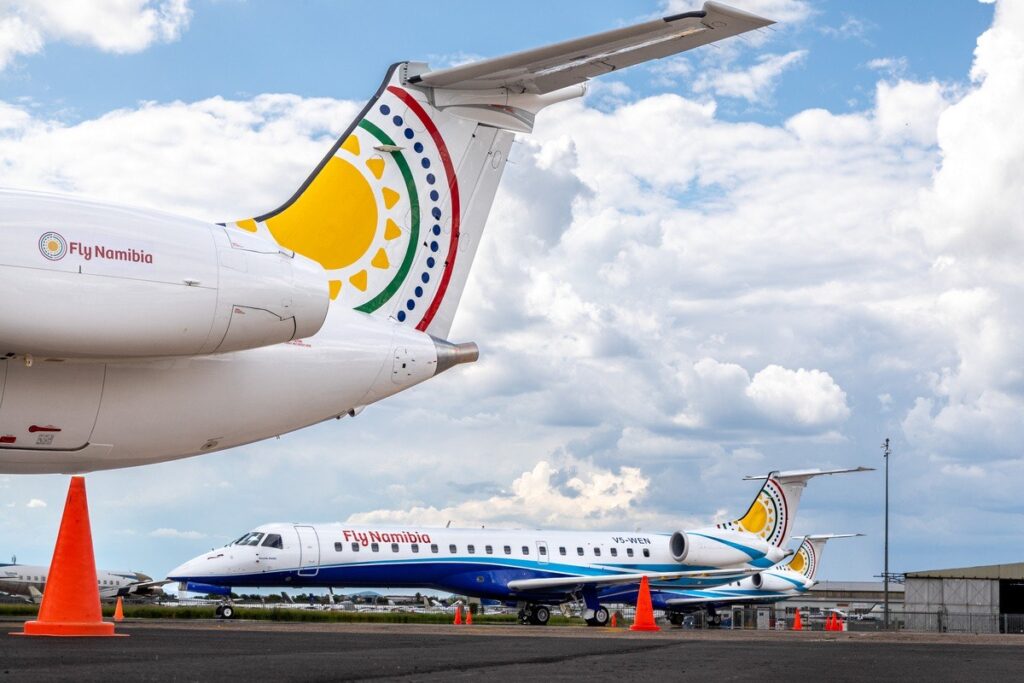
FlyNamibia has increased airfares with effect from Monday, 23 March 2026, after introducing a fuel surcharge, as rising oil prices and geopolitical tensions push airlines to pass on escalating costs to passengers.
The adjustment, implemented across the Westair Group’s operations including FlyNamibia, FlyNamibia Safari and Westair Charters, marks a direct response to mounting pressure from volatile fuel markets linked to ongoing conflict in the Middle East.
Fuel remains one of the largest cost drivers in aviation, and the company said sustained price increases and uncertainty around supply have significantly tightened operating margins.
Westair Group Chief Executive Officer, Henri van Schalkwyk, said the fare increase was unavoidable.
“We remain committed to connecting Namibia and supporting the country’s tourism and business sectors,” he said.
“This decision has not been taken lightly, but it is a necessary step to ensure that we can continue to operate sustainably in a challenging global environment.”
The group said the surcharge is aimed at preserving its route network, maintaining service reliability and ensuring continued delivery of safe air travel, despite rising input costs.
FlyNamibia’s move underscores a broader shift across the aviation industry, where airlines are increasingly adjusting fares to manage fuel-driven cost pressures.
Regionally, Air Mauritius has already raised its fuel surcharge for travel from 18 March, while Ethiopian Airlines has increased its fuel surcharge tax. Kenya Airways has implemented fare increases across all routes, and RwandAir has introduced a temporary surcharge on selected fares.
International carriers are also responding. Air France-KLM has raised long-haul ticket prices due to higher jet fuel costs, while Cathay Pacific has increased fuel surcharges across its network. LATAM Airlines has introduced a US$20 per sector surcharge, and Delta Air Lines has warned that fares may fluctuate as operating costs rise.
Westair said the fuel surcharge will be reviewed regularly in line with movements in fuel prices, signalling that further adjustments cannot be ruled out if cost pressures persist.