Namibia and Germany have launched a new skills development initiative that will begin with 100 trainees, with plans to scale the programme to thousands of young Namibians in the coming years as part of efforts to address skills shortages and expand employment opportunities locally and abroad.
The TalentsBridge Programme, launched in Windhoek, aims to equip participants with German-standard vocational training aligned with the needs of both the Namibian and German labour markets.
Speaking at the launch, President of the Berlin Chamber of Commerce and Industry and Chairman of TalentsBridge, Sebastian Stietzel, said the first intake will focus on three priority sectors: Industrial Electrical, Hospitality, and Wholesale and Retail.
“That is why we are bringing German-standard vocational training to Namibia and conducting it here locally,” Stietzel said. “The idea is to establish a training centre that combines theoretical instruction with practical workplace experience within Namibian companies, while also encouraging German companies to establish subsidiaries in Namibia.”
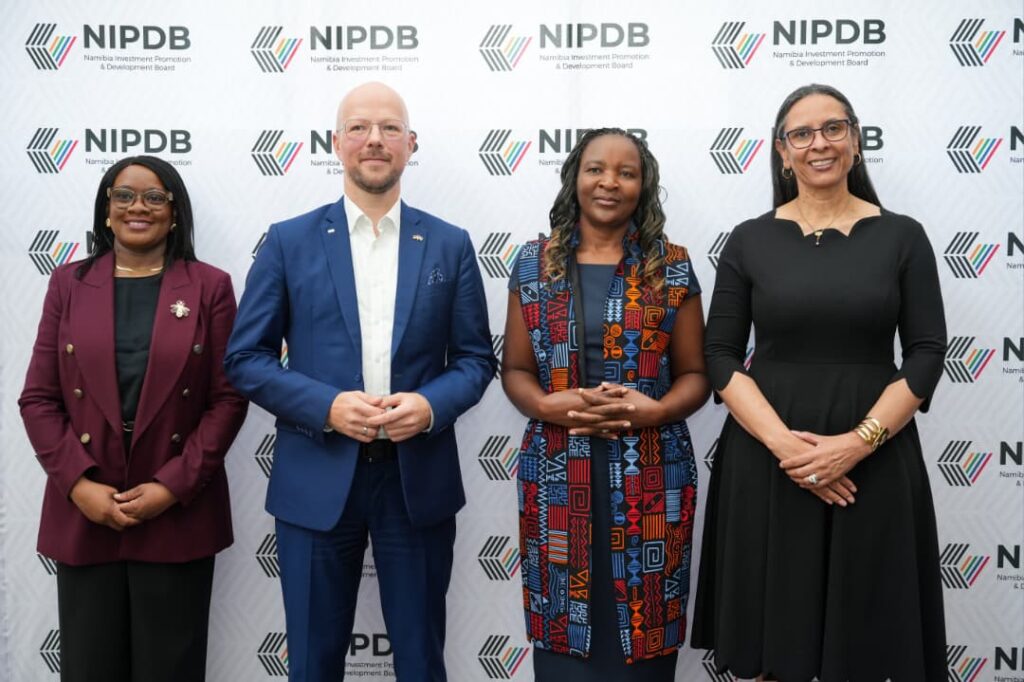
The programme is being implemented in partnership with the Namibia Investment Promotion and Development Board (NIPDB), the Ministry of Education, Innovation, Youth, Sports, Arts and Culture, as well as local and German private sector partners.
Participants, primarily unemployed graduates from Namibian Vocational Training Centres, will undergo language training and intercultural preparation before entering a 24-month apprenticeship programme. Successful graduates will have access to employment opportunities either in Namibia or Germany.
Stietzel said companies supporting the initiative have committed to offering employment pathways to trainees who may not secure placement locally.
“If suitable employment opportunities are available in Namibia, that would be ideal as it strengthens the domestic economy. However, if opportunities are limited, German companies funding the scholarships will guarantee job placements in Germany,” he said.
Training for the initial cohort will take place at a temporary facility, while long-term plans include the construction of a dedicated education campus near Windhoek. The proposed campus will feature student accommodation, training facilities and space for companies to operate alongside the training centre.
By 2028, the first graduates are expected to enter the workforce, with organisers targeting a significant expansion of the programme to support up to 3,000 young Namibians over time.
Officials say the initiative positions Namibia to turn Germany’s shortage of skilled labour into an opportunity for local workforce development while strengthening bilateral economic cooperation and skills transfer between the two countries.