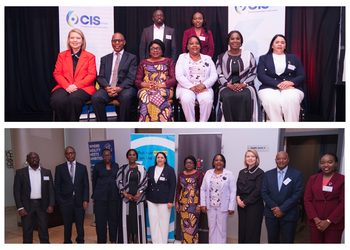
Standard Bank Namibia on Thursday convened key business clients, engineering, procurement and construction (EPC) firms, renewable energy partners, municipal representatives and industry stakeholders for its Breakfast Connect Session, aimed at accelerating private sector adoption of renewable energy solutions.
The engagement introduced clients to the bank’s Vehicle and Asset Finance (VAF) Solar Financing offering, designed to support businesses seeking clean, reliable and cost-stable energy alternatives amid rising electricity tariffs and supply reliability concerns.
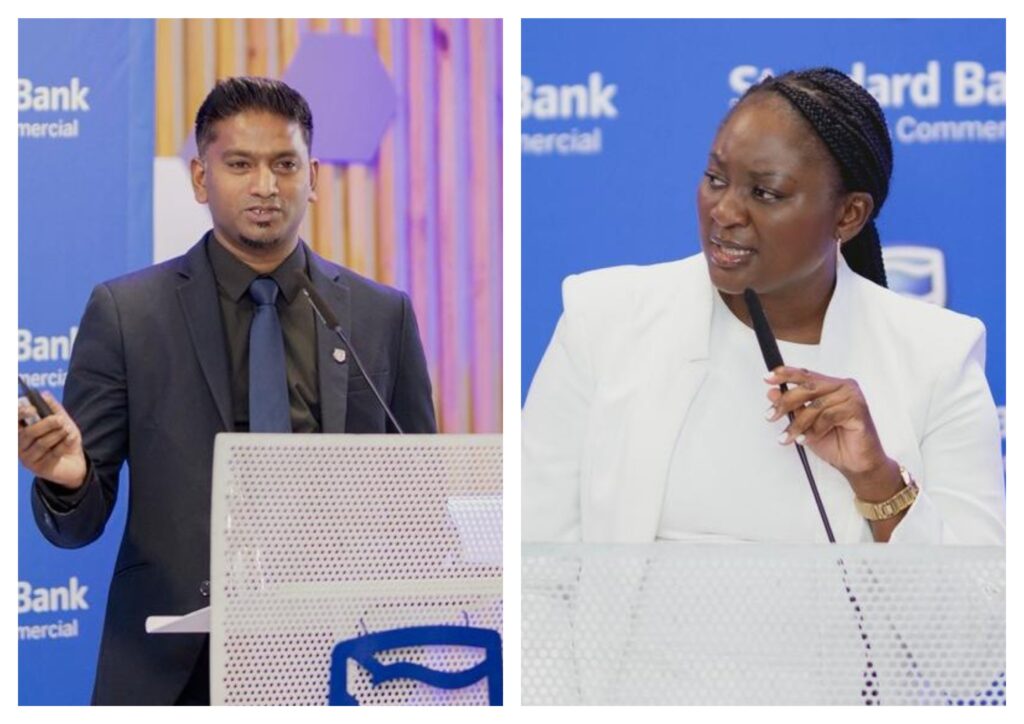
Speaking at the event, Standard Bank Namibia Head of Business and Commercial Banking, Hellen Amupolo, said renewable energy has moved from a long-term aspiration to an immediate operational priority for Namibian enterprises.
She emphasised that access to financing remains central to enabling the transition towards sustainable energy systems.
“This breakfast is more than just a gathering; it is a platform for collaboration, dialogue and action. Financing is the bridge between vision and reality, enabling projects that power businesses, strengthen infrastructure and support national sustainability efforts,” Amupolo said.
Delivering the keynote address, Standard Bank Group Market Development Lead and Asset Finance Specialist for Renewable Energy and Healthcare, Oliver Jugadasen, said Namibia’s energy landscape is undergoing a structural shift as companies increasingly pursue decentralised power solutions.
“The energy market is shifting toward decentralised generation, driven by rising utility costs, reliability concerns and the global move toward cleaner electricity. For Namibia, this is not only an environmental conversation but an economic one,” he said.
Jugadasen noted that technological improvements and declining solar panel prices have strengthened the commercial case for distributed energy investment but stressed that successful implementation depends on accurately assessing a business’s energy needs.
“For customers, the objective is not simply installing solar equipment. It starts with understanding energy demand. Oversizing installations increases capital costs unnecessarily, while right-sizing ensures optimal savings and predictable cash flow,” he said.
He added that well-structured financing solutions can deliver immediate cost benefits, particularly where solar-generated electricity is cheaper than grid supply.
“A financed system that produces electricity at a lower effective tariff than grid supply allows a customer to reduce operating expenses from the first year,” Jugadasen said.
While battery storage remains a significant cost factor, he said the investment case strengthens when compared with diesel generation expenses and the financial losses associated with operational downtime.
“When compared to the operational cost of diesel generators and the financial impact of downtime, storage becomes a resilience investment,” he said.
Jugadasen outlined financing pathways available to clients, including on-balance-sheet asset finance for customer-owned systems with repayment terms of up to ten years, as well as project financing structures linked to power purchase agreements, where the bank funds generation assets backed by contracted offtake arrangements.
“The bank finances the project following due diligence on contract stability, financial forecasts and operational risk. This model enables large-scale generation without requiring the end user to carry capital expenditure on their balance sheet,” he said.
Standard Bank said its renewable energy financing strategy aligns with broader continental efforts to mobilise capital into sustainable infrastructure. The bank added that it remains focused on supporting bankable projects through disciplined risk assessment and partnerships that deliver measurable economic value to both the private sector and the wider economy.
The lender reaffirmed its commitment to supporting clients with financing solutions that enable greater energy independence while advancing Namibia’s transition towards a decentralised, resilient and sustainable energy system.