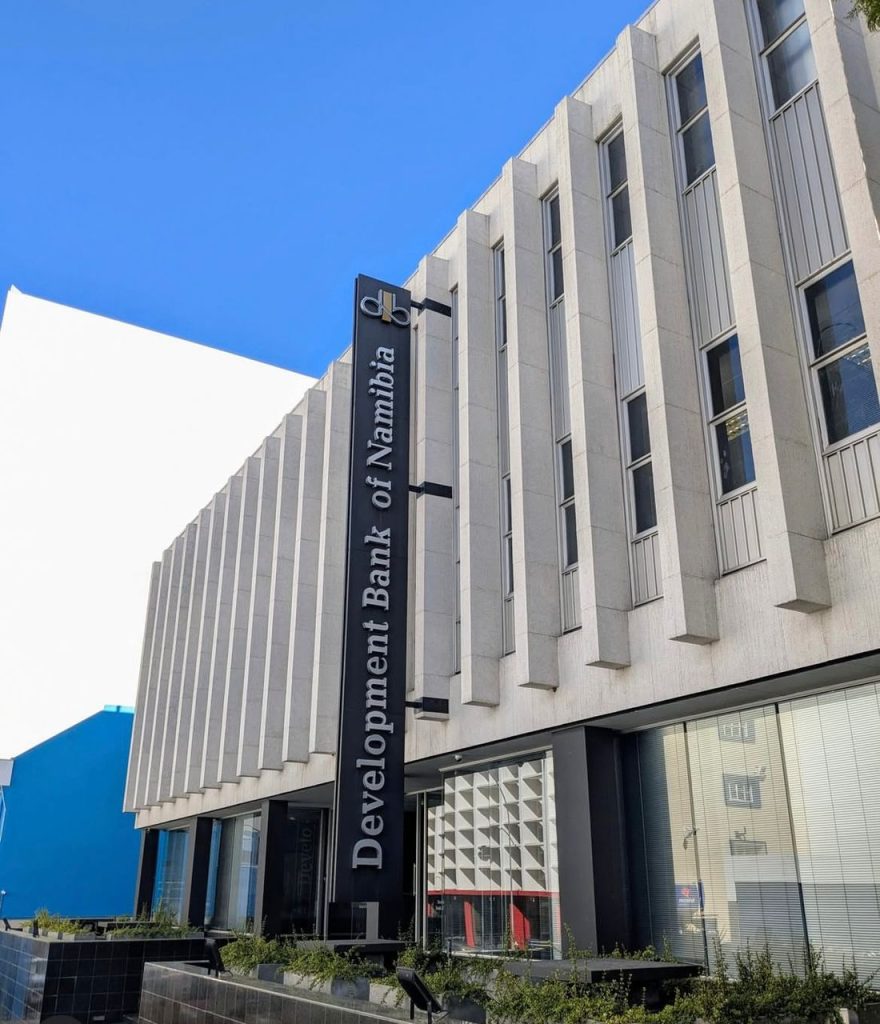
The Development Bank of Namibia’s loan book contracted to N$5.8 billion in the 2024/25 financial year, down from N$6.2 billion in 2023/24, according to the Bank’s Integrated Annual Report.
The reporting period, which runs from 1 April 2024 to 31 March 2025, reflects a tighter operating environment for development finance.
DBN attributed the contraction mainly to accelerated cash sweeps linked to its exposure to the National Energy Fund, which constitutes a significant portion of the loan book.
“The contraction in the loan book was largely driven by accelerated cash sweeps associated with the National Energy Fund exposure, alongside subdued disbursements and the clean-up of long-outstanding non-performing loans,” the Development Bank of Namibia said.
Despite the decline in loans, total assets remained stable at N$7.3 billion during the year under review. The Bank said a stronger cash position helped offset the reduction in the loan portfolio, supporting balance-sheet stability.
Asset quality indicators recorded mixed movements. The non-performing loan ratio increased by three percentage points, while the impairment ratio declined by four percentage points.
“While the loan book continues to reflect weak asset quality, the reduction in the impairment ratio reflects the write-off of exhausted accounts and an improved collateral position,” DBN said.
Operational efficiency came under pressure as the cost-to-income ratio rose sharply to 53.7%, from 38% in 2023/24, exceeding the Bank’s internal target of 40%.
DBN attributed the deterioration primarily to a 25% decline in net interest income, driven by interest rate cuts and a contracting loan book, while operating costs remained broadly stable.
The Bank said revenue compression placed upward pressure on the ratio, prompting management to implement cost-optimisation measures and efficiency improvements aimed at restoring the ratio to acceptable levels over the medium term.
Despite these pressures, DBN recorded a net profit of N$88.3 million for the year, up from N$62.0 million in 2023/24, representing a 42% year-on-year increase. The improvement was driven largely by strong loan recoveries and disciplined cost containment.
Net interest income declined by 25% year on year to N$337.4 million, from N$450.6 million in the previous financial year.
DBN said the decline was largely attributable to a 100-basis-point cut in the Bank of Namibia’s policy rate, which reduced returns on the prime-linked portion of its loan book.
“The reduction in the policy rate negatively affected prime-linked loans, while the cost of capital remained unchanged, compressing interest margins and contributing to the decline in net interest income,” the Development Bank of Namibia said.