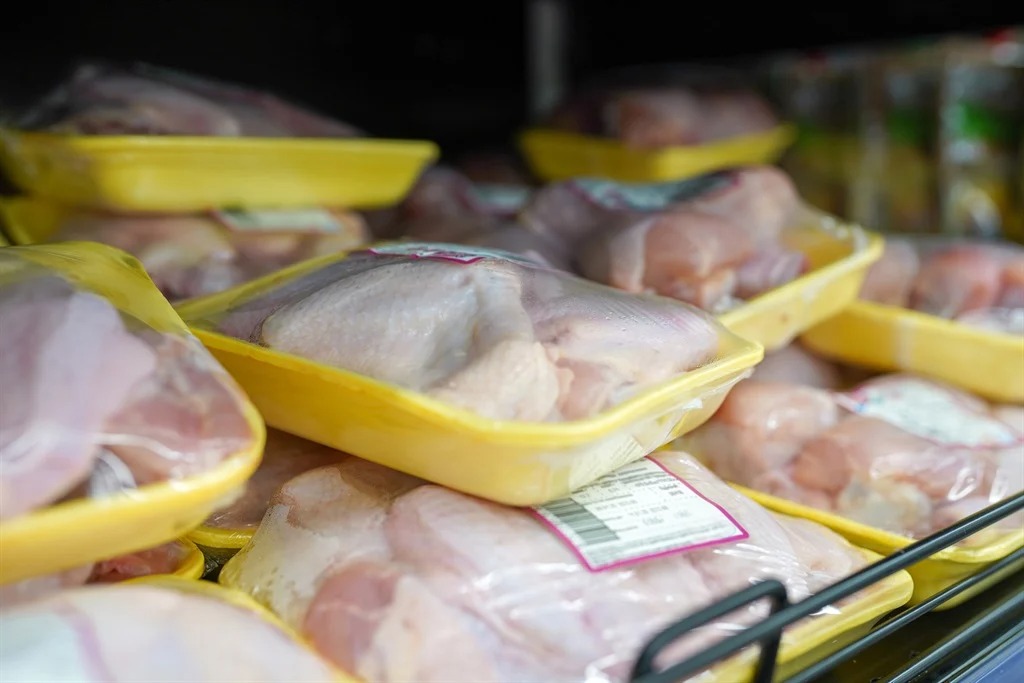
A total of 17,615,536 chickens were slaughtered for domestic consumption in Namibia on a year-to-date basis as at November, while poultry product imports reached 18.7 million kilograms over the same period, according to the Livestock and Livestock Products Board.
Month on month, live-bird imports surged by 85.8%, rising from 23,460 birds in October to 43,600 birds in November. All imports comprised day-old chicks sourced from South Africa, bringing year-to-date live chicken imports to 419,761 birds and underscoring continued reliance on imports to support domestic poultry production.
“Year to date, a total of 17,615,536 chickens were slaughtered for domestic consumption. In terms of trade, year-to-date imports of poultry products totalled 18.7 million kilograms,” the board said in its latest report.
The sheep sector recorded a modest year-on-year improvement in November, with 34,565 head marketed, up 6.2% from 32,533 head in November 2024, reflecting improved supply conditions, according to the board.
However, month-on-month marketing edged down by 0.3% from October’s 34,664 head. Of total marketing, slaughter declined by 8.0% to 13,225 head, while live exports increased by 17.5% to 21,340 head. South Africa remained the dominant destination, absorbing 98.8% or 21,074 head, with smaller volumes exported to Botswana (232 head) and Zimbabwe (34 head).
Despite the November increase, year-to-date sheep marketing declined sharply by 34.6% to 506,417 head, compared with 774,789 head over the same period in 2024. Sheep-meat exports also fell, with 34,886 kilograms exported in November, down 18.0% from a year earlier.
Producer prices in the sheep sector remained firm amid tight supply. The board said the A2 lamb price at export abattoirs averaged N$104.78 per kilogram in November, up 5.1% from October. On a year-to-date basis, A2 prices averaged N$94.14 per kilogram, 23.0% higher than the 2024 average. At auctions, Dorper lamb prices averaged N$47.12 per kilogram in November, while the 2025 year-to-date average stood at N$40.05 per kilogram, up 23.3% from 2024.
“Shipments went to Lesotho, which absorbed 79.4%, with South Africa taking the remaining 20.6%. Year-to-date exports totalled 367,346 kilograms, well below the 690,696 kilograms exported over the same period in 2024, a decline of 46.8% reflecting supply-side constraints,” the board said.
In the goat sector, the board reported a year-on-year increase in marketing in November, with 12,046 head marketed, up 28.0% from 9,412 head in November 2024. Month-on-month volumes rose by 2.8%, driven by higher live exports.
Live goat exports totalled 11,998 head, with 98.2% destined for South Africa, while the remainder was exported to Zimbabwe (163 head) and Botswana (53 head). However, year-to-date goat marketing declined by 10.4% to 114,873 head, compared with 128,140 head in 2024.
Goat prices strengthened in November, reflecting improved body conditions and steady demand. Goat lamb prices averaged N$53.18 per kilogram, while Kapater and ram prices rose to N$47.22 per kilogram and N$40.71 per kilogram, respectively.
“The overall firming of prices reflects improved body conditions and steady demand amid restricted market supply, a typical post-rainfall response as producers focus on herd rebuilding rather than sales,” the board said.
In the pork sector, pig marketing declined by 1.9% year on year in November to 4,270 head, although year-to-date volumes increased by 4.7% to 48,016 head. Pork imports continued to rise, increasing by 26.1% year on year to 728,821 kilograms in November and by 28.6% month on month.
Year-to-date pork imports reached 6.4 million kilograms, up 5.0% from 2024. The board said Spain remained the largest supplier at 39.8%, followed by South Africa (31.1%), the Netherlands (7.3%), the United Kingdom (5.7%), Belgium (5.2%) and Ireland (4.8%), with other countries accounting for the remaining 6.0%.