At a time when Namibia’s economy is under visible strain, leadership choices matter more than slogans. In this context, the recent appointments of Oscar Capelao to the Ministry of Finance and Ebson Uanguta to the Bank of Namibia deserve recognition not simply as routine administrative changes, but as decisions grounded in experience, continuity and earned trust.
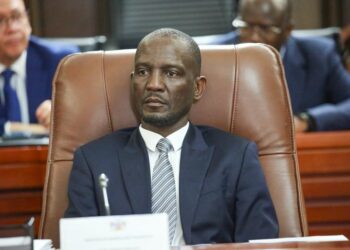
Oscar Capelao’s appointment as Executive Director and Accounting Officer in the Ministry of Finance comes at a demanding juncture. Fiscal pressure is rising, revenue growth is uneven and the margin for policy error has narrowed. These are not conditions suited to learning on the job.
Capelao brings with him a rare blend of institutional knowledge and private-sector financial discipline. Having served as Deputy Executive Director at Finance and as Group Chief Financial Officer at FirstRand Namibia, he understands both how government manages public resources and how capital responds to policy signals. That dual perspective is increasingly essential in an economy where public finance decisions directly affect business survival, investment confidence and employment.
His appointment reflects more than seniority. It reflects a recognition that experience matters when the economy is fragile. Finance leadership today requires restraint without paralysis, prudence without fear and a clear understanding that sustainability cannot be achieved by extracting more from a shrinking base.
Equally deserving is the appointment of Ebson Uanguta as Governor of the Bank of Namibia, effective January 2026. His elevation has been met with broad acceptance for good reason. Uanguta is a central banker shaped by decades of service, intellectual rigour and quiet consistency.
From his early work in monetary policy and exchange rate management to his leadership of research, international exposure at the IMF and long tenure as deputy governor, Uanguta’s career reflects steady preparation rather than ambition-driven acceleration. His path has been defined by patience, discipline and credibility, qualities that are often undervalued until a system comes under pressure.
The central bank he inherits is stronger than before, modernised through digitalisation, governance reform and financial market development. The task ahead is not to dismantle that progress, but to deepen it. Stability remains critical, but so does relevance. Monetary policy must speak to real economic conditions, financial inclusion and the lived experience of households and businesses.
Uanguta assumes office at a time of high unemployment, inequality and slowing growth, but also at a moment when long-term opportunity remains within reach. His leadership style, marked by humility and substance rather than spectacle, is well suited to this phase of Namibia’s economic journey.
Together, these appointments signal confidence in competence. They suggest a willingness to entrust key institutions to individuals who have earned their positions through service.
Commendation does not remove responsibility. Expectations will be high, and rightly so. But in uncertain times, continuity anchored in merit is not a weakness. It is a stabilising force.
Namibia’s economic challenges will not be solved by appointments alone. Yet placing experienced hands at the centre of fiscal and monetary authority is a meaningful step. It reflects an understanding that when the stakes are high, leadership must be both deserving and dependable.
* Briefly is a weekly column that is opinionated and analytical. It sifts through the noise to make sense of the numbers, trends and headlines shaping business and the economy with insight, wit and just enough scepticism to keep things interesting. THE VIEWS EXPRESSED ARE NOT OUR OWN, we simply relay them as part of the conversation.