Namibia is stepping up efforts to attract more Chinese investment as it positions itself as a strategic cooperation hub for China in southern Africa, with a strong emphasis on shifting from raw material exports to value-added industrial growth.
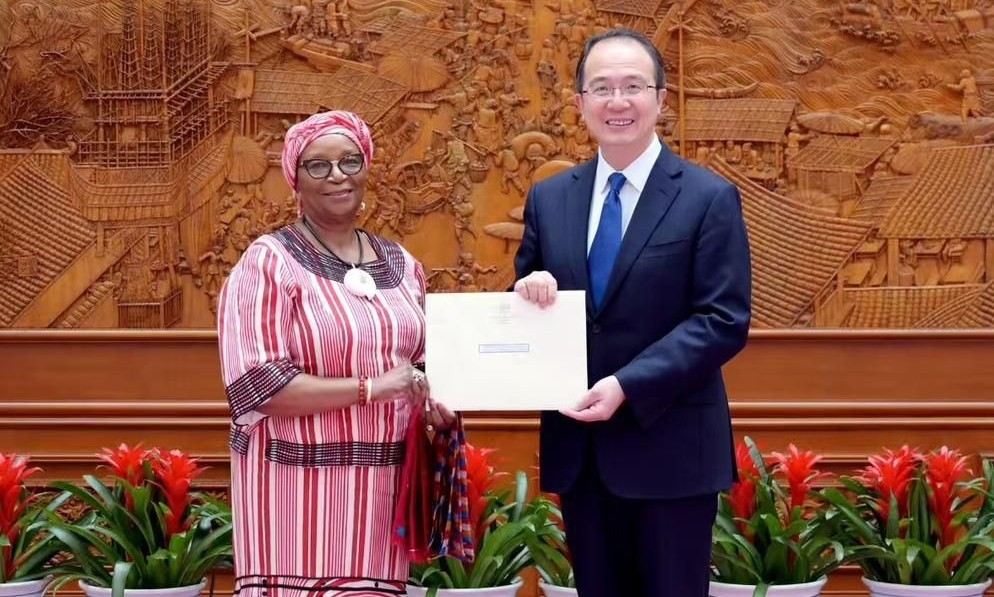
Speaking in Beijing, Namibia’s new Ambassador to China, Tonata Itenge-Emvula, said the country is prioritising partnerships that support industrialisation, renewable energy development and agricultural transformation.
“Namibia welcomes partners who share our vision to add value to our resources, develop renewable energy and boost agriculture for food security. We believe in cooperation where both Namibia and China benefit,” she said.
Itenge-Emvula said Namibia wants investors with the technology, expertise and capital needed to deepen value addition across high-potential sectors.
She noted that renewable energy is a key pillar, with Namibia emerging as a frontier market for green hydrogen development due to its strong wind and solar resources. Opportunities for cooperation include clean fuels, green ammonia and low-carbon industrial products.
Agriculture remains central to Namibia’s outward investment pitch. Itenge-Emvula said that with greater investment in irrigation, cold-chain logistics and modern agro-processing, Namibia can become a reliable supplier of premium food products to Asian markets while contributing to China’s long-term food security goals.
She highlighted the country’s strategic minerals—such as uranium, lithium, cobalt, nickel, manganese and copper,which are vital to global new-energy industries.
Existing Chinese investment, particularly through China National Nuclear Corporation, has already strengthened cooperation, and more partners are being invited to expand into processing and local value-chain development.
Itenge-Emvula said Namibia’s participation in the Forum on China-Africa Cooperation (FOCAC) and the Belt and Road Initiative (BRI) provides strong platforms for financing, trade facilitation and technology exchange.
“Food security is central to reducing poverty and strengthening livelihoods, and we see tremendous potential for cooperation with Chinese partners,” she said.
China is Namibia’s largest source of foreign direct investment—accounting for around 30% of total inflows,and is the country’s second-largest trading partner after South Africa.
More than 50 Chinese companies currently operate in Namibia, including major investors at the Husab and Rössing uranium mines.