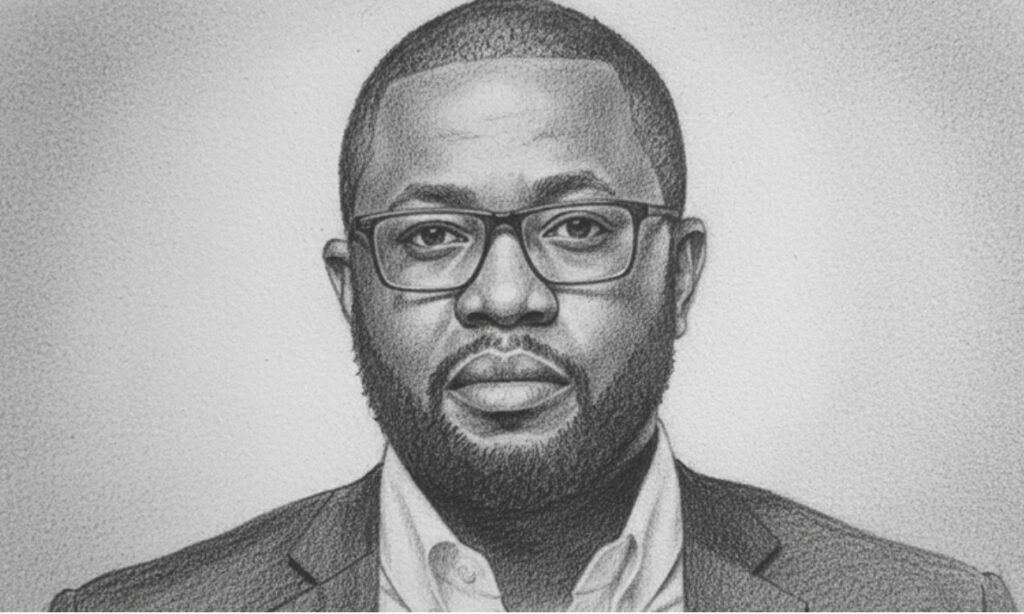
By Lot Ndamanomhata
When G20 finance ministers met in Johannesburg earlier this month to discuss debt sustainability, they did so on a continent where debt service already consumes budgets meant for hospitals, water infrastructure, school textbooks, and energy investment.
Yet the most powerful forces shaping African fiscal survival were not seated in the conference room.
They remained thousands of kilometres away in Washington, D.C., in institutions where decision-making is concentrated in the hands of a few shareholders — most notably the United States.
With the U.S. holding roughly 16–16.5% of voting power at the IMF (U.S. Treasury NAC Reports, 2024) and around 15.7–15.8% at the World Bank’s IBRD (World Bank IBRD Statement of Voting Power, 2024), it remained the only country with a de facto veto over major reforms at both institutions.
This imbalance was not theoretical; it was the invisible hand behind today’s global debt trap. It became clear that one could not meaningfully discuss “debt sustainability” on African soil without confronting the structural rules deciding who receives relief, liquidity, or decades of delay.
Johannesburg marked history as the first G20 Ministerial on debt sustainability held in Africa. Yet the central question lingered over the summit: could anything change if global financial governance remained untouched?
A World Drowning in Debt
The Institute of International Finance reported that global debt reached a record USD 324 trillion in the first quarter of 2025, rising by USD 7.5 trillion in only three months (Institute of International Finance, 2025). That figure amounts to more than three times global GDP.
For perspective:
- U.S. federal debt stood at USD 37 trillion
- China at USD 16.46 trillion
- Japan at USD 10.22 trillion
- The United Kingdom at USD 3.65 trillion
- India at USD 3.23 trillion
With U.S. debt now equivalent to 121% of its GDP (U.S. Fiscal Data, 2025), America owed more than the entire size of its economy. Yet Washington continued prescribing fiscal discipline to the developing world.
Even more striking, U.S. federal debt exceeded the combined economies of China, Germany, Japan, India and the United Kingdom. Yet when African states borrowed for hospitals, rail projects, water systems or electricity, Western institutions raised alarms over “unsustainable debt.”
Who Funds U.S. Debt? The Irony Was Global
Foreign holders of U.S. debt revealed a world financing America’s borrowings. Japan held USD 1.1 trillion; the U.K. USD 809.4 billion; China USD 756.3 billion. Luxembourg, Cayman Islands, Canada, Belgium, Ireland and France held hundreds of billions more (U.S. Treasury International Capital Data, 2025).
The takeaway was unmistakable: debt is universal, but punishment for debt is selective.
IMF and World Bank: Institutions of Structural Imbalance
The IMF and World Bank were never built with African representation in mind. Their voting structures, frozen in time since the 1940s, guarantee inequality.
- At the IMF, the U.S. holds around 16.5% voting power, giving it the only automatic veto (IMF Quota and Voting Shares, 2024).
- At the World Bank (IBRD), the U.S. holds around 15.7–15.8%, enough to block major reform (World Bank IBRD Voting Power, 2024).
Thus, no restructuring, mandate change or reform of conditionality can pass without U.S. approval. African calls for multilateral reform — echoed repeatedly by the African Union, UNCTAD and finance ministries — routinely stall at the gate of U.S. influence.
Why Poor Countries Pay More
Developing nations pay higher interest rates than wealthy economies. Studies from the Federal Reserve Bank of Minneapolis and the IMF (2024–2025) showed structural drivers:
- inflated risk premiums based on market bias
- liquidity premiums due to smaller debt markets
- currency risk linked to dollar dominance
- global interest rate cycles driven by U.S. Federal Reserve policy
- limited concessional finance pushing countries toward expensive loans
The outcome: those needing cheap money pay the highest prices. It was the financial equivalent of charging the sickest patients the highest medical fees.
The G20 Common Framework: Still Failing
The G20 Common Framework, launched in 2020, was supposed to resolve sovereign debt distress. It has not. Reports (IMF, 2024; G20 Secretariat, 2025; UN Debt Reform Briefs, 2024) identified failures:
- restructuring takes years, wrecking economies
- private creditors avoid contributing until late stages
- African voices are marginalised in decisions affecting African debt
Zambia, Ghana and Ethiopia experienced stagnation, currency collapse and delayed investment during drawn-out negotiations.
Why Johannesburg Mattered — and Why It Was Not Enough
Holding the summit in Africa signalled recognition that the Global South is at the epicentre of the debt crisis. But symbolism alone could not dismantle structural inequality.
The summit could push for:
- faster timelines
- transparent creditor committees
- more concessional finance
But it could not:
- reform IMF or World Bank governance
- remove U.S. veto power
- enforce private creditor participation
- change conditionality paradigms
Without Washington’s consent, systemic reform remained elusive.
The Hypocrisy Question
African debt is routinely portrayed as reckless, while Western debt is considered manageable or technical. Yet:
- U.S. debt is USD 37 trillion
- Japan’s debt-to-GDP exceeds 250%
- The UK and France carry chronic deficits
- China’s public-sector debt dwarfs African totals
The narrative that “Africa borrows too much” is politically convenient, not empirically grounded.
So, Will Johannesburg Change Anything?
Not unless the world confronts the underlying truth:
Debt sustainability is impossible without reforming who makes the rules.
Conclusion: Africa Cannot Fix a Global Crisis With a System Built Against It
Johannesburg represented a moment of possibility, but only if the global community accepts what African ministers already understand:
You cannot solve a global debt crisis with institutions governed like it is 1944.
Global debt sits at USD 324 trillion. Poor countries pay the highest interest. The U.S. alone has veto power over the institutions deciding who receives debt relief. Restructuring remains painfully slow and politically skewed.
Africa did not create the global debt crisis — yet Africa pays some of its highest costs.
The G20 can change this, but only by confronting structural power, not merely issuing communiqués.
*Lot Ndamanomhata is a graduate of Public Management, Journalism and Communication. This article reflects his personal views