Namibia exported horticulture produce worth N$1.9 billion in the 2023/24 financial year, up from N$1.7 billion the previous year, according to Namibia Agronomic Board (NAB) Chief Executive Officer Fidelis Mwazi.
He said the growth was driven by strong inspection services, compliance with food safety standards, and improved market access.
“We have seen horticulture exports increase from N$1.7 billion to N$1.9 billion, which is very significant. Our aspiration is for this growth to continue so that it becomes more sustainable and contributes even more to the nation,” Mwazi said.
Launching the NAB annual report, Mwazi said revenue for the year ending March 2024 stood at N$230 million, while prudent expense management produced a surplus of N$107 million.
Net assets increased to N$448 million, backed by an unqualified audit outcome. NAB also invested N$1.4 million in staff training and capacity building.
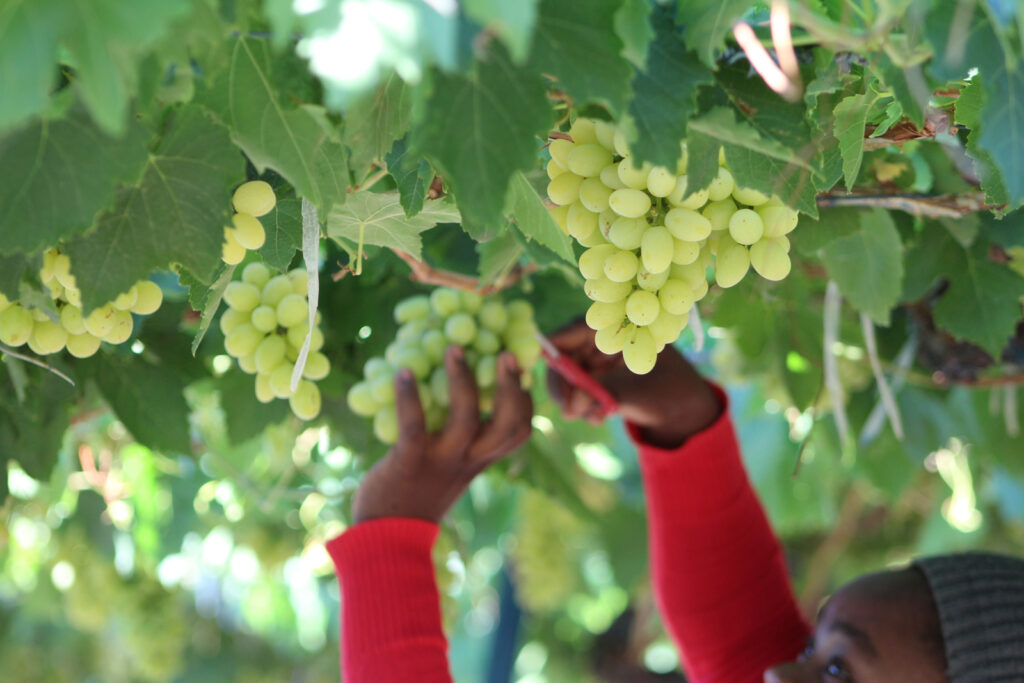
He reported that more than 93 million cartons of table grapes were inspected and cleared for export, ensuring Namibian produce met international standards without restrictions.
The annual report also outlined the development of four crop-specific marketing standards to align production with quality and safety demands, supported by farmer training programmes.
“Our staff work diligently to make sure consignments are ready on time, in compliance with regulations, and aligned with the Ministry of Agriculture,” Mwazi said.
He added that local market share promotion remains a priority. While the Primary Market Share Promotion Scheme has remained between 40% and 43% over the past five years, NAB aims to raise this to 60%.
Potatoes, apples, and bananas remain the leading imports, though trials are underway to strengthen local banana production.
“Potatoes fall under the Market Share Promotion Scheme, as we aim to reduce their import volumes. With apples and bananas, we have already started trials to explore how best to produce bananas locally and strengthen self-sufficiency,” he said.
Mwazi highlighted wider production challenges, noting that only 20% of Namibia’s grains are produced locally, with 80% imported.
In fruit, just 4% is grown domestically, while 96% is imported, underscoring opportunities for expansion with targeted support.
NAB achieved 92% compliance with good agricultural practices, slightly below its 95% target. Mwazi said measures were being taken to close the gap in the year ahead