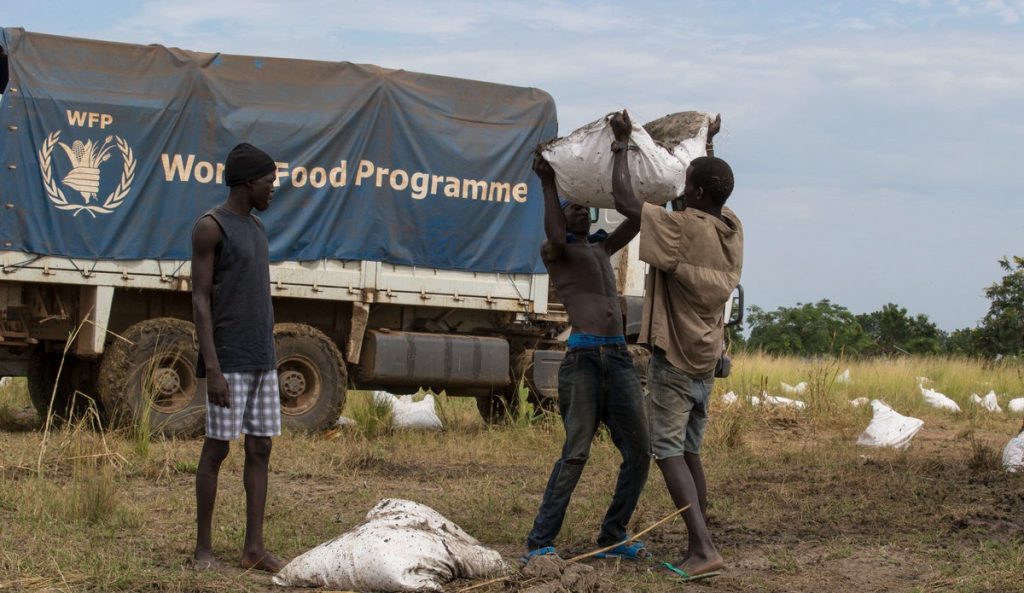
The United Nations World Food Programme (WFP) assisted 96,387 people in Namibia in July 2025, providing emergency food support to communities affected by droughts, floods and food insecurity.
According to the WFP Namibia Country Brief, 58,764 people received food vouchers, 25,585 children were served meals at soup kitchens, and 12,038 schoolchildren benefited from the Home-Grown School Feeding Programme.
Namibia, with a population of 3.02 million, continues to face the impact of El Niño-related droughts, crop failures, reliance on rain-fed agriculture and dependence on external markets.
The conditions have increased vulnerability to shocks and fuelled food price inflation.
WFP has operated in Namibia since 1990, supporting government food security and nutrition programmes. The Early Childhood Development Feeding Programme, run by the Ministry of Gender Equality and Child Welfare with WFP and UNICEF, supplies fortified porridge at around 2,000 centres. In July, a joint mission in the Erongo Region carried out oversight, training of trainers and baseline data collection for the programme.
“Under the USAID/BHA-funded nutrition-sensitive voucher programme, 58,764 beneficiaries, including pregnant and breastfeeding women and children under five, were enrolled on the Namibia Integrated Digital Assistance Service (NIDAS) platform,” WFP said.
Households received N$500 in food vouchers per feeding cycle to access a variety of foods in line with national dietary guidelines.
From 21 July to 1 August, WFP conducted an IPC/VAA workshop, training more than 45 government officials in food security analysis and certifying over 30 NamVAC members as IPC Level 1 Analysts.
The initiative aimed to improve early warning systems and guide policy decisions.
In the Oshikoto and Omusati Regions, 131 beneficiaries received training in nutrition, food safety and hygiene. WFP also supported the establishment of 28 household gardens and the development of 120 more.
The organisation said it requires US$ 0.5 million to cover operations between August 2025 and January 2026, representing 19 percent of its six-month funding needs.