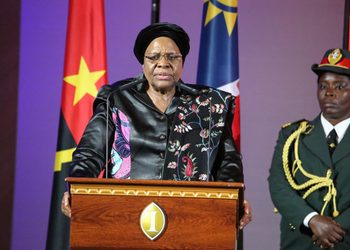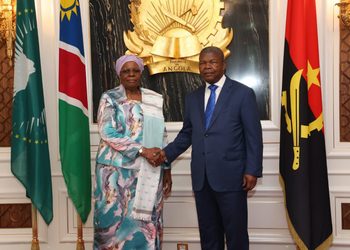
Minister of International Relations and Trade, Selma Ashipala-Musavyi, has called on business leaders in Omaheke to prioritise industrial development and value addition in order to strengthen the region’s participation in national, continental and global markets.
Speaking at the Ministry’s regional engagement, Ashipala-Musavyi stressed the need to establish industries and factories capable of transforming raw products into high-value goods.
“If we have the option to establish one or two industries or factories in Omaheke, what value addition can be optimised to allow the region to participate in national, continental, and global markets? How can we advance value addition in this region, take advantage of the African Continental Free Trade Area, and impact the lives of our people here and across the country?,” she said.
She also highlighted the potential of Devil’s Claw, a highly sought-after local product, and urged stakeholders to identify other goods that could be revived or upgraded to maximise economic benefits.
In addition, she pointed to Namibia’s duty-free access for beef to the European market through the EFTA agreement, noting that Norwegian buyers are offering premium prices.
“What happens when we export our cattle, and how does it impact the living standards of people in this region? We must ensure that exports contribute to prosperity both locally and abroad,” Ashipala-Musavyi said.
Omaheke Governor, Pijoo Nganate, also addressed the meeting, cautioning that while the region is widely known as Namibia’s “Cattle Country”, farmers remain constrained by externally set livestock prices and limited value addition.
“Our farmers still do not have control of the market. Prices are being decided for them, we export our cattle on the hoof, and very little value addition is taking place in the region. That needs to be reversed,” he said.
Nganate called on government, businesses and communities to ensure that farmers are not only producers but also beneficiaries of processing and marketing opportunities. He said local procurement should form part of the solution, encouraging schools, hostels and correctional facilities to source food directly from farmers.
He added that Omaheke continues to face recurrent droughts, limited industrial activity and high youth unemployment, but emphasised the region’s strategic location along the Trans-Kalahari Corridor as a trade advantage, describing it as Namibia’s eastern gateway to SADC and beyond.
Beyond livestock, Nganate said opportunities in horticulture, dairy, renewable energy and small-scale manufacturing should be harnessed to drive diversification and inclusive growth. He praised youth involvement in agriculture, noting that recent training programmes have attracted strong interest from young farmers.