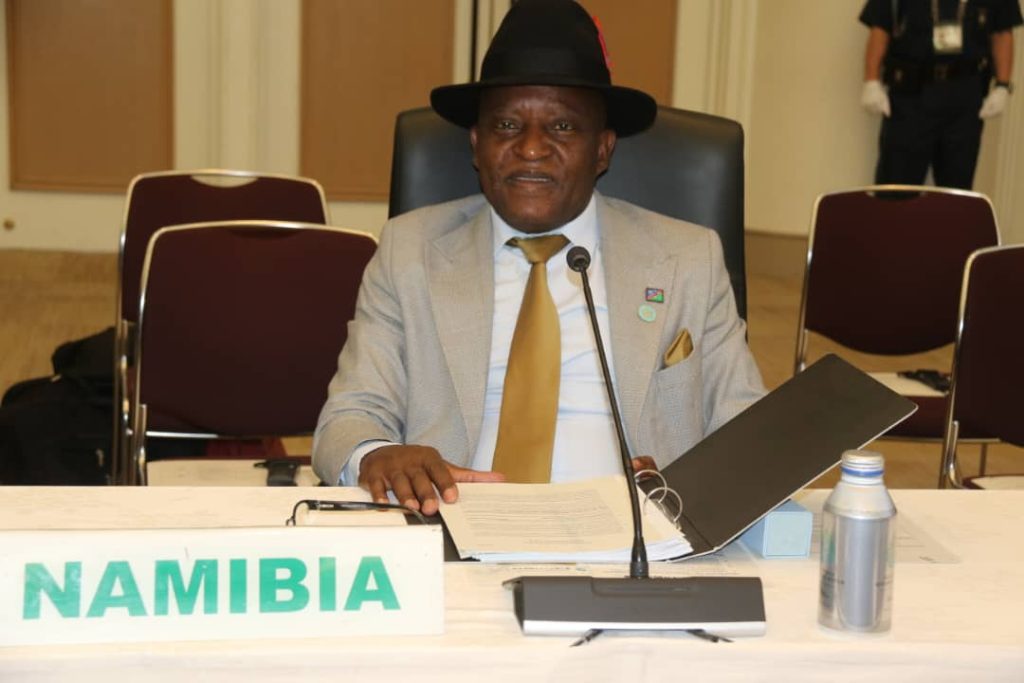
Namibia is placing innovation, agriculture and the blue economy at the core of its development strategy, Prime Minister Tjitunga Elijah Ngurare told delegates at the Tokyo International Conference on African Development (TICAD 9).
Ngurare said the country’s priorities are guided by the recently launched Sixth National Development Plan, which aims to boost food security, job creation and sustainable growth.
“We live in a world that is rapidly changing. Technological advancement is reshaping our future in ways we never imagined. This chord of technology is good and brings the world and Africa together in what was called in the early 1990s as global village which, in the context of Africa, can also be called a modernised global African village,” Ngurare said.
He highlighted agriculture and the blue economy as strategic sectors for economic transformation. Fisheries, aquaculture, transport, tourism and logistics have been identified as key drivers under the national plan, alongside efforts to expand access to innovation and smart technologies.
“In Africa, we say it takes a village to raise a child. Therefore, to achieve meaningful economic diversification, we must create a sustainable industrial ecosystem that involves collaboration between the government, private sector, including SMEs, with a special focus on those owned by women and the youth,” he said.
Ngurare said the government is also working to integrate the informal sector into the mainstream economy and improve cross-border connectivity through ports and transport networks, measures he described as essential to strengthen regional trade and broaden participation in economic growth.
“We can sustainably use and share ocean resources to grow our economy, improve our livelihoods and create jobs for our people without disrupting the health of our ocean ecosystems. We can fast-track economic growth and produce energy and food, while conserving marine and freshwater environments and promoting water tourism,” he said.
The Prime Minister emphasised that partnerships would be critical to Namibia’s ambitions, particularly with Japan.
“Let us foster people-to-people partnerships, equipping our youth with the necessary knowledge and skills to thrive in an ever-changing global economy. We must leverage technology to drive innovation and create new opportunities for our youth. Once the youth of Africa develop genuine faith in their future, half the battle is won,” he said.