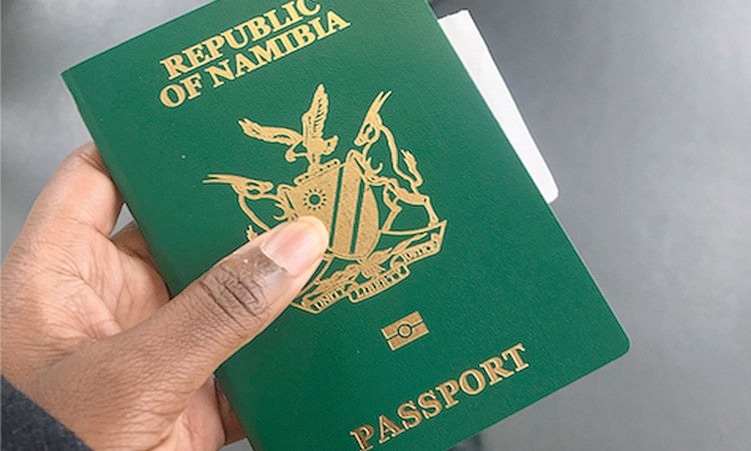
Namibian passport holders can access destinations representing just 16% of the global economy, placing the country 135th out of 199 passports ranked in the 2027 La Vida Passport Value Index.
The index, which measures passport strength based on economic and international travel reach, shows that Namibians can travel to 114 of the 227 destinations assessed without obtaining a traditional visa in advance.
These destinations collectively account for 16% of global gross domestic product (GDP) and 27.6% of international tourist arrivals worldwide.
Unlike conventional passport rankings, which primarily measure the number of destinations accessible without a visa, the La Vida Passport Value Index assesses the economic significance and tourism activity of destinations accessible to passport holders.
Within Southern Africa, Namibia trails South Africa, which ranks 119th globally, with access to 139 destinations representing 26.5% of global GDP and 37% of international tourist arrivals.
Botswana ranks 128th, with access to 95 destinations accounting for 17.9% of global GDP, while Zimbabwe occupies 134th position, with access to 107 destinations representing 16.1% of global economic output.
Namibia, however, ranks ahead of Eswatini in 136th position, Zambia at 167th and Angola at 179th.
Elsewhere on the continent, Mauritius is Africa’s highest-ranked country, occupying 59th position globally, with access to 179 destinations representing 61.3% of global GDP and 81.2% of international tourist arrivals.
Seychelles follows in 62nd position, with access to 175 destinations accounting for 60% of global GDP.
Globally, Singapore tops the index, with access to 216 destinations representing 99.5% of global GDP and 99.7% of international tourist arrivals.
Germany ranks second, followed by Croatia, South Korea and Denmark.
The index draws on World Bank 2023 GDP data and UN Tourism 2023 international visitor arrival figures to calculate the economic and travel reach of each passport.
Its methodology includes visa-free entry, electronic visas and visas issued on arrival as forms of travel access, covering 199 countries and 28 territories.
The rankings reflect the economic size and tourism activity of destinations accessible to passport holders, rather than the economic benefits or market access rights available to travellers.