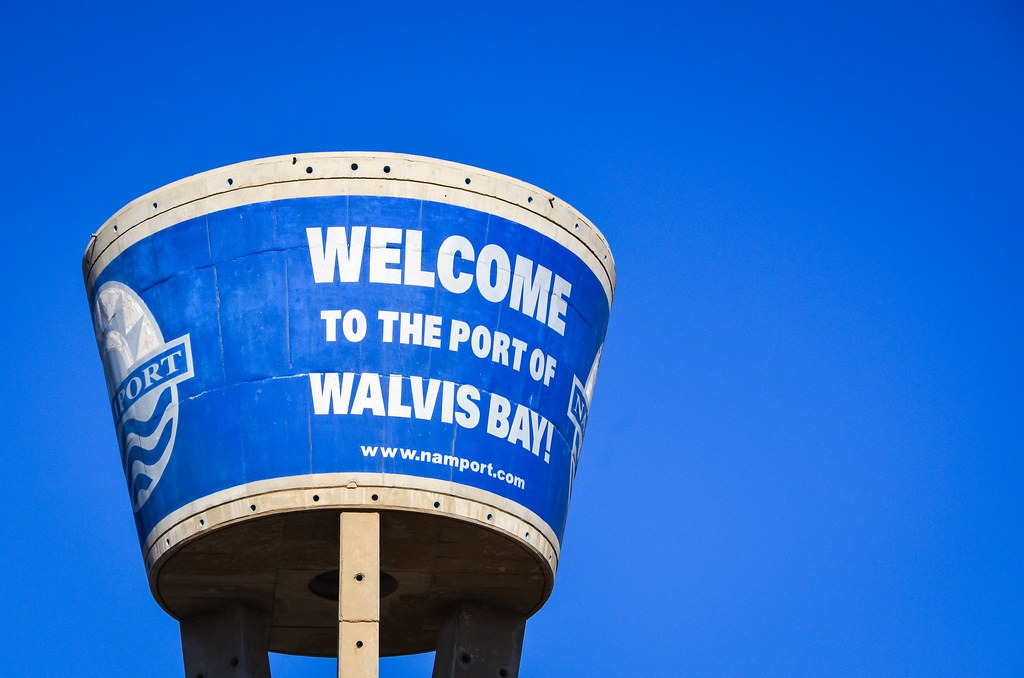
The Namibia Ports Authority’s (Namport) total cargo throughput across the ports of Walvis Bay and Lüderitz fell sharply during the 2025/26 financial year, declining by 25% to 6.36 million tonnes from 8.43 million tonnes the previous year.
In an interview with The Brief, Namport Manager for Marketing and Stakeholder Engagement Cliff Shikuambi said the decline reflects both cyclical pressures in global shipping and structural shifts in regional trade patterns.
“While throughput fell by 25%, the ports remain resilient, and we are actively engaging with stakeholders to diversify cargo segments and strengthen Namibia’s role as a logistics hub,” he said.
Walvis Bay handled 5.24 million tonnes of cargo during the year, while Lüderitz processed 1.14 million tonnes, highlighting the scale of the contraction in Namibia’s maritime trade.
Shikuambi said the decline was not unique to Namibia, noting that vessel calls also decreased at both ports, resulting in lower average cargo volumes per vessel.
“We are seeing smaller parcel sizes per vessel, which is consistent with broader market fragmentation. Our focus is on leveraging Walvis Bay’s container terminal and Lüderitz’s bulk handling capacity to stabilise volumes going forward,” he said.
Despite the decline in cargo throughput, Namport reported improvements in some operational areas. Syncrolift bay occupancy increased to 65% from 41% in the previous financial year, indicating stronger demand for ship repair services, although jetty occupancy declined.
Passenger vessel calls remained stable, increasing marginally to 60 during the 2025/26 financial year from 59 in the previous year.
Shikuambi said Namport’s strategy is to adapt to changing cargo flows while strengthening Namibia’s position as a competitive maritime gateway for Southern Africa.
He added that continued engagement with shipping lines, cargo owners and logistics stakeholders will be critical to restoring cargo growth in the coming financial year.