Tuesday, November 17, 2026
Subscribe
The Brief | Namibia's Leading Business & Financial News
  • Home
  • Companies
    • Finance
    • Agriculture
    • Technology
    • Property
    • Trade
    • Tourism
  • Business & Economy
  • E-PAPERreader
  • Mining & Energy
  • Opinions
    • Analysis
    • Columnists
  • Africa
No Result
View All Result
The Brief | Namibia's Leading Business & Financial News
Subscribe
No Result
View All Result
Home Latest

Windhoek says congestion will worsen without major public transport investment

by reporter
July 17, 2026
in Latest
10
A A
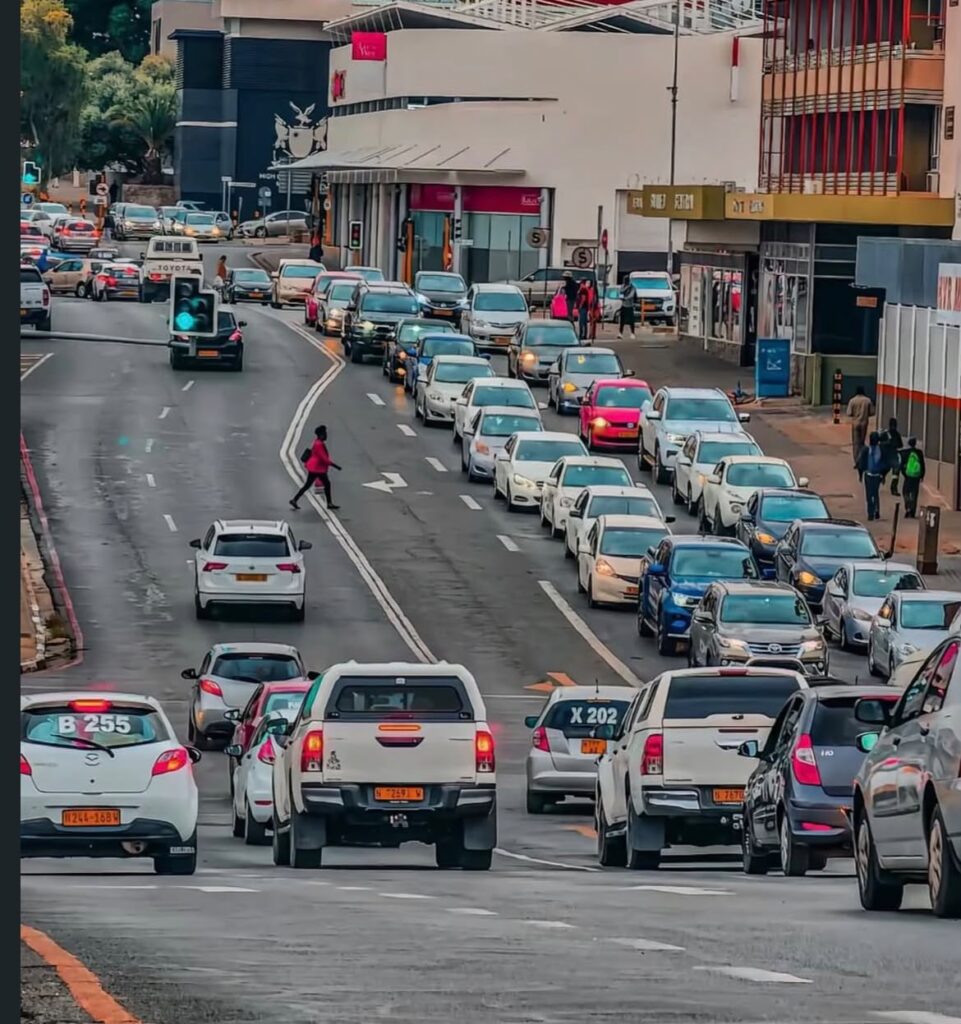
Busy city street jammed with cars in both directions and pedestrians crossing near storefronts on the right.

The City of Windhoek has warned that traffic congestion will continue to worsen unless Namibia invests in a modern, integrated public transport system, saying expanding roads alone will not solve the capital’s growing mobility challenges.

The municipality said congestion is a symptom of a broader transport challenge driven by increasing reliance on private vehicles and the absence of a mass public transport network.

According to the City, international experience shows that no major city has successfully eliminated congestion simply by building more roads or upgrading intersections.

Instead, it said sustainable urban mobility depends on integrating road infrastructure with reliable and affordable public transport, supported by safe walking and cycling facilities.

“Globally, successful cities rely on integrated transport systems where strategic road infrastructure is complemented by efficient, reliable and affordable public transport, together with safe walking and cycling facilities.”

The City said Windhoek remains relatively small by international standards but has become increasingly dependent on private motor vehicles. Although vehicle ownership remains comparatively low, particularly in the north-western suburbs, four-door sedan taxis remain the dominant form of public transport and contribute significantly to peak-hour traffic volumes.

The municipality identified funding as the biggest obstacle to developing a modern public transport system, noting that urban transport requires significant capital investment and ongoing operational subsidies.

“The primary reason why this has not yet been realised in Windhoek is not a lack of planning or vision, but simply funding. Unlike road infrastructure, urban public transport across the world requires ongoing operational subsidies in addition to substantial capital investment. To date, Namibia has not established a sustainable funding mechanism to support such a system.”

The City said it has been engaging the Ministry of Works and Transport and the Ministry of Urban and Rural Development over the past year to develop a sustainable funding model for urban public transport.

At the same time, the municipality is updating its Integrated Transport Master Plan (ITMP), which includes traffic counts, travel demand forecasting and transport modelling to assess mobility needs over the next 20 years.

Preliminary findings indicate that traffic congestion will deteriorate significantly under a business-as-usual scenario unless public transport is substantially improved.

“The preliminary findings of the ITMP confirm that, under a ‘business-as-usual’ scenario, and without a significant improvement in public transport, traffic congestion will continue to worsen drastically as the city grows.”

While road upgrades remain part of the City’s transport strategy, officials stressed they must be complemented by investment in public transport infrastructure.

Current projects include upgrades to Winnie Madikizela-Mandela Drive, Auas Road, Peter Nanyemba Road and the lower section of Independence Avenue. Future upgrades are planned for Sam Nujoma Drive (west), Hosea Kutako Drive through the Northern Industrial Area and David Herero Meroro Road serving Rocky Crest, with these corridors designed to accommodate future public transport and non-motorised transport infrastructure.

The City said investing in public transport is ultimately more sustainable and cost-effective than continually expanding road capacity, which is constrained by both cost and available space.

The warning comes amid growing criticism from residents over worsening traffic congestion across Windhoek, particularly during peak commuting hours.


author avatar
reporter
See Full Bio
Previous Post

Namibia, South Africa launch business council to drive cross-border investment

Next Post

Namibia’s First Legal AI Platform: Murphy’s Law

Must Read

Two business headshots: left, a man in a dark suit; right, a man in a blue suit with glasses, both smiling against a light gray backdrop.
Latest

Arysteq appoints Pieter Möller as CEO, Dean Isaaks as CIO

November 16, 2026
Man in a light blue suit delivering a speech at a podium with two microphones.
Latest

Trans-Kalahari Railway contractor procurement set for 2027/28

November 16, 2026
Fisheries ministry vows crackdown on unethical right holders
Latest

Namibia takes over RCMRD leadership from Zambia

November 16, 2026
Smiling miner in a yellow safety shirt and white hard hat at a rocky quarry site.
Latest

Rössing Uranium appoints Martin Tjipita as new Managing Director

November 16, 2026
Man in glasses speaks at a wooden podium with a laptop and handheld mic, flanked by banners for IPPR and Hanns Seidel Foundation Namibia Office
Latest

Only five of 34 councils ready for Access to Information Act

November 16, 2026
A man in a dark suit and red tie wearing glasses speaks into a handheld microphone, gesturing with his left hand during a panel discussion.
Latest

Gawaxab identifies power costs, regulatory uncertainty as barriers to Namibia’s mineral beneficiation

November 13, 2026
Load More

Related News

Zambia explores digital currency, but warns against crypto

Zambia explores digital currency, but warns against crypto

February 9, 2022
Namibia urged to reform fisheries legislation and improve oversight

Govt targets N$300m growth in fisheries sector contribution to N$10.7bn by 2030

December 17, 2025
EIF, DBN partner to boost climate financing in Namibia

EIF, DBN partner to boost climate financing in Namibia

August 23, 2024

Browse by Category

  • Africa
  • Agriculture
  • Analysis
  • Business & Economy
  • Columnists
  • Companies
  • e-edition
  • Finance
  • Finance
  • Fisheries
  • Green Hydrogen
  • Health
  • Investing
  • Latest
  • Market
  • Mining & Energy
  • namibia
  • Namibia
  • News
  • Opinions
  • Property
  • Retail
  • Technology
  • Tourism
  • Trade
The Brief | Namibia's Leading Business & Financial News

The Brief is Namibia's leading daily business, finance and economic news publication.

CATEGORIES

  • Business & Economy
  • Companies
    • Agriculture
    • Finance
    • Fisheries
    • Health
    • Property
    • Retail
    • Technology
    • Tourism
    • Trade
  • e-edition
  • Finance
  • Green Hydrogen
  • Investing
  • Latest
  • Market
  • Mining & Energy
  • namibia
  • News
    • Africa
    • Namibia
  • Opinions
    • Analysis
    • Columnists

CONTACT US

Cell: +264814612969

Email: newsdesk@thebrief.com.na

© 2026 The Brief | All Rights Reserved. Namibian Business News, Current Affairs, Analysis and Commentary

Welcome Back!

Login to your account below

Forgotten Password?

Retrieve your password

Please enter your username or email address to reset your password.

Log In
No Result
View All Result
  • Home
  • Companies
  • Mining & Energy
  • Business & Economy
  • Opinions
    • Analysis
    • Columnists
  • Africa

© 2026 The Brief | All Rights Reserved. Namibian Business News, Current Affairs, Analysis and Commentary

This website uses cookies. By continuing to use this website you are giving consent to cookies being used. Visit our Privacy and Cookie Policy.