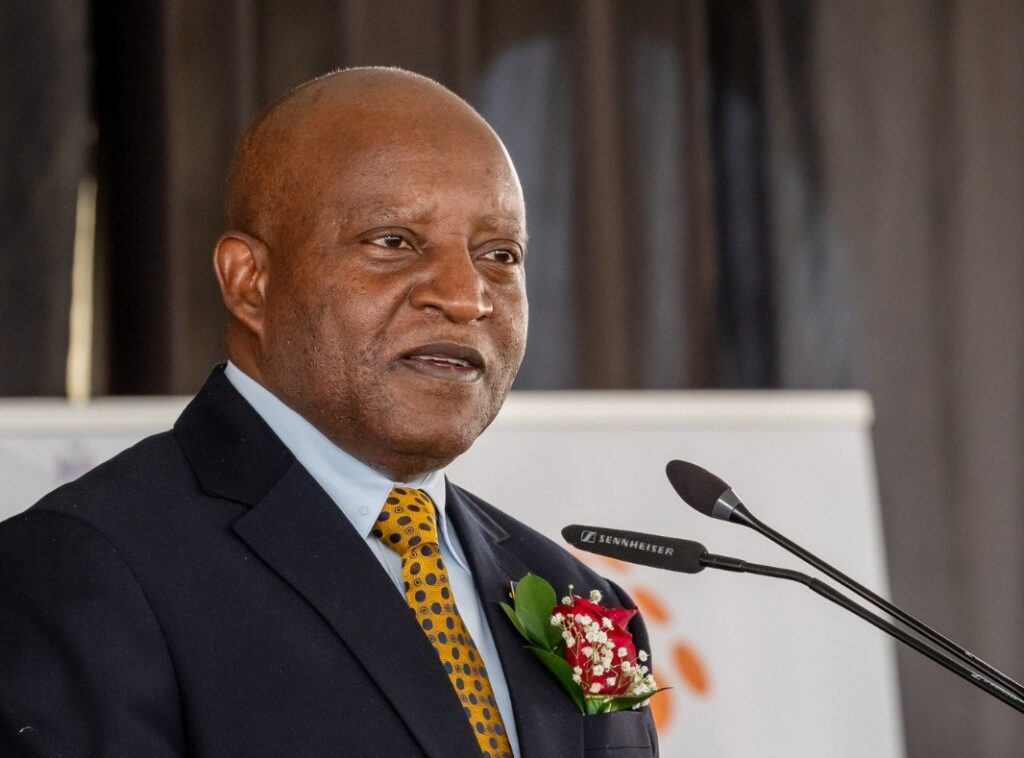
Prime Minister Dr Elijah Ngurare has demanded immediate action to revive billions of dollars’ worth of stalled government infrastructure projects, warning that years of delays and abandoned developments have become an unacceptable waste of public funds and are denying Namibians access to essential services.
Addressing the Executive Directors’ Retreat in Swakopmund, Ngurare criticised the continued failure to complete state-funded projects, some of which have remained unfinished since 2012, and urged senior government officials to shift from planning to implementation.
“Director of Ceremonies, both you and I are shocked when we travel across the country and find unfinished, long-abandoned capital projects that have cost billions of dollars, some dating as far back as 2012. The National Planning Commission knows this better than anyone,” he said.
“Granted, many of you in this room were not yet Executive Directors when these projects stalled. However, we must care deeply about this incomprehensible waste of public funds—unfinished roads meant to serve communities, houses meant to reduce our housing backlog, classrooms meant for needy children, clinics and hospitals for the sick, and boreholes meant to bring clean water closer to communities.”
Ngurare described the situation as a failure of public service delivery and called for greater accountability to ensure government projects are completed on time and deliver value for taxpayers.
The Prime Minister also revealed that parts of the government’s digital infrastructure had been compromised, warning that unauthorised actors had gained access to government systems and were diverting official emails.
“Some of our technical infrastructure has been compromised, for lack of a better word. In other words, certain unauthorised actors have gained access to our digital space. That in itself is an infringement on our national security. You, as a ministry, might comfortably send an email assuming it will safely reach its destination, while someone else is diverting it elsewhere,” he said.
He instructed ministries to eliminate fragmented digital systems, strengthen coordination under lead ministries and work closely with security authorities to address the vulnerabilities.
Ngurare also raised concerns over allegations of corruption in recruitment across regional councils and state-owned enterprises, saying perceptions that jobs are secured through political connections or bribery continue to erode public confidence in government institutions.
In a bid to maximise the impact of public spending, the Prime Minister directed accounting officers to enforce local procurement requirements, prioritise Namibian suppliers and reduce reliance on foreign contractors for work that can be undertaken locally.
Among the measures announced were directing public schools and hospitals to use Namibia’s more than 20,000 vocational training centre (VTC) graduates for minor maintenance work instead of outsourcing such jobs to foreign firms.
He also instructed school feeding programmes and state hostels to procure maize meal and mahangu from millers registered with the Namibian Agronomic Board (NAB), arguing that keeping government expenditure within the domestic economy is critical to strengthening food security and creating jobs.
“I also recently met with local millers registered with the Namibian Agronomic Board who process mahangu and maize meal. Securing our ability to feed ourselves safeguards our national interest; relying entirely on imports compromises national security. These registered millers have met our national standards and must be supported,” he said.
Ngurare said restoring public confidence in government will depend on faster implementation, stronger accountability and ensuring that public funds translate into completed projects that improve the lives of Namibians.