Namibia has renewed its call for the resolution of the long-running Orange River boundary dispute with South Africa, describing the issue as critical to safeguarding the country’s territorial integrity and completing its decolonisation process.
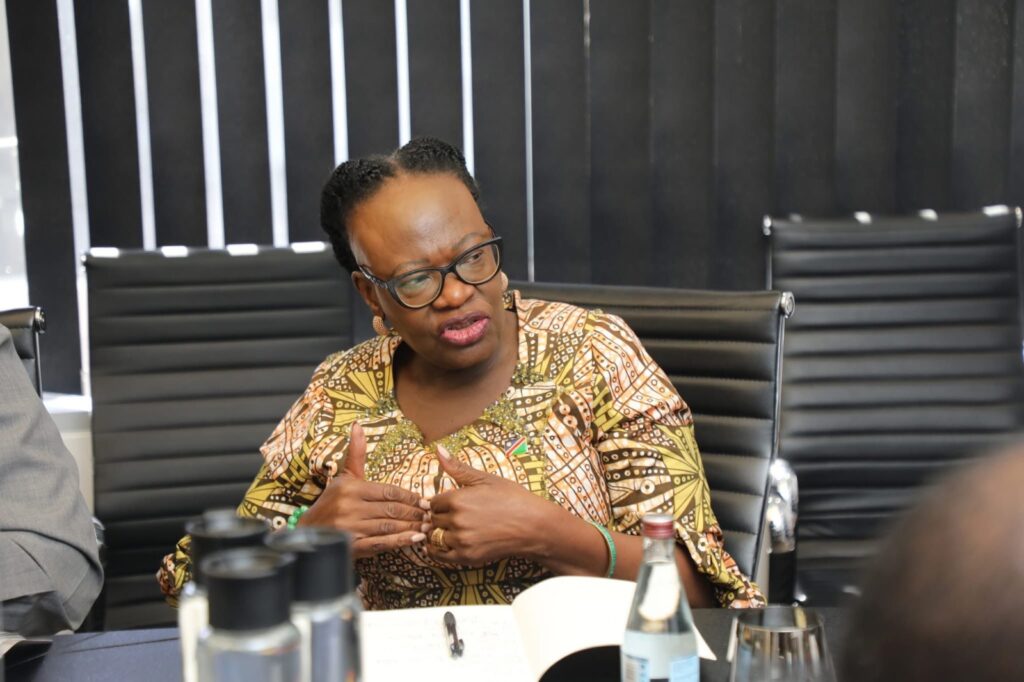
Addressing the Fourth Session of the Namibia-South Africa Bi-National Commission (BNC) in Pretoria, Minister of International Relations and Trade Selma Ashipala-Musavyi said negotiations over the boundary have remained unresolved for 36 years despite Namibia attaining independence in 1990.
“Namibia’s struggle for national liberation took us 24 years. It has been 36 years since the commencement of the negotiations, and we are yet to conclude the matter on the Orange River Boundary,” she said.
Ashipala-Musavyi expressed hope that the latest BNC session would provide a clear pathway towards resolving the dispute, which she said remains essential to securing Namibia’s full territorial integrity.
Beyond the border issue, the minister reaffirmed Namibia’s commitment to strengthening bilateral relations with South Africa, describing the neighbouring country as a strategic partner whose ties with Namibia were forged during the liberation struggle.
She noted that the two countries have concluded more than 150 bilateral agreements since Namibia’s independence, covering trade, security, energy, water, health, education and cultural cooperation.
Ashipala-Musavyi said the focus should now shift from signing agreements to ensuring they deliver tangible economic and social benefits.
Energy cooperation featured prominently during the discussions, with the minister calling for deeper collaboration to diversify energy sources and strengthen regional energy security.
“We also look forward to discussions on deepening cooperation in the energy sector through collaborative efforts to diversify our respective energy mixes. In our Sixth National Development Plan, Namibia recognises energy as a critical enabler for meeting our developmental needs. We are also aware of the imperative to diversify energy sources at the regional level through accelerated investment in renewables, improve water access and sanitation, and expand cross-border energy trade in order to address the regional energy shortfall,” she said.
Trade also remained a key focus, with bilateral trade between Namibia and South Africa reaching approximately N$86 billion in 2025. Namibia exported goods worth N$29.21 billion to South Africa while importing N$57.84 billion, resulting in a substantial trade deficit.
To strengthen commercial relations, Ashipala-Musavyi renewed calls for the establishment of the South Africa-Namibia Business Council, saying it would facilitate private investment, joint ventures and industrial partnerships between businesses in both countries.
“Namibia regards this Council as the missing operational link between our two economies, one capable of organising the movement of private capital, joint ventures and industrial partnerships beyond the raw asymmetry of import and export statistics. Our Chambers of Commerce should finalise its terms of reference and secure its formal launch before the Fifth Session of the Namibia-South Africa Bi-National Commission. The holding of a Business Forum as part of this BNC Session is highly commendable,” she said.
The minister also welcomed progress within the Southern African Customs Union (SACU), including proposals to give Botswana, Eswatini, Lesotho and Namibia greater participation in South Africa’s tariff-setting process, as well as continued collaboration on regional industrial projects such as the Andrada Lithium Project in Namibia.