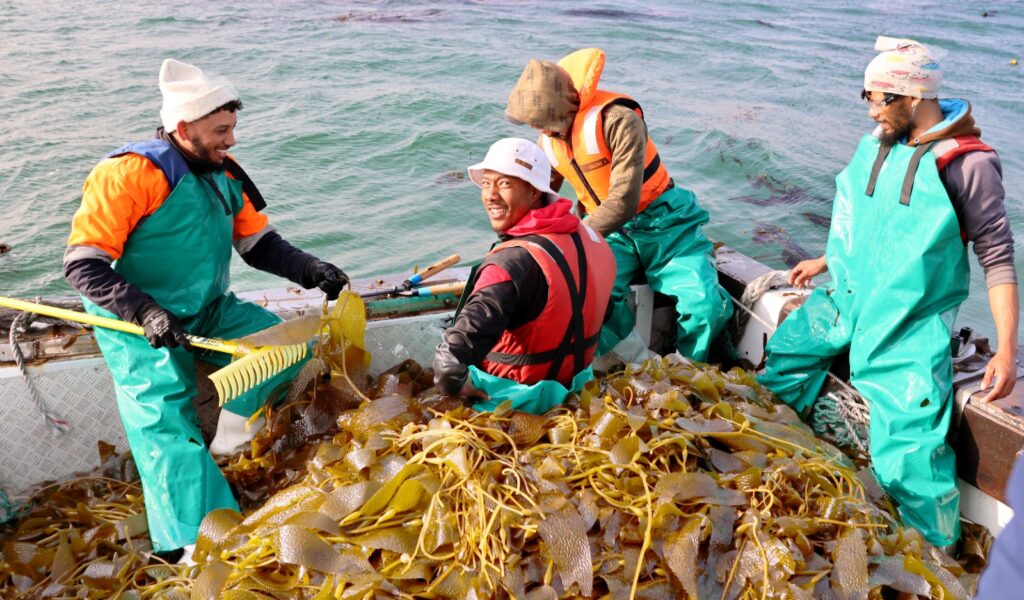
Kelp Blue has harvested approximately 730 tonnes of kelp since the start of its operations at its more than 6,000-hectare site off the coast of Lüderitz and expects annual production to nearly double this year as it expands its seaweed farming activities.
Kelp Blue Deputy Operations Manager Iriya Jona said harvesting activities will continue through June before resuming later in the year.
Jona said the company had already harvested around 360 tonnes of kelp by the end of May and expects total production for 2026 to reach about 500 tonnes, nearly double last year’s output.
“Regarding harvesting, to date we have harvested approximately 730 tonnes of kelp. As of the end of May this year, we had already harvested around 360 tonnes and we will continue harvesting through June before resuming again in November and December. We expect to finish the year at approximately 500 tonnes, which is nearly double last year’s output,” she said.
The projected increase comes as Kelp Blue expands its farm infrastructure and cultivation areas to secure sufficient biomass for future production growth.
“We plan to expand our farm because we are confident in the growth potential and want to ensure we have enough biomass for future years,” Jona said.
The company is also working to improve the efficiency of kelp deployment and installation processes to reduce losses and increase productivity.
“Another priority is optimising our installation processes. The less time our kelp spends out of the water before deployment, the better. There is always a risk of loss when material remains out of the sea for extended periods,” she said.
Kelp Blue is simultaneously investing in research to better understand the marine ecosystem developing around its seaweed farms.
According to Jona, the company regularly monitors species interactions within the cultivation areas, including organisms that feed on kelp and marine species that use the underwater forests as habitat.
“Our teams regularly go out to sea to collect samples and monitor activity. We are also investigating whether some of these organisms could have commercial value or be incorporated into other products,” she said.
Jona noted that research conducted through the Kelp Forest Foundation has provided early insights into how the farms may support marine biodiversity.
She said one study examining lobster populations found that juvenile lobsters appear to be more common within the kelp farm than in surrounding areas.
“This is likely because younger animals benefit from the shelter provided by the kelp forest. The farm reduces wave action and creates a more protected environment,” Jona said.
She said kelp forests create favourable conditions for marine life by absorbing carbon dioxide and releasing oxygen through photosynthesis.
“That is why we often observe schools of fish and other marine life within the farm. The environment provides food, shelter and protection, particularly for younger organisms,” she said.
Jona added that the research forms part of Kelp Blue’s broader effort to build scientific understanding of large-scale kelp cultivation and its environmental impacts while supporting the development of new kelp-based products and applications.