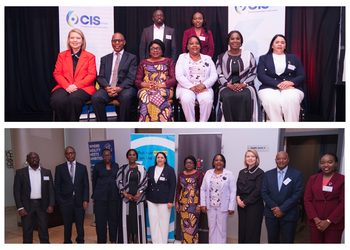
Namibia has secured more than N$1 billion in conservation financing under a landmark initiative aimed at protecting wildlife, sustaining communal conservancies and supporting rural livelihoods as traditional donor funding declines.
The programme, known as Namibia for Life, was launched as Africa’s first Finance for Permanence (PFP) initiative focused specifically on community conservation.
According to World Wildlife Fund for Nature’s Country Director for Namibia, Juliane Zeidler, the deal has secured more than US$61 million in confirmed funding, with additional contributions still being negotiated.
“In Namibia, as mentioned earlier, the closing deal has been set at US$63 million (over N$1 billion), with additional funds earmarked but not yet fully confirmed. Today marks the launch of the very first Finance for Permanence (PFP) initiative in Africa. It is also the first on the continent to focus specifically on community conservation. Most PFP programmes implemented elsewhere have primarily supported state-protected areas,” Zeidler said.
The funding package brings together international public and private conservation partners and is intended to provide long-term financial support to Namibia’s community-based natural resource management (CBNRM) system, which has become one of the country’s most internationally recognised conservation models over the past three decades.
Namibia’s 91 communal conservancies and related community forest associations currently manage more than 230,000 square kilometres of land, supporting conservation activities and natural resource-based livelihoods for around 250,000 people.
Zeidler said the initiative became necessary after Namibia’s transition to middle-income status in 2007 triggered a gradual decline in bilateral donor support, placing growing pressure on conservation programmes and local institutions.
The funding mechanism was eventually developed through the Enduring Earth partnership, which includes the World Wide Fund for Nature and other international conservation partners.
“Then, in 2021, it finally became possible to move forward through the Finance for Permanence (PFP) approach. This is a very specific fundraising model developed by the Enduring Earth partnership, of which WWF is a key member, together with international partners,” she said.
Part of the initiative includes the establishment of a Socio-Economic Development Fund aimed at supporting conservation enterprises and local business development through a microfinance-style funding model.
The programme is expected to create new economic opportunities linked to Namibia’s wildlife and bio-economy sectors, particularly in remote rural communities heavily dependent on conservation-linked income.
The funding will be administered locally through the Community Conservation Fund of Namibia (CCFN), which will oversee conservancy support, extension services and institutional strengthening programmes.
Zeidler said the initiative is also expected to ease mounting financial pressure on local conservation organisations that have struggled to survive following the end of major international funding programmes and the economic impact of the COVID-19 pandemic.
“Globally, many NGOs have been affected by funding cuts and are often not fully recognised as development partners. Namibia’s case is different. When large funding streams such as the Millennium Challenge Account ended, and later during the COVID-19 pandemic, national organisations came under significant pressure,” she said.